
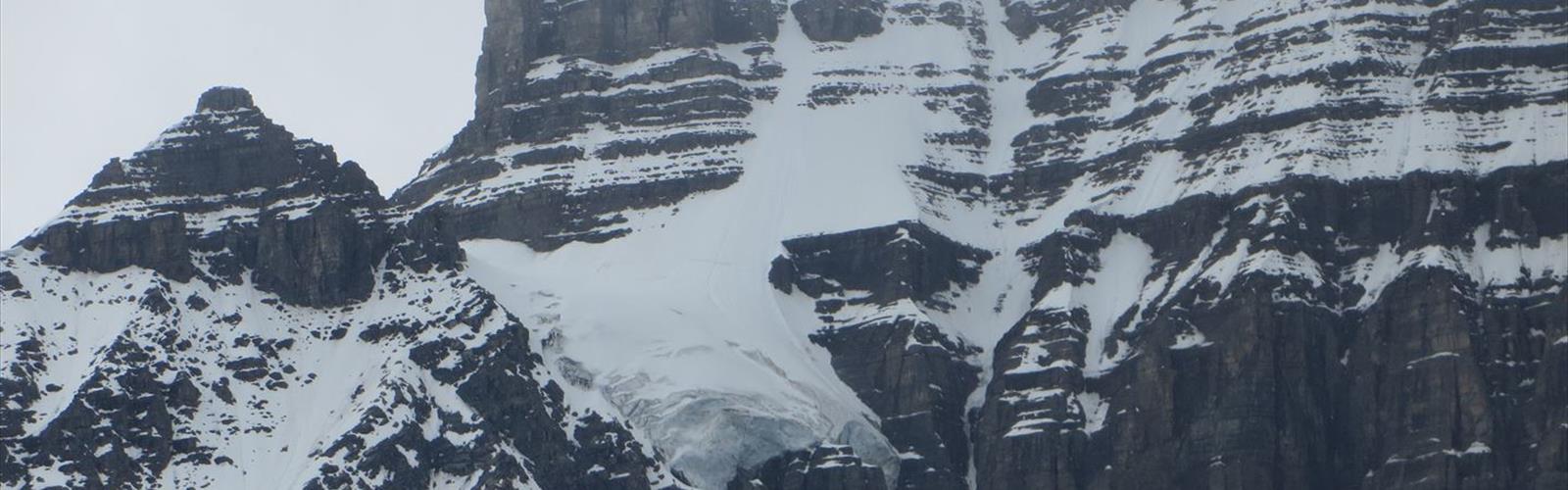

Ready to explore Tuff Puff Trailhead? Here's everything you need to know before you go!
Discover the trail
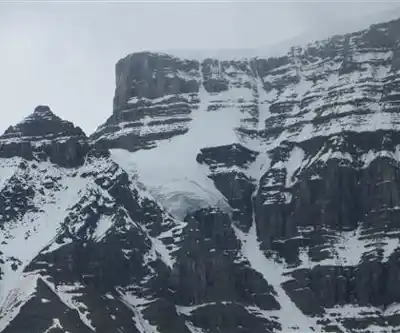
Photos: David Wilson from Oak Park, Illinois, USA — CC BY 2.0 (Wikimedia Commons)
Trail description
The Tuff Puff Trailhead sits in the heart of the Canadian Rockies in Alberta, serving as a launching point for hiking routes that showcase some of the region's most impressive mountain scenery. It has earned a solid reputation among both local hikers and visitors for providing access to diverse terrain and consistently rewarding views — whether you're planning a relaxed morning outing or a more committed day on the trails.
What makes this trailhead worth knowing about is its versatility. Rather than funneling everyone onto a single route, Tuff Puff opens up several different trail options that cater to varying skill levels and time commitments. The surrounding landscape delivers the classic Rocky Mountain experience: dramatic peaks rising above treeline, dense coniferous forests, and the kind of scenery that makes the Canadian Rockies one of the most visited mountain regions in North America.
Trail Details
The main route from the Tuff Puff Trailhead covers 15 km with 300 m of elevation gain, rated Easy and typically completed in around 4 hours. That combination — moderate distance with relatively gentle elevation change — makes this a genuinely accessible outing for most hikers, including those who don't spend every weekend in the mountains. The grade stays manageable throughout, so you can focus on the scenery rather than grinding through steep technical sections.
The terrain follows a pattern common to this part of the Rockies: you start in dense coniferous forest where the trail is well-defined and sheltered, then gradually move into more open terrain as elevation increases. The forest cover gives way to broader views of the surrounding peaks, and the transition from closed canopy to open mountain landscape is one of the more satisfying parts of the experience.
What You'll See
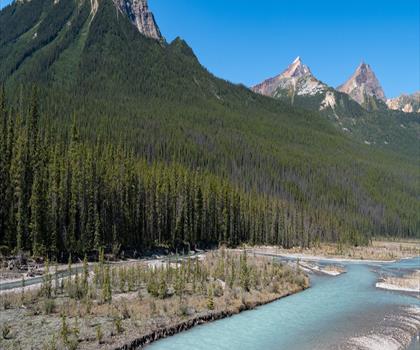
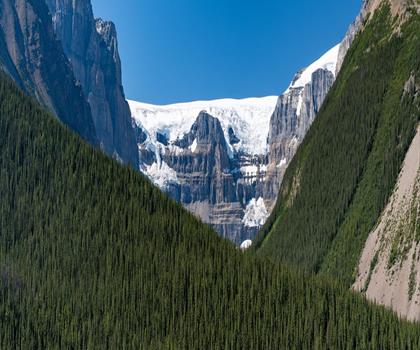
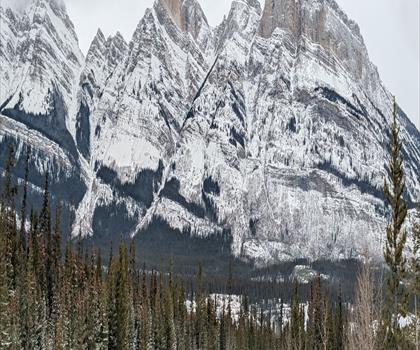
The visual payoff on this trail builds steadily rather than arriving all at once. Early sections move through classic Rocky Mountain forest — spruce and fir creating that familiar filtered light and quiet atmosphere. As the trail opens up, the surrounding peaks come into view, their rocky faces and snow-dusted summits framing the horizon in multiple directions.
The Canadian Rockies are known for their alpine lakes, and the broader area around this trailhead is no exception. The combination of mountain walls, evergreen forest, and clear water creates the kind of scenery that draws photographers and casual hikers alike. Light conditions shift noticeably throughout the day, with morning and late afternoon offering the most dramatic contrast and color on the peaks.
Wildflower displays during late spring and summer add another layer to the experience. Alpine meadows fill in with Indian paintbrush, lupine, and mountain asters as the snow retreats, creating vivid color against the rocky backdrop. Come fall, aspen groves shift to gold and mountain ash picks up deep red tones, making the same trail feel like an entirely different place compared to midsummer.
Wildlife
The area supports a healthy cross-section of Rocky Mountain wildlife. Elk and deer are regularly spotted, particularly during early morning and evening hours when they're most active and most likely to be out in the open. Patience and quiet movement improve your chances of a good sighting.
Both black bears and grizzly bears are present in this ecosystem. Encounters are uncommon, but hikers should carry bear spray, make noise on the trail — especially in dense brush or near running water — and know how to respond if a bear is encountered. Maintaining distance from all wildlife is non-negotiable, both for your safety and theirs.
Planning Your Visit
Mountain weather in the Canadian Rockies moves fast. Conditions at the trailhead can differ significantly from what you'll find at higher elevations, and afternoon thunderstorms are a real possibility during summer months. Check the forecast before you go, start early when you can, and always pack a rain layer regardless of what the morning sky looks like.
For a 15 km outing lasting around 4 hours, bring more water than you think you'll need — mountain air and sustained physical effort increase hydration requirements quickly. Pack enough food to keep your energy steady, and carry a basic first-aid kit. Even on an easy-rated trail in a well-traveled area, self-sufficiency matters when you're in the backcountry.
Navigation is straightforward on well-maintained trails, but a downloaded offline map or a paper topo adds a useful backup if weather rolls in or trail markers become unclear. Cell coverage in the Canadian Rockies is inconsistent at best once you're away from the trailhead.
Leave No Trace
The alpine environment in this part of Alberta is genuinely fragile — vegetation at higher elevations grows slowly and recovers from disturbance even more slowly. Staying on designated trails, packing out everything you bring in, and keeping noise levels reasonable all contribute to keeping this area in good shape for the next person. Wildlife feeding is prohibited and creates real problems for animals and future hikers alike. Proper food storage at the trailhead and on the trail is part of responsible hiking in bear country.
The Essential Hiking Checklist
Everything you need for your next hike. Bilingual, printable, 1 page.
Get your free hiking checklistRecommended gear for this trail
As an Amazon Associate I earn from qualifying purchases.


Ready to go?
Everything you need to know before you goStarting Point
The tuff puff trailhead is located in Alberta, Canada. To get to the start of the trails, take Highway 2 west from Calgary to the town of Cochrane. Turn left onto Highway 1A and drive for about 5 km until you reach the signed trailhead parking lot on the right.
When?
How much?
As an Amazon Associate I earn from qualifying purchases.
Affiliate links — LGPO may earn a commission at no extra cost to you.
- Hiking shoes Essential
- → Salomon Elixir Tour Mid WP · 203.38 $
- Layered clothing Essential
- Rain jacket Essential
- Trekking poles
- → Black Diamond Trail Ergo Cork · 69.99 $
- Headlamp
- → Petzl Actik Core 625 · 103.95 $
FAQ - Frequently asked questions
Everything you need to knowSimilar hikes nearby
Discover other trails you might enjoy
Fossil Mountain
Canadian Rockies

Snake Indian Mountain
Canadian Rockies
Mushroom Peak
Canadian Rockies
Mount Woolley
Canadian Rockies
Stutfield Peak
Canadian Rockies
Mount Sarbach
Canadian Rockies
Hiking near Banff
187 trails to explore ~112 km away
We work hard to provide the most up-to-date and error-free data possible. If something seems incorrect, let us know! Your contribution helps the whole community.
Hikers' opinions
Be the first to review!
No hiker has shared their experience yet. Share your impressions and help other hikers!