

Ready to explore Mont Rougemont? Here's everything you need to know before you go!
Discover the trail
Available trails
| Trails | Distance | Elevation | Duration | Difficulty | GPX |
|---|---|---|---|---|---|
| 5.25 km | 260 m | 1h30 | Intermediate | GPX |
Trail description
Description
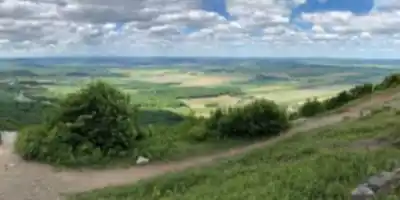
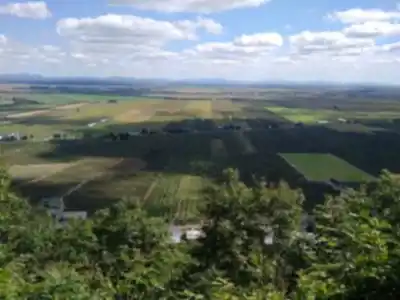
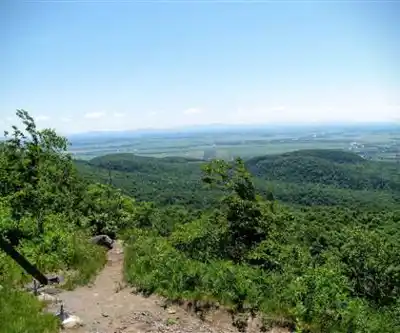
Mount Rougemont rises 381 meters above the Montérégie plains, making it one of the most prominent Monteregian Hills southeast of Montreal. This ancient volcanic intrusion offers hikers a surprisingly challenging climb through diverse terrain, from dense hardwood forests to rocky outcrops with panoramic views across the St. Lawrence Valley. The mountain's unique position in the agricultural heartland of Quebec creates a striking contrast between wild summit trails and the orderly apple orchards that blanket the surrounding countryside.
The main trail network covers 6.4 kilometers with 500 meters of elevation gain, creating a hard-rated hike that typically takes 3 hours and 30 minutes to complete. Don't let the mountain's modest height fool you—the steep sections through loose rock and root-crossed paths demand good fitness and proper footwear. The reward comes at the summit, where cleared viewpoints reveal sweeping vistas of the Richelieu Valley, distant Adirondacks, and on clear days, the Montreal skyline.
Trail Experience and Terrain
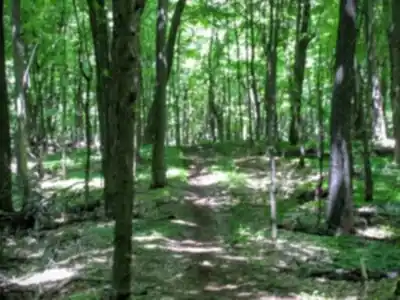
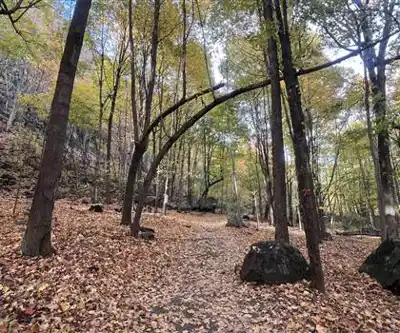
The sentier rougemont begins gently through mixed forest dominated by sugar maple, yellow birch, and American beech. Early sections wind through relatively flat terrain, allowing hikers to warm up before the mountain reveals its true character. As you gain elevation, the trail becomes increasingly rocky and steep, with several sections requiring careful foot placement over loose stones and exposed roots.
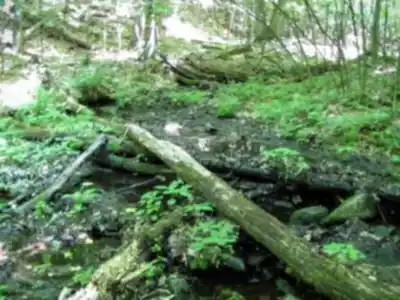
The middle portion of the climb presents the most technical challenges, where the path cuts directly up the mountainside through dense canopy. Here, hikers navigate natural rock steps and occasional scrambles over small boulder fields. The forest composition shifts noticeably with altitude, transitioning from rich lowland species to more hardy mountain varieties adapted to the exposed conditions near the summit.
Multiple trails within the rougemont network offer different approaches and loop options, allowing experienced hikers to extend their adventure or create varied routes on return visits. The trail rougemont system connects several viewpoints, each offering distinct perspectives of the surrounding Montérégie landscape.
Wildlife and Natural Features
Mount Rougemont supports diverse wildlife populations that reflect both its forested habitat and edge proximity to agricultural lands. White-tailed deer are commonly spotted, particularly during early morning or late afternoon hikes when they venture from deeper forest cover to browse along trail edges. The mountain's varied elevations and forest types attract numerous bird species, including pileated woodpeckers, various warbler species during migration, and year-round residents like chickadees and nuthatches.
Spring hiking reveals spectacular wildflower displays as the forest floor comes alive with trilliums, bloodroot, and wild leeks before the canopy fully leafs out. Summer brings lush green tunnels of foliage that provide welcome shade during the steep climbs, while autumn transforms the mountain into one of the region's premier fall color destinations. The mix of maple, birch, and oak creates a particularly vibrant display of reds, oranges, and yellows that peaks typically in late September to early October.
The mountain's geological history as a Monteregian Hill—formed by ancient igneous intrusions—becomes evident in the rocky outcrops and boulder fields encountered along the upper trails. These exposed sections provide interesting contrast to the surrounding sedimentary landscape of the St. Lawrence Lowlands.
Apple Orchard Country
Mount Rougemont sits at the heart of Quebec's premier apple-growing region, where over a dozen commercial orchards take advantage of the area's ideal microclimate and well-drained soils. The mountain's slopes and surrounding farmland produce numerous apple varieties, from traditional McIntosh and Cortland to newer cultivars developed specifically for Quebec's growing conditions.
Many local orchards welcome visitors for pick-your-own experiences, fresh cider tastings, and seasonal festivals that celebrate the harvest. These working farms provide an authentic glimpse into Montérégie's agricultural heritage and offer perfect post-hike refreshment opportunities. The contrast between wilderness hiking and pastoral farm visits creates a uniquely Quebec outdoor experience that combines natural adventure with cultural immersion.
Timing visits during apple season—typically August through October—allows hikers to experience both peak fall colors on the mountain and harvest activities in the orchards below. Many farms also produce artisanal ciders, jams, and other apple-based products that make excellent souvenirs of your Rougemont adventure.
Planning Your Visit
Mount Rougemont's location just 45 minutes southeast of Montreal makes it an ideal day trip destination for urban hikers seeking a quick escape to nature. The mountain is easily accessible from Highway 10, with clear signage directing visitors to trailhead parking areas. For those staying in rougemont qc or other nearby communities, hiking rougemont offers convenient access to genuine mountain terrain without lengthy travel times.
The rougemont park facilities include basic amenities like parking and trail maps, though hikers should come prepared with their own water, snacks, and safety equipment. The challenging nature of the main trail demands proper hiking boots with good ankle support and aggressive tread for the rocky sections. Trekking poles can be particularly helpful during the steeper descents.
Trail conditions vary significantly with seasons, so checking current status before departure is essential. Spring hiking may encounter muddy conditions and seasonal stream crossings, while winter transforms the mountain into a snowshoeing destination with entirely different challenges and rewards. Summer offers the most predictable conditions but can be quite warm during the exposed summit sections, making early morning starts advisable.
Weather can change quickly on the mountain, particularly near the summit where exposure increases wind effects. Carrying extra layers and rain protection is recommended even on seemingly stable days, as conditions in the valley don't always reflect what hikers will encounter at higher elevations.
Services and amenities
This information may vary by season.
Ready to go?
Everything you need to know before you goStarting Point
To access the hiking trails, you can start at the main trailhead located at 100 Rang de la Montagne, Rougemont, QC J0L 1M0. There is a parking lot available at this address for visitors.
When?
From 9 am to 5 pm
How much?
- Hiking shoes Essential
- Layered clothing Essential
- Rain jacket Essential
- Trekking poles
- Headlamp
FAQ - Frequently asked questions
Everything you need to knowFrom 9 am to 5 pm
The Essential Hiking Checklist
Everything you need for your next hike. Bilingual, printable, 1 page.
Download the free checklistSimilar hikes nearby
Discover other trails you might enjoy

Parc Michel Chartrand
Montérégie
Parc De La Cité
Montérégie
Mont Saint Bruno National Park
Montérégie
Mont St Hilaire
Montérégie

Parc Régional De Beauharnois - Salaberry
Montérégie

Friends of the Lake Saint-François National Wildlife Area
Montérégie
Hiking near Montreal
92 trails to explore ~39 km away
We work hard to provide the most up-to-date and error-free data possible. If something seems incorrect, let us know! Your contribution helps the whole community.
Hikers' opinions