
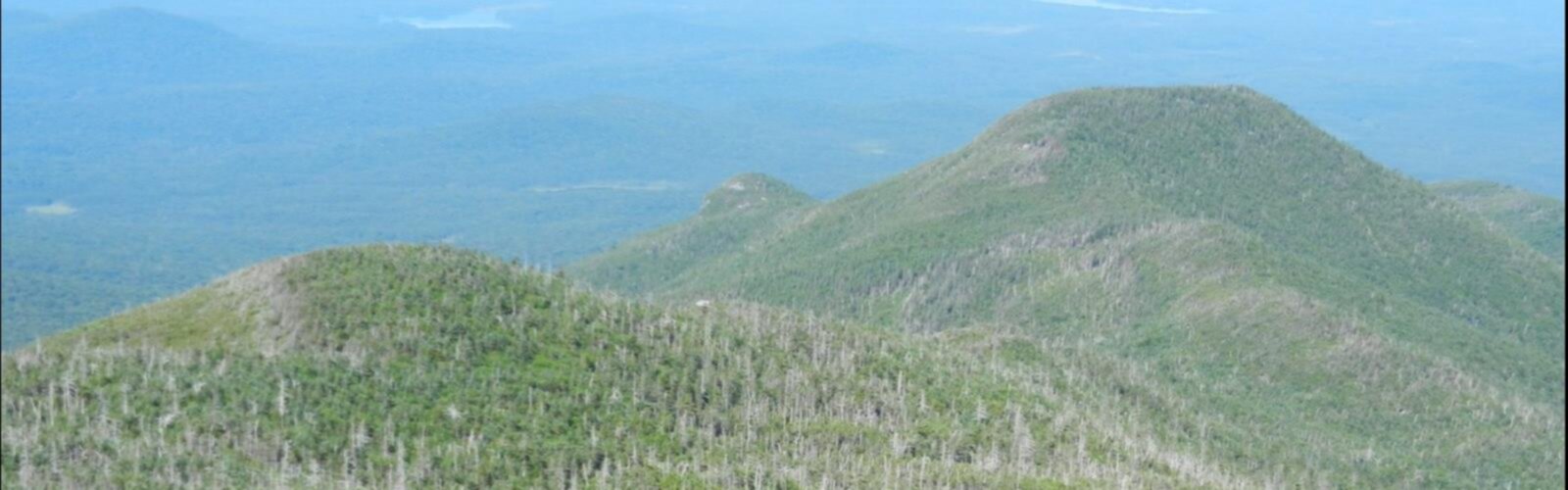

Ready to explore Couchsachraga Peak, New York? Here's everything you need to know before you go!
Discover the trail
Oh no! We don't have any photos 😢
This trail hasn't been captured yet. Be the first to share your adventure!Trail description
Couchsachraga Peak is one of the most remote and demanding destinations in New York's Adirondack High Peaks region. Tucked into the Santanoni Mountains of Essex County, this 3,816-foot summit offers a genuine wilderness experience that stands apart from the more trafficked peaks in the range. The name itself comes from an Algonquin or Huron word meaning "dismal wilderness" — a fitting description for the dense, trackless forest that defines the entire approach and summit area.
What makes Couchsachraga genuinely different from most Adirondack peaks is the complete absence of marked trails and summit views. The top is fully forested, so there's no payoff panorama waiting for you — just trees, a hidden canister, and the quiet satisfaction of having navigated your way there. That combination makes it one of the least-visited peaks on the 46er list, drawing mostly serious peak baggers working toward their High Peaks completion and experienced off-trail hikers who actually enjoy the challenge of a real bushwhack.
The Route and Terrain
There are no established trails to Couchsachraga's summit. Most hikers approach from the Cold River area, which means committing to a long day through terrain that demands solid navigation skills from start to finish. The 24-kilometer round trip involves roughly 1,156 meters of elevation gain and typically takes around 8 hours and 30 minutes — though that estimate assumes efficient route-finding, which is far from guaranteed on a first attempt.
The terrain shifts as you move through the approach. You'll pass through relatively open hardwood sections before pushing into denser coniferous forest where progress slows considerably. Expect blowdown, uneven footing, wet patches, and areas of thick undergrowth that make every kilometer feel earned. During leaf-on seasons, the canopy closes in and visibility through the forest drops significantly, which adds another layer of difficulty to staying on course.
Panther Peak sits to the east of Couchsachraga, and many hikers combine both summits in a single day. It's a logical pairing given the proximity, but it extends an already demanding outing and requires careful time management to avoid being caught in the woods after dark.
Finding the Summit
The summit itself offers no natural landmark to confirm you've arrived. The highest point is marked only by a small canister tucked among the trees — easy to miss if you're not paying close attention to your elevation readings. Reaching the true top requires careful use of a topographic map and compass, and ideally a GPS device as a backup, though heavy forest canopy can affect GPS reliability. Many experienced hikers recommend studying the route in detail before heading out and taking careful note of key terrain features to use as reference points on the way back.
The lack of a view means the reward here is entirely internal. There's no summit photo with a sweeping backdrop — just the knowledge that you navigated a genuinely challenging piece of Adirondack wilderness and found what you were looking for.
Watershed and Wilderness Setting
Couchsachraga sits within the Cold River watershed. The southern slopes drain into Calahan Brook, which feeds into Moose Creek and eventually the Cold River itself. The Cold River flows into the Raquette River, continuing north toward the Saint Lawrence. The surrounding landscape is some of the most pristine wilderness within Adirondack Park — limited road access, extensive wild forest, and habitat that supports black bears, moose, and a full range of Adirondack bird species.
The Cold River area represents one of the more isolated corners of the park, and that remoteness is a core part of what defines the Couchsachraga experience. You're unlikely to encounter many other hikers out here, and the sense of being genuinely far from the trailhead is real.
Historical Context
Couchsachraga has an interesting footnote in Adirondack mountaineering history. The original 46 High Peaks list was compiled based on an 1897 survey that measured the mountain at over 4,000 feet. When a 1953 USGS resurvey revealed that Couchsachraga — along with three other peaks — actually fell short of that threshold, the Adirondack Forty-Sixers organization made the deliberate choice to keep the original list intact. Modern GPS confirms the current elevation at 3,816 feet, making it one of the so-called "short peaks" that 46ers must still complete for their patch.
That decision preserved the historical character of the challenge and acknowledged the limitations of early surveying methods. For many hikers, knowing this history adds a layer of meaning to the climb — you're not just bagging a peak, you're connecting with over a century of Adirondack exploration.
Planning Your Visit
Given the off-trail nature of this hike, preparation matters more here than on most Adirondack outings. Topographic maps are essential, and you should be comfortable with map and compass navigation before attempting the route. Cell coverage is unreliable throughout the area, and a rescue operation in this terrain would be complicated and slow — so self-sufficiency is not optional.
Pack extra food, water, a first aid kit, and emergency shelter regardless of the forecast. The combination of remote location, long distance, significant elevation gain, and mandatory bushwhacking puts this squarely in the category of hikes where things can go sideways quickly if you're underprepared.
Fall tends to offer the most favorable conditions, with better visibility through the thinning canopy and generally stable weather. Spring mud season can make the approach miserable, and winter adds snow depth and shortened daylight to an already demanding day. If you're heading out during hunting season, blaze orange is a smart addition to your kit.
Couchsachraga isn't a peak you visit for the views or the easy trail — it's a peak you visit because the challenge itself is the point, and because some of the best wilderness in the Adirondacks doesn't come with a marked path to follow.
The Essential Hiking Checklist
Everything you need for your next hike. Bilingual, printable, 1 page.
Get your free hiking checklistRecommended gear for this trail
As an Amazon Associate I earn from qualifying purchases.


Ready to go?
Everything you need to know before you goStarting Point
The trails at the Couchsachraga Peak, New York in Adirondacks can be accessed from the parking lot on Route 8.
When?
How much?
As an Amazon Associate I earn from qualifying purchases.
Affiliate links — LGPO may earn a commission at no extra cost to you.
- Hiking shoes Essential
- → Salomon Elixir Tour Mid WP · 203.38 $
- Layered clothing Essential
- Rain jacket Essential
- Trekking poles
- → Black Diamond Trail Ergo Cork · 69.99 $
- Headlamp
- → Petzl Actik Core 625 · 103.95 $
FAQ - Frequently asked questions
Everything you need to knowSimilar hikes nearby
Discover other trails you might enjoy

Algonquin Peak, New York
Adirondacks

Big Slide Mountain, New York
Adirondacks

Boundary Peak, New York
Adirondacks
Crane Mountain
Adirondacks
Avalanche Pass
Adirondacks
Ampersand Mountain, New York
Adirondacks
Hiking near Lake Placid
0 trails to explore ~25 km away
We work hard to provide the most up-to-date and error-free data possible. If something seems incorrect, let us know! Your contribution helps the whole community.
Hikers' opinions
Be the first to review!
No hiker has shared their experience yet. Share your impressions and help other hikers!