

Ready to explore Mount Brazeau? Here's everything you need to know before you go!
Discover the trail
Trail description
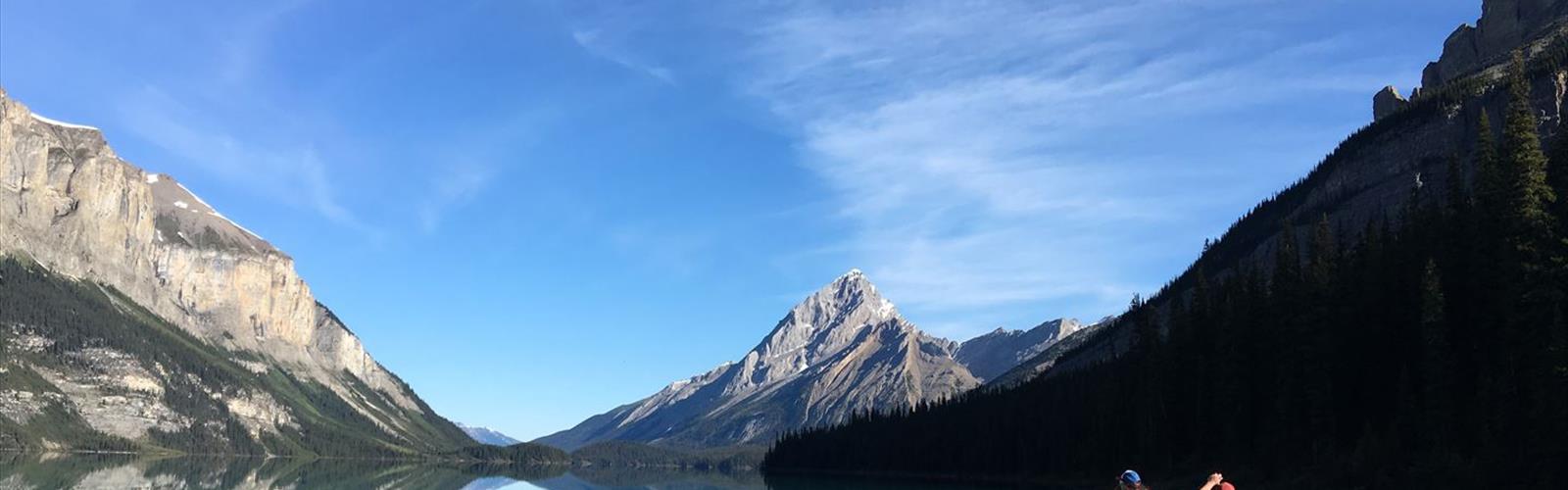
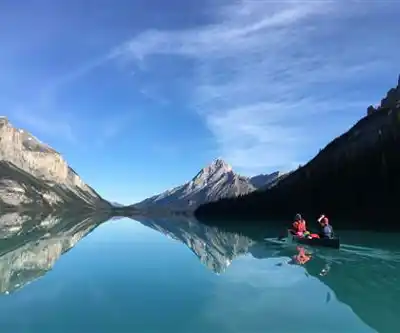
Mount Brazeau stands as Alberta's eleventh-highest peak at 2,858 metres (9,380 feet), rising above the upper Coronet Creek Valley in Jasper National Park. West of the Coronet Glacier and south of Maligne Lake, this is a serious mountain objective — one that demands real mountaineering experience, solid fitness, and careful planning before you ever leave the trailhead.
History and Naming
The mountain carries a layered history. Arthur P. Coleman named the peak in 1902 after Joseph Edward Brazeau, who served as a translator for the Palliser Expedition — a recognition of the critical role Indigenous knowledge played in early exploration of the Rockies. The first recorded ascent came in 1898 when J. Norman Collie and his party reached the summit, placing Mount Brazeau among the early milestones of Canadian mountaineering.
Geology and Terrain
Mount Brazeau is a textbook example of the forces that built the Canadian Rockies. Its sedimentary layers were laid down in shallow marine environments during the Precambrian to Jurassic periods, then thrust eastward and upward during the Laramide orogeny — the same tectonic event responsible for the entire range. The result is the dramatic vertical relief you see today.
The summit formation is primarily quartzite, a hard and durable rock that creates steep faces, sharp ridges, and — for those who make it that far — solid holds. The lower slopes transition through limestone and shale, which behave differently underfoot: expect looser rock and terrain that requires more attention. These distinct rock zones aren't just geological curiosities; they directly affect how you move through the mountain and what techniques you'll need at different elevations.
The broader terrain follows a classic alpine progression. From the valley bottom, you move through subalpine forest, then open alpine meadows, then exposed rock and glacier-carved ridges. The proximity to Coronet Glacier means snow and ice can be present well into summer, and conditions on the upper mountain shift quickly with the weather.
Access and Approach
Mount Brazeau sits deep in Jasper National Park's backcountry. The primary access begins from Highway 16, which runs through the Athabasca River valley. From there, you're committing to a backcountry approach — this is not a day trip for most parties. The upper Coronet Creek Valley provides the most direct line to the mountain's base, but the approach involves stream crossings, loose rock sections, and navigation through terrain where trail markers can be sparse or absent.
An approach from the north via the Icefields Parkway is also possible, though it adds distance and complexity to the route planning. Whichever way you come in, budget time and logistics accordingly. Multi-day itineraries are the norm for parties attempting the summit, and backcountry camping permits are required within Jasper National Park.
The Climb
With 3,500 metres of elevation gain over 11.2 kilometres and an estimated time of 7 hours 30 minutes, Mount Brazeau is rated Hard — and that rating is earned. The sustained elevation gain from valley approaches is relentless, and the mountain's exposed position makes it particularly vulnerable to fast-moving weather systems. Conditions can deteriorate rapidly at this altitude, and there's little shelter once you're on the upper mountain.
Depending on your chosen route and the time of year, glacier travel may be part of the equation. The proximity to Coronet Glacier means crevasse awareness and appropriate glacier equipment are worth considering seriously, not treating as optional. Snow bridges and ice conditions vary significantly by season, and what looks straightforward in late summer can be a different proposition in June or early July.
The quartzite summit block offers good rock quality for the final climbing sections, which is a welcome change after the looser lower terrain. That said, route-finding through the limestone and shale zones below requires patience and experience — this is not a mountain where you can simply follow a well-worn path to the top.
What to Expect on the Mountain
From the upper reaches of Mount Brazeau, the views extend across the upper Athabasca River drainage and out to major peaks throughout the region. The scale of the Jasper backcountry becomes immediately apparent — you're looking at one of the largest protected mountain wilderness areas in North America, and the summit puts you squarely in the middle of it.
The mountain's position south of Maligne Lake is worth noting for context. Maligne Lake draws significant visitor traffic, but Mount Brazeau exists in an entirely different world — remote, demanding, and far removed from the crowds. That contrast is part of what makes it a meaningful objective for experienced mountaineers looking for something beyond the accessible peaks.
Anyone heading to Mount Brazeau should be comfortable with backcountry navigation, self-rescue, and managing rapidly changing alpine conditions. Carry the ten essentials, file a trip plan, and check in with Jasper National Park staff before heading out — the park's backcountry rangers are a valuable resource for current conditions and permit requirements.
The Essential Hiking Checklist
Everything you need for your next hike. Bilingual, printable, 1 page.
Get your free hiking checklistRecommended gear for this trail
As an Amazon Associate I earn from qualifying purchases.


Ready to go?
Everything you need to know before you goStarting Point
The mount brazeau is located in Alberta. To get to the start of the trails, take Highway 40 to the Brazeau Dam. Park at the dam and walk across the dam to the trailhead.
When?
How much?
As an Amazon Associate I earn from qualifying purchases.
Affiliate links — LGPO may earn a commission at no extra cost to you.
- Hiking shoes Essential
- → Salomon Elixir Tour Mid WP · 203.38 $
- Layered clothing Essential
- Rain jacket Essential
- Trekking poles
- → Black Diamond Trail Ergo Cork · 69.99 $
- Headlamp
- → Petzl Actik Core 625 · 103.95 $
FAQ - Frequently asked questions
Everything you need to knowSimilar hikes nearby
Discover other trails you might enjoy
Fossil Mountain
Canadian Rockies

Snake Indian Mountain
Canadian Rockies
Mushroom Peak
Canadian Rockies
Mount Woolley
Canadian Rockies
Stutfield Peak
Canadian Rockies
Mount Sarbach
Canadian Rockies
Hiking near Jasper
82 trails to explore ~61 km away
We work hard to provide the most up-to-date and error-free data possible. If something seems incorrect, let us know! Your contribution helps the whole community.
Hikers' opinions
Be the first to review!
No hiker has shared their experience yet. Share your impressions and help other hikers!