

Ready to explore Cedar Falls? Here's everything you need to know before you go!
Discover the trail
Trail description
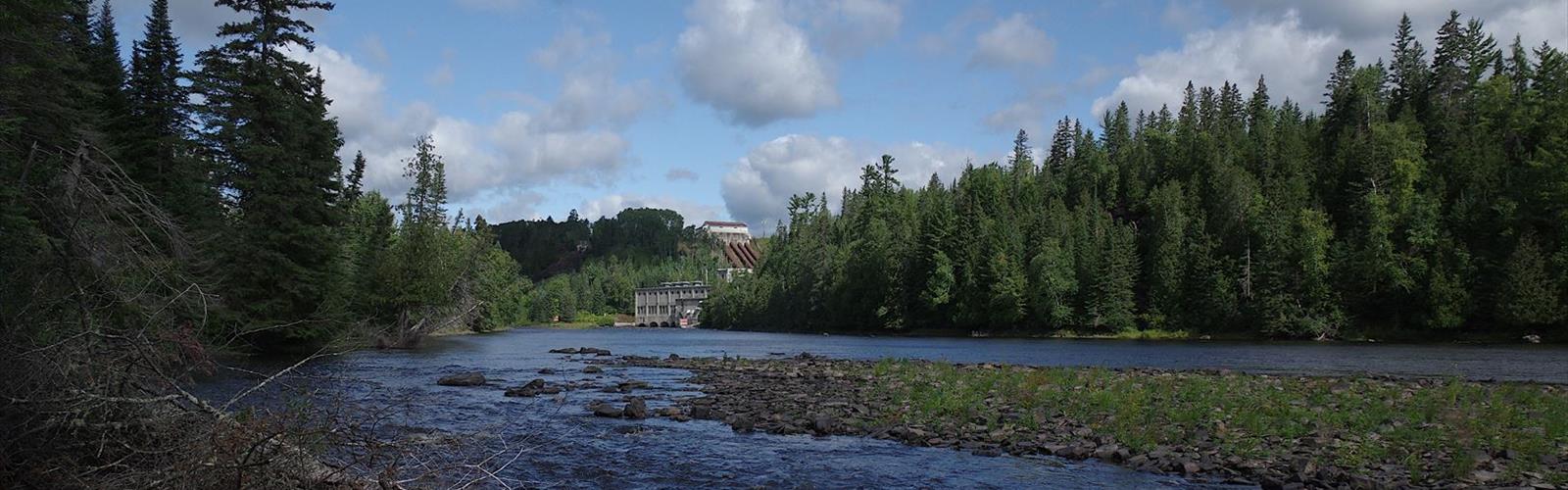
Cedar Falls is a natural waterfall destination tucked into the forests of Northeastern Ontario. It's the kind of place that rewards you the moment you step out of the car — the sound of moving water carries through the trees well before you actually reach the falls, building anticipation as you walk the trail in.
The Trail
The hike to Cedar Falls is approachable for most people. With an estimated time of about 1 hour and 15 minutes and an elevation gain of 150 metres, it offers just enough of a workout to feel satisfying without being punishing. The terrain moves through a mixed forest dominated by cedar, which gives the area its name and its character — the canopy is dense, the air smells clean, and the ground stays shaded even on warm days.
The path is well-defined and maintained, making it a solid choice whether you're introducing someone to hiking for the first time or just looking for a relaxed outing that still gets your legs moving. That said, the elevation change means you'll feel it on the way up, so wear footwear with decent grip, especially if the ground is wet.
Cedar Falls Itself
The falls are the clear highlight. Water drops over a ledge of rugged rock into a pool below, and the effect is genuinely impressive — not just a trickle, but a proper cascade with presence and sound. The best conditions are typically after significant rainfall, when the flow is at its strongest and the falls are most photogenic. The pool at the base is a natural gathering spot, and it's easy to spend time here just watching the water and listening.
The surrounding rock and forest frame the falls well, making this a rewarding spot for photography. Early morning visits tend to offer softer light and fewer people on the trail.
Wildlife and Forest
The cedar forest along the trail supports a variety of local wildlife. Deer are spotted here with some regularity, and the birdlife is active — you'll likely hear more than you see, but keep your eyes up in the canopy and along the water's edge. The mix of mature trees, understory growth, and moving water creates good habitat, so it's worth slowing down and paying attention as you walk.
Visiting Through the Seasons
Cedar Falls holds up well across all four seasons, each bringing a different version of the same place. Spring and early summer bring the highest water flow and the most vivid green in the forest. Late summer is quieter and drier. Autumn transforms the surrounding trees into a display of orange, red, and gold that frames the falls beautifully. In winter, the falls can partially or fully freeze, creating ice formations along the rock face that are striking in their own right — just be aware that icy conditions on the trail require extra caution and appropriate footwear.
Getting There and What to Bring
Cedar Falls is accessible by car from communities in Northeastern Ontario, with parking available at the trailhead. Before heading out, pack water, a snack, and layers — conditions in the forest can shift, and it's always better to have more than you need. A basic trail map is worth having, particularly if you're unfamiliar with the area.
- Estimated time: 1 hour 15 minutes
- Elevation gain: 150 metres
- Best after: Rainfall, for peak water flow
- Footwear: Hiking boots or trail shoes with grip
- Seasons: Accessible year-round
Cedar Falls is one of those destinations in Northeastern Ontario that doesn't need much hype — the place speaks for itself once you're standing in front of the falls.
The Essential Hiking Checklist
Everything you need for your next hike. Bilingual, printable, 1 page.
Get your free hiking checklistRecommended gear for this trail
As an Amazon Associate I earn from qualifying purchases.


Ready to go?
Everything you need to know before you goStarting Point
The cedar falls trails are located in the cedar falls Conservation Area, which is about an hour north of Toronto. To get there, take Highway 400 to Barrie and then Highway 11 to Orillia. From Orillia, take Highway 12 to Coldwater and then Highway 5 to the cedar falls Conservation Area.
When?
How much?
As an Amazon Associate I earn from qualifying purchases.
Affiliate links — LGPO may earn a commission at no extra cost to you.
- Hiking shoes Essential
- → Salomon Elixir Tour Mid WP · 203.38 $
- Layered clothing Essential
- Rain jacket Essential
- Trekking poles
- → Black Diamond Trail Ergo Cork · 69.99 $
- Headlamp
- → Petzl Actik Core 625 · 103.95 $
FAQ - Frequently asked questions
Everything you need to knowSimilar hikes nearby
Discover other trails you might enjoy

Wolf Lake Mountain, Ontario
Northeastern Ontario
Daisy Lake
Northeastern Ontario
Mount Ararat
Northeastern Ontario
Ghost Range
Northeastern Ontario
The Crack Killarney
Northeastern Ontario
Halfway Lake Provincial Park
Northeastern Ontario
Hiking near Winnipeg
17 trails to explore ~572 km away
We work hard to provide the most up-to-date and error-free data possible. If something seems incorrect, let us know! Your contribution helps the whole community.
Hikers' opinions
Be the first to review!
No hiker has shared their experience yet. Share your impressions and help other hikers!