
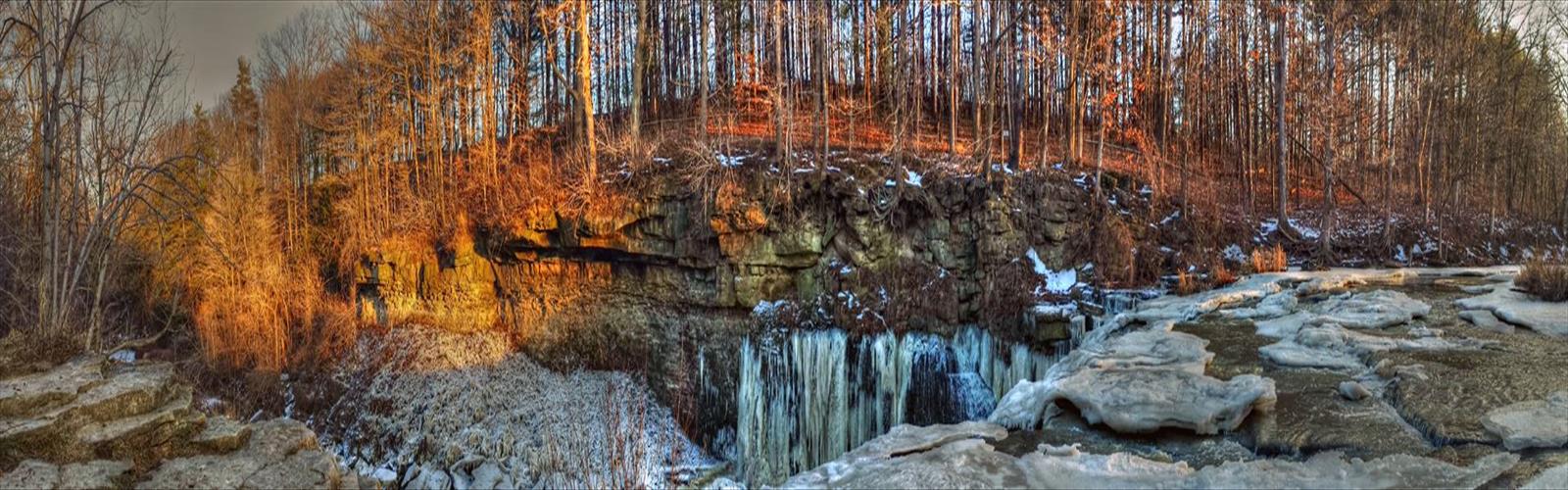

Ready to explore Ball's Falls Conservation Area? Here's everything you need to know before you go!
Discover the trail
Trail description
A hike defined by its setting and on-the-ground character
Ball's Falls Conservation Area sits in the heart of the Niagara Peninsula, tucked into a limestone gorge carved by Twenty Mile Creek. What makes this place stand out isn't just the waterfalls — though they're genuinely impressive — it's the layering of natural and historical character that gives the whole area a distinct sense of place. You're walking through a landscape that has been shaped by both geology and human history, and both are visible at every turn.
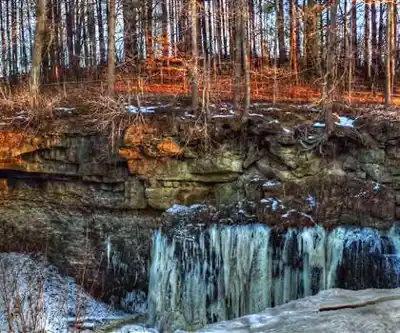
The conservation area is managed by the Niagara Peninsula Conservation Authority and protects a stretch of the Niagara Escarpment, a UNESCO World Biosphere Reserve. The gorge itself is the defining feature: steep wooded walls, exposed limestone, and the creek cutting through the bottom. Two waterfalls anchor the experience — the Upper Falls and the Lower Falls — and both are accessible from the trail network. The Lower Falls, in particular, is a dramatic drop into a tight canyon that rewards the short walk to reach it.
Beyond the natural features, Ball's Falls preserves a 19th-century mill hamlet. Stone ruins, heritage buildings, and interpretive signage are woven into the trail corridor, giving the hike a texture you don't find at most conservation areas. It's not a museum visit bolted onto a nature walk — the two elements genuinely coexist along the path.
How the outing typically unfolds on the trail
The trail system at Ball's Falls is compact and well-connected. Most visitors follow a loop that takes in the gorge, both waterfalls, and the heritage site. The paths are clearly marked and the distances are manageable, making it easy to explore the full area without committing to a long day out.
From the main parking area, the trail drops toward the gorge fairly quickly. The elevation change — about 69 metres — is concentrated in a few key spots, particularly where the path descends to the creek level near the falls. These sections involve some steps and uneven footing on exposed rock and roots, but nothing that requires technical skill. The rest of the route moves through mixed forest and open areas near the heritage buildings at a much gentler grade.
The Upper Falls is typically the first major stop. It's a wide, curtain-style drop that's especially striking after rain or during spring runoff. The Lower Falls comes later in the loop and requires a steeper descent into the gorge — this is the more dramatic of the two, with the water funneling into a narrow canyon below. Both viewpoints have enough space to stop, take it in, and move on without feeling rushed.
The heritage area near the trailhead includes restored and preserved structures from the Ball family's 19th-century settlement, including a grist mill, a lime kiln, and several other buildings. Interpretive panels provide context without overwhelming the experience. It's worth slowing down here rather than treating it as a pass-through.
Effort, rhythm, and energy management
The total elevation change of 69 metres is modest, but it's not evenly distributed. The descents into the gorge are the most physically demanding parts of the hike — short bursts of steeper terrain with some scrambling over roots and rock. Anyone with knee concerns should take these sections slowly, especially on the way back up. Trekking poles can help on wet days when the limestone gets slippery.
Outside of those gorge sections, the pace is relaxed. The trail doesn't demand sustained effort, and there are natural stopping points throughout — at the falls, near the heritage buildings, and along the creek. It's the kind of hike where the terrain manages your rhythm for you rather than requiring you to push through.
Who this hike is best suited for
Ball's Falls works well for a wide range of hikers. Families with older children handle it comfortably, and the heritage site adds an element of interest that keeps non-hikers engaged. The gorge sections are not suitable for strollers, and younger children will need a hand on the steeper descents.
For experienced hikers, this isn't a destination for physical challenge — it's a destination for scenery and character. The combination of the Escarpment gorge, two waterfalls, and a preserved 19th-century settlement is genuinely uncommon, and the area rewards visitors who take their time rather than moving fast.
Photographers, history enthusiasts, and anyone interested in the Niagara Escarpment ecosystem will find plenty to engage with here beyond the basic trail experience.
Preparation mindset and on-trail considerations
Footwear matters at Ball's Falls. Trail runners or hiking boots with grip are the right call — the limestone near the falls and the root-covered sections of the gorge trail can be slippery, particularly in spring or after rain. Sandals and flat-soled shoes are a poor choice for the gorge descent.
The conservation area has washroom facilities and a parking lot at the main entrance. An entrance fee applies; check with the Niagara Peninsula Conservation Authority for current rates and seasonal hours before heading out, as hours vary by season and the site hosts special events — particularly in the fall — that can affect access and parking availability.
The Niagara Escarpment environment here is sensitive, and the heritage structures are protected. Staying on marked trails and keeping away from the ruins is both a safety consideration and a matter of preserving the site for future visitors.
Cell service in the gorge can be limited, so downloading an offline map before you go is a practical step, especially if you're visiting for the first time.
The Essential Hiking Checklist
Everything you need for your next hike. Bilingual, printable, 1 page.
Get your free hiking checklistRecommended gear for this trail
As an Amazon Associate I earn from qualifying purchases.


Ready to go?
Everything you need to know before you goStarting Point
The ball's falls conservation area is located in Lincoln, Ontario. To get to the start of the trails, take Highway 55 to the Ninth Line exit. Turn left onto Ninth Line and drive for 2.5 km. The entrance to the conservation area will be on your right.
The ball's falls conservation area is located in Lincoln, Ontario. To get to the start of the trails, take Highway 55 to the Ninth Line exit. Turn left onto Ninth Line and drive for 2.5 km. The entrance to the conservation area will be on your right.
When?
How much?
As an Amazon Associate I earn from qualifying purchases.
Affiliate links — LGPO may earn a commission at no extra cost to you.
- Hiking shoes Essential
- → Salomon Elixir Tour Mid WP · 203.38 $
- Layered clothing Essential
- Rain jacket Essential
- Trekking poles
- → Black Diamond Trail Ergo Cork · 69.99 $
- Headlamp
- → Petzl Actik Core 625 · 103.95 $
FAQ - Frequently asked questions
Everything you need to knowSimilar hikes nearby
Discover other trails you might enjoy
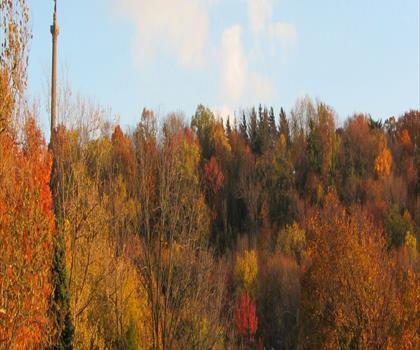
Niagara River Recreation Trail
Niagara Canada
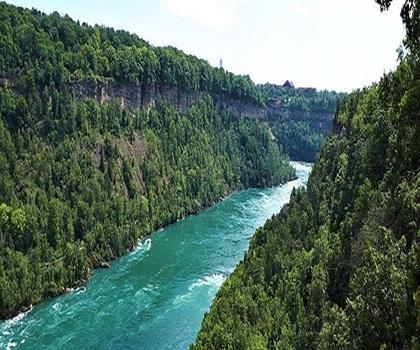
Niagara Glen Nature Centre
Niagara Canada

Woodend Conservation Area
Niagara Canada
Lakeside Park Beach
Niagara Canada
Short Hills Provincial Park
Niagara Canada
Firemen's Park
Niagara Canada
Hiking near Niagara Falls
128 trails to explore ~25 km away
We work hard to provide the most up-to-date and error-free data possible. If something seems incorrect, let us know! Your contribution helps the whole community.
Hikers' opinions
Be the first to review!
No hiker has shared their experience yet. Share your impressions and help other hikers!