

Ready to explore Freedom Trail? Here's everything you need to know before you go!
Discover the trail
Trail description
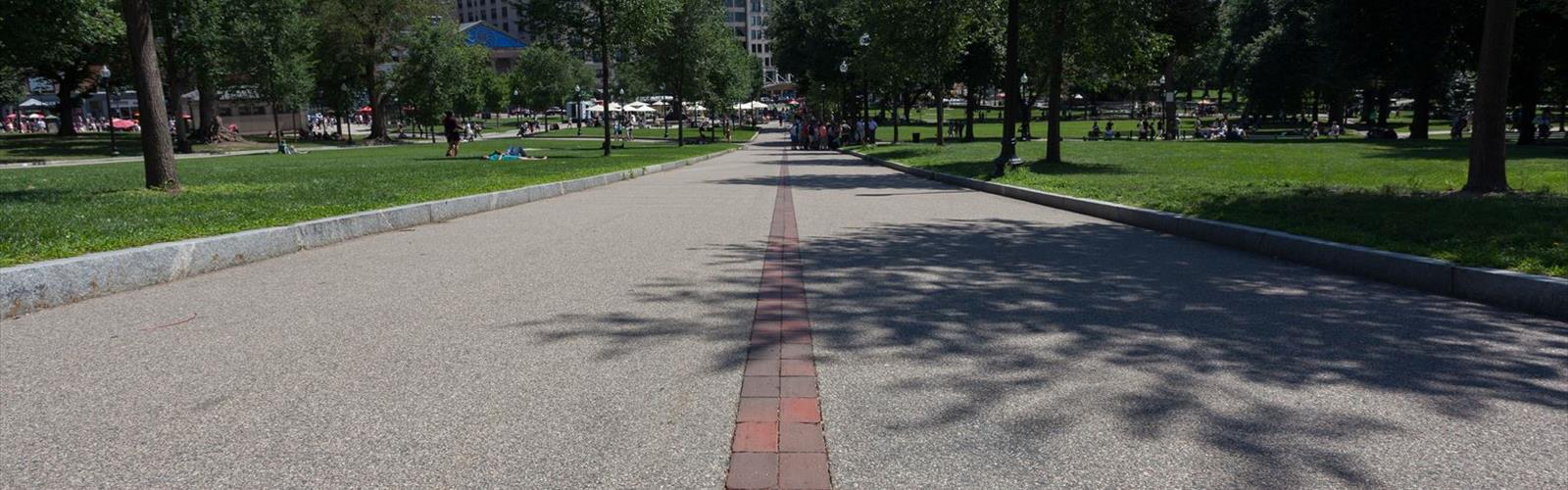
The Freedom Trail offers one of America's most accessible introductions to Revolutionary War history, winding 4 kilometers through downtown Boston and connecting 16 locations that shaped the birth of the United States. This red-brick marked path takes you from Boston Common through the heart of the city to the USS Constitution in Charlestown, creating a walking timeline of American independence that combines urban exploration with historical discovery.
What makes this trail particularly appealing for outdoor enthusiasts is how it seamlessly blends city walking with meaningful terrain variation. You'll navigate cobblestone streets, climb gentle hills through historic neighborhoods, and cross the Charles River via the Charlestown Bridge. The route includes 30 meters of elevation gain as you move between Boston's varied neighborhoods, from the flat Common area up through Beacon Hill's steep brick sidewalks and down to the harbor districts.
The trail begins at Boston Common, America's oldest public park, where you can orient yourself at the visitor information booth. From there, the brick line leads you past the Massachusetts State House with its distinctive gold dome, then down through the narrow streets of downtown Boston. You'll encounter diverse walking surfaces: smooth sidewalks along busy streets, uneven brick walkways through historic districts, and occasional stone stairs as you navigate the city's natural topography built on three original hills.
Historic Sites and Landmarks
The 16 stops along the Freedom Trail range from simple ground markers to major historic buildings, each offering a different piece of the Revolutionary puzzle. You'll pass through three colonial-era graveyards where notable figures from the Revolution are buried, including the Granary Burying Ground where Samuel Adams and John Hancock rest. The trail includes several significant churches, most notably the Old North Church where Paul Revere received his famous "one if by land, two if by sea" signal.
Three sites along the route charge admission fees: the Old South Meeting House, where the Boston Tea Party was organized; the Old State House, site of the Boston Massacre; and the Paul Revere House, the oldest building in downtown Boston. Most other locations are free to visit or operate on suggested donations, making this an economical way to explore Boston's history while getting substantial exercise.
The trail concludes in Charlestown with the Bunker Hill Monument and the USS Constitution, known as "Old Ironsides." This final section involves crossing the Charlestown Bridge, which provides excellent views of Boston Harbor and the city skyline. The USS Constitution, still a commissioned U.S. Navy ship, offers free tours when open to the public and represents the trail's most dramatic endpoint.
Navigation and Trail Experience
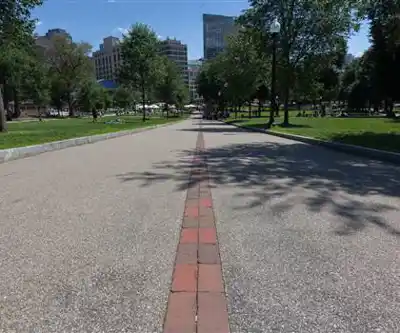
Following the Freedom Trail requires no special navigation skills, making it perfect for families and casual walkers. The route is marked primarily with a red brick line embedded in sidewalks and streets, supplemented by bronze medallions and painted lines where bricks aren't practical. At each historic site, you'll find explanatory markers providing context about the location's significance to American history.
The National Park Service operates a visitor center on the first floor of Faneuil Hall, roughly halfway through the trail. Here you can pick up free maps, join guided tours, or purchase books about Boston and American history. The center serves as an excellent rest stop and information hub, particularly useful if you're breaking the trail into segments or need to use facilities.
The urban walking experience varies significantly by neighborhood. In the Common and State House area, you'll walk on wide, well-maintained sidewalks. The downtown section involves more crowded streets and requires attention to traffic signals. The North End portion features narrow European-style streets with brick and cobblestone surfaces that can be slippery when wet. The final approach to Charlestown includes the longest continuous walking segment with harbor views.
Planning Your Visit
Most people complete the full Freedom Trail in approximately 2 hours and 30 minutes of walking time, though this can extend significantly based on how much time you spend at each site. History enthusiasts often take 4-5 hours or spread the experience across multiple days. The trail works well as either a continuous walk or in segments, with numerous subway stops and parking areas along the route providing flexibility for different fitness levels.
The urban nature of this trail means it's accessible year-round, though Boston's winters can make walking conditions challenging due to ice and snow accumulation on brick surfaces. Spring through fall offers the most comfortable weather for extended walking. Summer brings crowds, particularly around popular sites like Faneuil Hall and the North End, but also provides the longest hours for touring historic buildings.
Since you'll be walking through active city neighborhoods on varied surfaces, wear comfortable walking shoes with good grip for cobblestones, brick sidewalks, and occasional stairs. The trail is entirely walkable in regular street clothes, making it accessible for visitors who aren't equipped for traditional hiking. Consider bringing water, as public fountains are limited along the route.
Beyond the Official Route
While the official Freedom Trail provides an excellent overview of Revolutionary Boston, some historians note that the designated route omits certain significant locations, such as the actual site of the Boston Tea Party and the location of the Liberty Tree, an important gathering place for colonial protesters. These sites, while not marked on the trail, are located near the official route for those interested in a more complete historical picture.
The trail connects well with other Boston attractions and walking routes. From the North End section, you can easily explore additional Italian-American cultural sites and restaurants. The downtown portion intersects with Boston's shopping and business districts, while the Charlestown section offers access to additional harbor activities and dining options.
For Scout groups, the Freedom Trail qualifies for the Boy Scouts of America Historic Trails Award, adding an educational component for youth visitors. The combination of physical activity, historical education, and urban exploration makes this trail particularly valuable for school groups and family outings seeking both exercise and learning.
Originally conceived by journalist William Schofield in 1951 and implemented by Mayor John Hynes, the Freedom Trail has grown from serving 40,000 annual visitors in 1953 to becoming one of Boston's most popular attractions. The trail is overseen by the City of Boston's Freedom Trail Commission and supported through grants from nonprofits, foundations, private philanthropy, and Boston National Historical Park, ensuring its continued maintenance and historical accuracy for future generations of walkers.
The Essential Hiking Checklist
Everything you need for your next hike. Bilingual, printable, 1 page.
Get your free hiking checklistRecommended gear for this trail
As an Amazon Associate I earn from qualifying purchases.


Ready to go?
Everything you need to know before you goStarting Point
The freedom trail is a 2.5 mile walking trail in downtown Boston, Massachusetts. The start of the trail is at the Boston Common, which is located at the intersection of Park Street and Tremont Street.
When?
How much?
As an Amazon Associate I earn from qualifying purchases.
Affiliate links — LGPO may earn a commission at no extra cost to you.
- Hiking shoes Essential
- → Salomon Elixir Tour Mid WP · 203.38 $
- Layered clothing Essential
- Rain jacket Essential
- Trekking poles
- → Black Diamond Trail Ergo Cork · 69.99 $
- Headlamp
- → Petzl Actik Core 625 · 103.95 $
FAQ - Frequently asked questions
Everything you need to knowSimilar hikes nearby
Discover other trails you might enjoy
Mount Auburn Cemetery
Greater Boston

Piers Park
Greater Boston

Start of Minuteman Bike Path
Greater Boston
Chestnut Park at Cleveland Circle
Greater Boston
Elm Bank
Greater Boston

Pond Meadow Park
Greater Boston
Hiking near Boston
0 trails to explore ~1 km away
We work hard to provide the most up-to-date and error-free data possible. If something seems incorrect, let us know! Your contribution helps the whole community.
Hikers' opinions
Be the first to review!
No hiker has shared their experience yet. Share your impressions and help other hikers!