

Ready to explore Halibut Point State Park? Here's everything you need to know before you go!
Discover the trail

Trail description
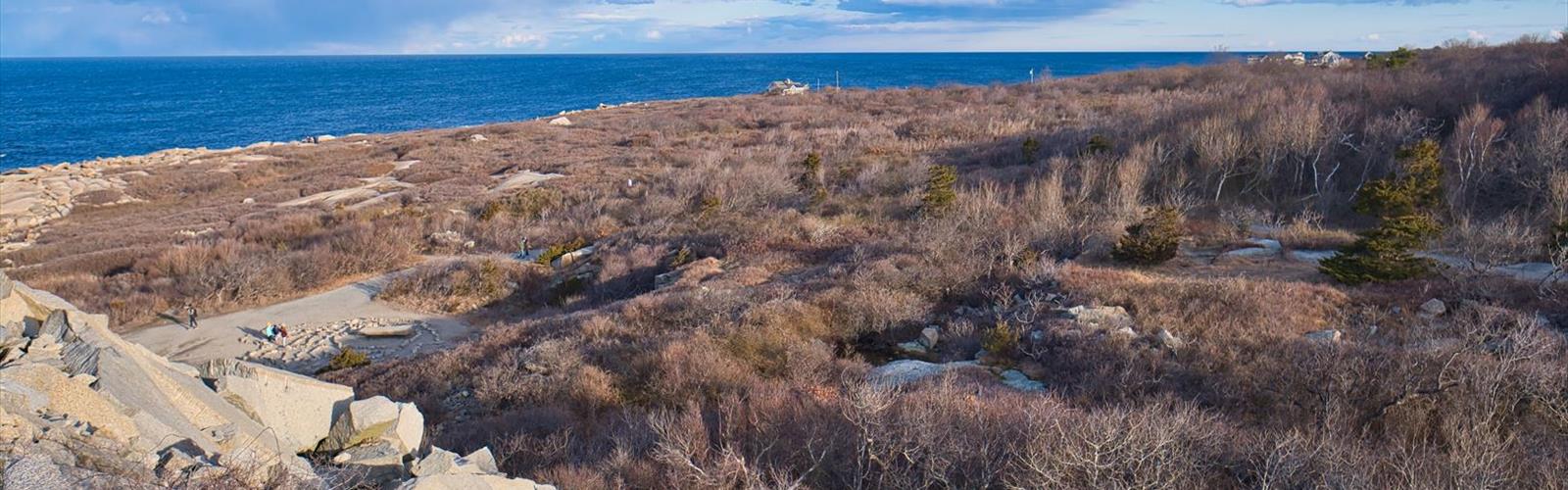
Halibut Point State Park sits on the rugged tip of Cape Ann in Rockport, Massachusetts, where 55 acres of granite coastline meet the Atlantic Ocean in dramatic fashion. This compact park packs remarkable diversity into its relatively small footprint—from towering sea cliffs and a flooded granite quarry to coastal woodlands and some of the North Shore's most spectacular ocean views.
The park's most striking feature is its massive granite quarry, carved deep into the bedrock during the early 20th century. What was once a bustling industrial site has transformed into a peaceful, water-filled basin surrounded by sheer granite walls that rise 60 feet above the dark water. The quarry's still surface reflects the sky and surrounding cliffs, creating an almost otherworldly atmosphere that photographers find irresistible.
Trail System and Hiking Experience
The well-maintained trail network accommodates hikers of all abilities, with the Quarry Loop Trail serving as the park's centerpiece. This popular route winds around the flooded quarry's perimeter, offering constantly changing perspectives of both the granite basin and the ocean beyond. The trail surface varies from packed earth to granite slabs, with some sections following the quarry's rim where the views are most dramatic.
The hiking here feels more like exploration than traditional trail walking. You'll find yourself moving from one granite outcrop to another, each offering a different vantage point of the quarry or coastline. The terrain invites you to take your time—there's always another angle to photograph or a new section of coastline to investigate. The minimal elevation gain makes this accessible to families, but the varied terrain keeps it interesting for more experienced hikers who enjoy scrambling over rock formations.
Beyond the main loop, shorter trails branch off toward the coastline and through the park's wooded sections. These paths lead you through classic New England coastal landscape—weathered granite outcroppings, hardy shrubs and grasses adapted to salt spray, and pockets of mixed forest that provide welcome shelter from ocean winds. The transitions between these different environments happen quickly, giving you a sense of discovering multiple landscapes within a single hike.
Coastal Features and Terrain
The coastline itself presents a stark contrast to the sandy beaches found elsewhere on Cape Ann. Here, massive granite slabs meet the Atlantic in a series of tide pools, crevices, and wave-cut platforms. During storms, waves crash against these rocks with tremendous force, sending spray high into the air and creating a spectacle that can be safely observed from the elevated viewing areas.
On calm days, the rocky shoreline becomes an entirely different place to explore. You can carefully make your way down to the water's edge to investigate tide pools and observe the intricate patterns the ocean has carved into the granite over thousands of years. The rock formations create natural benches and viewing platforms where you can sit and watch the horizon, often spotting boats heading to and from nearby harbors.
The granite's resistance to erosion has created numerous protected pockets and crevices where marine life thrives despite the ocean's constant assault. These features make the coastline endlessly fascinating to explore, with new details revealing themselves as the light changes throughout the day.
Wildlife and Birdwatching
The park's position on the Atlantic flyway makes it exceptional for birdwatching, particularly during spring and fall migrations. Seabirds are the main attraction—cormorants, gulls, and terns are common sights, while lucky visitors might spot peregrine falcons hunting along the cliffs. The varied habitats within the park support different bird communities: woodland species like chickadees and nuthatches in the forested areas, and specialized coastal birds along the shoreline.
The granite quarry itself has become an unexpected wildlife habitat. The deep, clear water supports fish populations that attract diving birds, while the quarry walls provide nesting sites for various species. The surrounding vegetation has gradually reclaimed much of the former industrial site, creating a unique ecosystem where nature and human history intersect.
Marine life thrives in the tide pools and rocky crevices along the coast. Low tide reveals a miniature underwater world of sea anemones, hermit crabs, periwinkles, and various seaweeds adapted to the harsh conditions of the intertidal zone. Timing your visit with the tides can dramatically change what you'll discover along the water's edge.
Historical Context
The park's visitor center provides essential context for understanding what you're seeing on the trails. The granite quarrying operation that created the park's most distinctive feature was part of a larger industry that helped build many of America's great cities. The high-quality granite extracted here found its way into buildings, monuments, and infrastructure projects throughout New England and beyond.
Evidence of the quarrying era remains visible throughout the park, adding a fascinating layer to your hiking experience. Massive granite blocks, some partially cut and abandoned when operations ceased, lie scattered around the quarry rim. Tool marks are still visible on rock faces, and careful observers can spot the holes drilled for explosives and the channels cut to guide the stone's fracture. These industrial remnants, now softened by decades of weathering and vegetation growth, tell the story of the intensive human activity that once dominated this landscape.
Planning Your Visit
Plan to spend 1-2 hours exploring the park's main features, though photographers and nature enthusiasts often find themselves staying much longer. The compact size means you can easily see everything the park offers in a single visit, but the dramatic lighting changes throughout the day make return visits worthwhile. Early morning and late afternoon provide the best light for photography, while midday offers the clearest views of the ocean horizon.
The granite surfaces can be slippery when wet, and the quarry's edges require caution—the water is deep and the walls are steep. Ocean conditions along the coast can change rapidly, so maintain a safe distance from the water during rough weather. The exposed location means wind and weather can be more intense than in sheltered inland areas, so dress in layers and be prepared for changing conditions.
Several scenic picnic areas overlook the ocean, providing perfect spots to rest and take in the views. These areas offer some protection from the wind while maintaining the spectacular coastal vistas that make Halibut Point special. The combination of dramatic scenery, accessible trails, and rich natural and cultural history makes this small park a standout destination on Massachusetts' North Shore.
The Essential Hiking Checklist
Everything you need for your next hike. Bilingual, printable, 1 page.
Get your free hiking checklistRecommended gear for this trail
As an Amazon Associate I earn from qualifying purchases.


Ready to go?
Everything you need to know before you goStarting Point
The halibut point state park is located in Massachusetts. To get to the start of the trails, take exit 13 from Route 128 and head south on Route 127. The park entrance will be on your right.
When?
How much?
As an Amazon Associate I earn from qualifying purchases.
Affiliate links — LGPO may earn a commission at no extra cost to you.
- Hiking shoes Essential
- → Salomon Elixir Tour Mid WP · 203.38 $
- Layered clothing Essential
- Rain jacket Essential
- Trekking poles
- → Black Diamond Trail Ergo Cork · 69.99 $
- Headlamp
- → Petzl Actik Core 625 · 103.95 $
FAQ - Frequently asked questions
Everything you need to knowSimilar hikes nearby
Discover other trails you might enjoy


Hiking near Portsmouth
0 trails to explore ~44 km away
We work hard to provide the most up-to-date and error-free data possible. If something seems incorrect, let us know! Your contribution helps the whole community.
Hikers' opinions
Be the first to review!
No hiker has shared their experience yet. Share your impressions and help other hikers!