


Ready to explore Roosevelt Park? Here's everything you need to know before you go!
Discover the trail

Trail description
Roosevelt Park offers an accessible network of walking trails that wind through a mix of mature woodlands and open meadows in the heart of the city. This urban oasis provides a quick escape into nature without requiring a long drive to more remote hiking destinations. The park's trail system connects several distinct areas, each offering different terrain and scenery that changes dramatically with the seasons.
The main trail network consists of interconnected paths that allow hikers to customize their route length and difficulty. Wide, well-maintained paths make up the primary routes, while narrower footpaths branch off to more secluded areas of the park. The terrain varies from flat, paved sections perfect for casual walks to more challenging dirt trails that climb gentle hills and navigate around natural obstacles like fallen logs and seasonal creek beds.
Trail Network and Terrain
The park's trail system radiates out from a central hub near the main parking area, making navigation straightforward even for first-time visitors. The longest continuous route takes hikers through the park's most diverse landscapes, starting in dense hardwood forest where towering oaks and maples create a natural canopy overhead. This section feels surprisingly remote despite being surrounded by urban development.
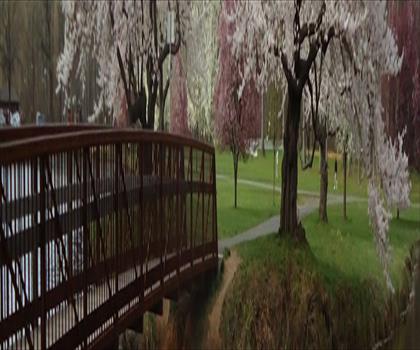
As the trail emerges from the forest, it opens onto rolling meadows where wildflowers bloom in spring and summer. These open areas provide excellent opportunities for wildlife viewing, particularly during early morning and late afternoon hours. The path then curves back toward wooded areas, passing through groves of younger trees and crossing several small wooden bridges over seasonal streams.
The park's topography includes gentle hills that provide modest elevation changes without requiring technical hiking skills. These rises offer pleasant views over the surrounding landscape and create natural viewpoints where hikers can pause to rest and take in the scenery. The highest points in the park provide glimpses of the city skyline through breaks in the tree cover.
What makes Roosevelt Park particularly appealing is how the trail system accommodates different hiking preferences within a compact area. You can stick to the main loop for an easy stroll or venture onto the connecting side trails that add distance and variety. The network design means you're never too far from the parking area, making it perfect for testing your energy level or cutting a hike short if needed.
Seasonal Highlights
Roosevelt Park transforms throughout the year, offering distinct experiences in each season. Spring brings vibrant wildflower displays in the meadow areas, with trilliums and wild violets carpeting the forest floor. The park's many deciduous trees create a spectacular fall color show, with peak foliage typically occurring in mid to late October.
Winter hiking reveals the park's underlying structure as bare branches expose distant views previously hidden by leaves. Snow-covered trails take on a peaceful quality, though hikers should be prepared for potentially icy conditions on paved sections. Summer offers the fullest canopy cover, providing welcome shade during hot weather, though the trails can become muddy after heavy rains.
Each season also brings different wildlife activity patterns. Spring migration brings new bird species through the park, while fall sees increased deer movement as they prepare for winter. Summer evenings often feature fireflies in the meadow areas, creating a magical atmosphere for late-day walks.
Wildlife and Natural Features
The park supports a surprising variety of urban wildlife that hikers encounter regularly along the trails. White-tailed deer are commonly spotted in the early morning hours, particularly in the meadow areas where they come to graze. The diverse bird population includes both year-round residents and seasonal migrants, making the park popular with birdwatchers who often carry binoculars along the trails.
Several small ponds and wetland areas within the park attract waterfowl and provide habitat for frogs and other amphibians. These water features also support the park's population of turtles, which can often be seen sunning themselves on logs during warmer months. The varied habitats create opportunities to observe different species within a single hike.
The park's mature trees include several notable specimens that serve as landmarks along the trails. Ancient oaks with massive trunks mark key trail junctions, while groves of towering pines create cathedral-like spaces that feel particularly serene. Interpretive signs along some routes help visitors identify common tree species and understand the local ecosystem.
The wetland areas deserve special attention from hikers interested in ecology. These spots showcase how urban parks can support complex ecosystems, with different plant communities thriving in the varying moisture levels. The seasonal streams that feed these areas create dynamic environments that change throughout the year.
Hiking Experience
Walking Roosevelt Park's trails feels like stepping into a different world despite the urban setting. The sound of traffic fades quickly once you're among the trees, replaced by birdsong and the rustle of leaves. The trail surfaces vary enough to keep things interesting—smooth pavement gives way to packed earth, then to softer forest floor covered in fallen leaves.
The elevation changes, while modest, add character to the hiking experience. You'll find yourself climbing gentle slopes that reward you with better views, then descending into quiet hollows where the atmosphere feels more intimate. The wooden bridges over streams create natural stopping points where you can listen to water flowing and watch for wildlife.
Navigation stays simple throughout the park thanks to clear sight lines and well-placed trail markers. The interconnected loop system means you can extend or shorten your route based on how you're feeling. This flexibility makes Roosevelt Park ideal for regular exercise routines where you might want different distances on different days.
Practical Information
Roosevelt Park welcomes visitors year-round with no entrance fees required. The main parking area provides ample space for cars, though it can fill up on pleasant weekend afternoons. Additional parking is available along nearby streets for overflow during busy periods.
Dogs are welcome throughout the park but must remain on leash at all times. The wide, well-maintained trails make this an excellent location for dog walking, and several waste stations are strategically placed along the main routes. Pet owners should be aware that the park's wildlife population means dogs may become excited by scents and sounds along the trails.
Families with children will find Roosevelt Park particularly accommodating. The variety of trail lengths allows parents to choose routes appropriate for different ages and energy levels. Shorter loops near the parking area work well for toddlers, while older children can handle the longer routes that explore the park's full extent. The relatively flat terrain means strollers can navigate most of the main trails, though the unpaved sections may be challenging for standard wheels.
Trail conditions vary seasonally, with spring mud being the primary concern for hikers. The park's drainage system handles most weather well, but low-lying areas can remain soggy for several days after heavy rains. Standard hiking footwear is adequate for most conditions, though waterproof boots are recommended during wet periods or after snow melts.
The park lacks facilities like restrooms or water fountains, so visitors should plan accordingly for longer visits. The urban setting means restaurants and convenience stores are readily available just outside the park boundaries. Several benches along the main trails provide rest spots, and a few picnic tables near the parking area offer space for post-hike meals.
Roosevelt Park's trail system provides an excellent introduction to hiking for beginners while offering enough variety to keep experienced hikers engaged. The combination of accessibility, diverse terrain, and urban convenience makes it a valuable resource for anyone seeking regular outdoor exercise or a quick nature break during busy schedules.
The Essential Hiking Checklist
Everything you need for your next hike. Bilingual, printable, 1 page.
Get your free hiking checklistRecommended gear for this trail
As an Amazon Associate I earn from qualifying purchases.


Ready to go?
Everything you need to know before you goStarting Point
To access the hiking trails, you can start at the main trailhead located at 151 Parsonage Road, Edison, NJ 08837. There is a parking lot available at this address for your convenience.
When?
How much?
As an Amazon Associate I earn from qualifying purchases.
Affiliate links — LGPO may earn a commission at no extra cost to you.
- Hiking shoes Essential
- → Salomon Elixir Tour Mid WP · 203.38 $
- Layered clothing Essential
- Rain jacket Essential
- Trekking poles
- → Black Diamond Trail Ergo Cork · 69.99 $
- Headlamp
- → Petzl Actik Core 625 · 103.95 $
FAQ - Frequently asked questions
Everything you need to knowSimilar hikes nearby
Discover other trails you might enjoy
Dorbrook Recreation Area
Central New Jersey
Thompson Park Monroe
Central New Jersey
Holmdel Park
Central New Jersey
Rosedale Park
Central New Jersey
Nomahegan Park
Central New Jersey

Hamilton Veterans Park
Central New Jersey
Hiking near Newark
0 trails to explore ~25 km away
We work hard to provide the most up-to-date and error-free data possible. If something seems incorrect, let us know! Your contribution helps the whole community.
Hikers' opinions
Be the first to review!
No hiker has shared their experience yet. Share your impressions and help other hikers!