

Ready to explore Morristown National Historical Park? Here's everything you need to know before you go!
Discover the trail
Trail description
Morristown National Historical Park delivers something genuinely rare in the New York metro area: a place where you can put in a solid full-day hike and come away feeling like you've covered real ground—historically and physically. Located about 30 miles west of Manhattan in Morris County, the park protects over 1,700 acres of rolling woodlands, meadows, and wetlands that once sheltered George Washington's Continental Army during the brutal winter of 1779–1780. That backstory isn't just a footnote here. It's woven into every mile of trail.
The full trail network stretches over 27 miles (43 kilometers), with elevation gain varying significantly by route. The most popular route, the Grand Loop Trail, is 7 miles long with 323 meters of elevation gain. Budget your time based on which trails you choose to hike—the park's layout makes it easy to customize your day depending on how much time you want to spend at historical sites along the way. Difficulty sits firmly in the easy category, which makes this a strong choice for families, casual hikers, or anyone who wants distance without technical challenge.
Jockey Hollow: The Core of the Experience
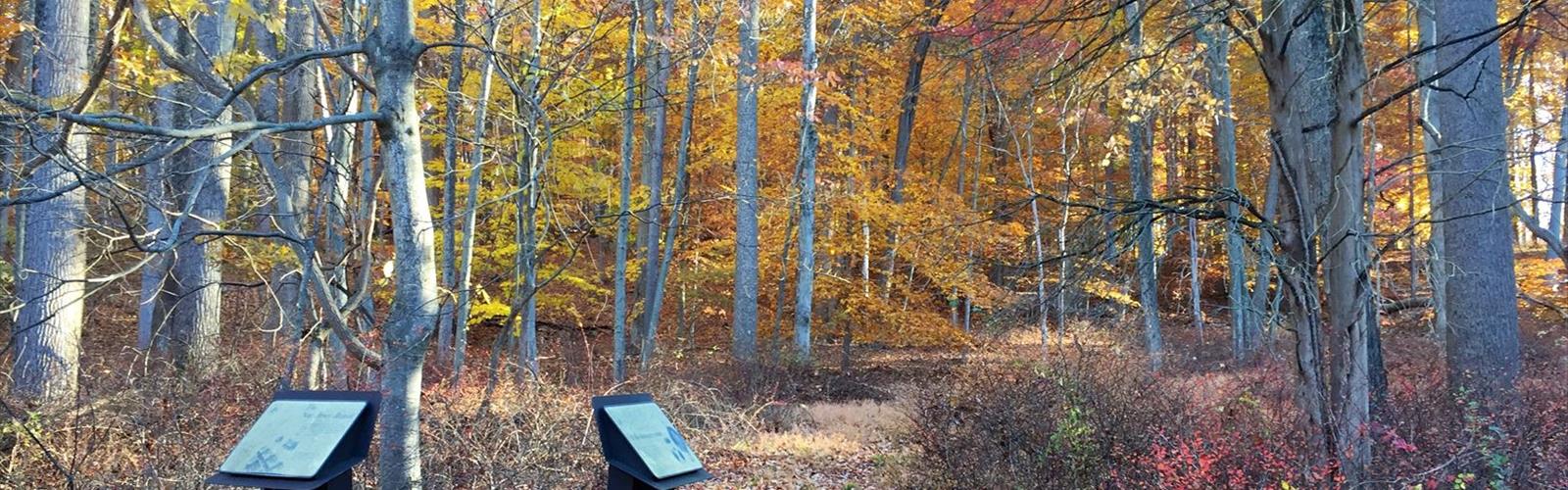
Jockey Hollow forms the heart of the park's trail system and the most historically charged section of the network. This is where Continental Army soldiers constructed over 1,000 log huts during that infamous winter encampment—one of the most difficult periods of the Revolutionary War. The trails here weave past reconstructed soldier huts set in the same hardwood forest where troops once foraged for firewood. Walking these paths, it's not hard to understand why the encampment was so brutal: the terrain is exposed in winter, the forest dense, and the hills relentless enough to make supply runs genuinely difficult.
The Grand Loop Trail and Patriots' Path are the go-to routes for a comprehensive tour of this area. Together they connect the major historical landmarks while keeping you immersed in woodland that feels surprisingly wild given the park's proximity to suburban New Jersey. These aren't manicured nature walks—the trails have character, with root-laced sections, seasonal mud, and enough variation in the forest understory to hold your attention.
Terrain and Trail Conditions
The trail surface is primarily packed dirt and gravel, with some sections following original 18th-century military roads that have been in continuous use for over two centuries. Rocky terrain is minimal, and the grades stay manageable throughout. That said, the rolling topography means you're rarely on completely flat ground, which keeps the walking engaging without ever feeling strenuous.
Spring mud season is worth factoring into your plans. Snowmelt and April rains can make lower-lying sections genuinely soggy, and some trail junctions become soft enough to slow your pace. Summer brings full canopy cover from the dominant oak, maple, and hickory forest, which makes a meaningful difference during New Jersey's humid months. Fall is arguably the strongest season for hiking here—the hardwood mix produces reliable foliage color, and the cooler temperatures make covering longer distances comfortable. Winter hiking is possible and has its own appeal: the bare canopy opens up sight lines that reveal the landscape's structure, and the cold helps you viscerally connect with what Washington's troops endured.
Historical Landmarks Along the Trail
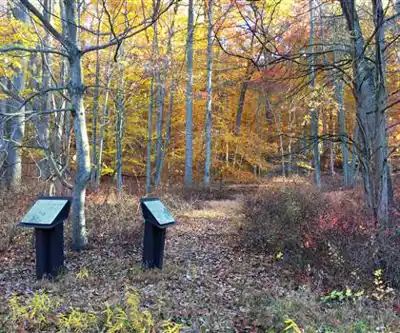
The Wick House, a well-preserved 18th-century farmhouse near the Jockey Hollow entrance, offers a tangible look at civilian life during the encampment period. The surrounding kitchen garden is maintained in period style and worth a few minutes of your time. Interpretive signs appear at key points throughout the trail network—placed thoughtfully enough to inform without cluttering the experience. The historical infrastructure here is genuinely well done: it adds context without turning the hike into a guided museum tour.
Many of the trails follow original military roads, which gives the route-finding a different feel than typical trail systems. You're not walking a path that was cut for hikers—you're using infrastructure that served a functional military purpose, and that distinction comes through in how the routes move through the landscape.
Wildlife and Natural Features
The park's mix of forest, meadow edge, and wetland creates habitat diversity that supports a solid range of wildlife for a developed region. White-tailed deer are common and frequently visible in early morning or late afternoon. Red foxes inhabit the woodlands, though they're more likely to show up as tracks in muddy trail sections than as direct sightings. Bird life is a genuine highlight—woodpeckers are active throughout the forest, hawks work the meadow edges, and spring migration brings waves of warblers through the canopy. Wetland areas within the park attract great blue herons and various waterfowl, adding another layer to the wildlife watching.
Spring wildflower season produces good photographic opportunities in the forest understory, particularly in the weeks before the canopy closes in fully.
Logistics and Access
Parking is available at multiple locations throughout the park. First-time visitors are best served by starting at the main visitor center at Jockey Hollow, which provides orientation to the trail network and historical context before you head out. Restrooms and water are available at visitor facilities, but trail access to these amenities is limited once you're out on the longer routes—carry water for any hike covering significant distance.
The park's trail network is designed for flexible planning. You can build a short two-hour loop around the main historical sites or string together multiple trail segments for a full day covering the complete trail system. Most trails remain open year-round, though icy conditions in winter can affect footing on shaded sections.
The steady visitor traffic from the surrounding Morris County area means main routes stay well-worn and easy to follow, even in shoulder seasons when trail markers can be harder to spot through leaf litter or snow.
The Essential Hiking Checklist
Everything you need for your next hike. Bilingual, printable, 1 page.
Get your free hiking checklistRecommended gear for this trail
As an Amazon Associate I earn from qualifying purchases.


Ready to go?
Everything you need to know before you goStarting Point
The easiest way to get to the start of the trails at the morristown national historical park is to drive. The park is located at 430 South Street in Morristown, NJ.
When?
How much?
As an Amazon Associate I earn from qualifying purchases.
Affiliate links — LGPO may earn a commission at no extra cost to you.
- Hiking shoes Essential
- → Salomon Elixir Tour Mid WP · 203.38 $
- Layered clothing Essential
- Rain jacket Essential
- Trekking poles
- → Black Diamond Trail Ergo Cork · 69.99 $
- Headlamp
- → Petzl Actik Core 625 · 103.95 $
FAQ - Frequently asked questions
Everything you need to knowSimilar hikes nearby
Discover other trails you might enjoy
Watchung white purple trails
Northern New Jersey

Mt Cecchino
Northern New Jersey
Van Slyke Castle
Northern New Jersey
Loantaka Park
Northern New Jersey

Hacklebarney Hiking Trail
Northern New Jersey
Ramapo Mountain State Forest
Northern New Jersey
Hiking near Newark
0 trails to explore ~31 km away
We work hard to provide the most up-to-date and error-free data possible. If something seems incorrect, let us know! Your contribution helps the whole community.
Hikers' opinions
Be the first to review!
No hiker has shared their experience yet. Share your impressions and help other hikers!