

Ready to explore Hidden Lake? Here's everything you need to know before you go!
Discover the trail
Trail description
Hidden Lake sits deep within New Jersey's Pine Barrens, one of the most ecologically distinctive wilderness areas on the East Coast. This 32-kilometer trail is a serious undertaking — with an estimated 8 hours and 20 minutes of hiking time, it's built for experienced hikers who want a full day out in one of the region's most unusual landscapes. The terrain stays relatively flat, with only 200 meters of elevation gain across the entire route, but don't let that fool you. The distance combined with sandy underfoot conditions makes this a genuinely demanding hike.
The Pine Barrens environment is unlike anything else in New Jersey. Sandy, nutrient-poor soils support a fire-adapted plant community dominated by pitch pines and scrub oaks, while low-lying areas give way to cedar swamps and wetlands. The whole ecosystem has a spare, almost otherworldly quality — open and quiet, with a horizon that stretches further than you'd expect this close to the urban Northeast.
On the Trail
The route winds through a cross-section of Pine Barrens habitats. You'll move between stretches of open pine and scrub oak, where the canopy is low and the light is bright, and denser cedar swamps where the trees close in and the air feels cooler and damper. The understory through much of the trail features lowbush blueberries, huckleberries, and scattered wildflowers depending on the season.
One of the more striking features of the hike is the water. Pine Barrens streams and pools run a deep reddish-brown — not from pollution, but from tannins released by decomposing vegetation. The result is an acidic, tea-colored water that's characteristic of the region. The trail crosses several of these cedar-stained streams and passes through wetter zones where the water table is close to the surface. These areas support carnivorous plants like sundews and pitcher plants, which thrive in the nutrient-poor, acidic conditions.
The sandy soil drains well, so the trail holds up reasonably after rain. That said, softer sections do exist, and they'll slow your pace more than you might anticipate. Factor that into your timing, especially on the back half of the route when fatigue sets in.
Wildlife Along the Way
The Pine Barrens support a surprisingly rich array of wildlife. Bird activity is strong throughout the year, with warblers, woodpeckers, and various raptors regularly spotted along the trail. White-tailed deer are common, and the area also supports foxes, raccoons, and occasional black bears. The moist, acidic habitat is particularly good for amphibians — frogs and salamanders are frequently encountered near the wetter sections of the trail.
Hidden Lake
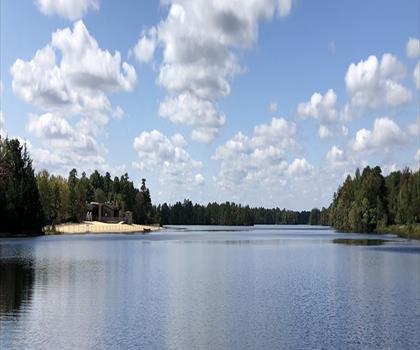
The lake is the payoff for the distance. Its dark, tannin-stained water reflects the surrounding pine canopy, and the shoreline shifts between sandy stretches and areas where fallen logs and aquatic vegetation create habitat for fish, turtles, and waterfowl. Trees grow right to the water's edge in most places, keeping the atmosphere enclosed and quiet.
It's a good spot to stop for an extended break. The relative remoteness of the location means you're unlikely to share it with many other people, particularly on weekdays. Bring food and take your time here — you've earned it, and the return trip is the same distance back.
Planning Your Hike
At 32 kilometers, preparation matters. A few things worth keeping in mind before you head out:
- Water: Carry enough for the full day. Natural water sources along the trail should be treated before drinking, and the acidity of Pine Barrens water can be hard on some filtration systems.
- Insects: Mosquitoes and ticks are active through the warmer months. The moist, vegetated terrain is ideal habitat for both. Bring repellent and wear long pants, especially when moving through dense understory sections.
- Navigation: The Pine Barrens can be disorienting. The landscape is relatively uniform, and the network of old sand roads and intersecting trails makes it easy to lose your bearings. Bring a map and compass or a GPS device. Cell coverage is unreliable in the more remote sections.
- Pacing: The minimal elevation gain can create a false sense of ease. Sandy terrain is more tiring than packed dirt, and 32 kilometers is a long day regardless of the grade. Start early and build in buffer time.
Spring and fall offer the most comfortable conditions — moderate temperatures and lower insect pressure than summer. Winter hiking is possible when snow isn't too deep, and the good drainage of the sandy soil helps keep trails passable through most of the year, though ice can be a hazard in colder months.
This is a trail for hikers who want a genuine full-day challenge in a landscape that rewards patience and attention — Hidden Lake delivers both the journey and the destination.
The Essential Hiking Checklist
Everything you need for your next hike. Bilingual, printable, 1 page.
Get your free hiking checklistRecommended gear for this trail
As an Amazon Associate I earn from qualifying purchases.


Ready to go?
Everything you need to know before you goStarting Point
The hidden lake trails are located in the Delaware Water Gap National Recreation Area. To get to the start of the trails, take exit 5 from Interstate 80 and follow the signs for the park. The trails start at the parking lot for the hidden lake overlook.
When?
How much?
As an Amazon Associate I earn from qualifying purchases.
Affiliate links — LGPO may earn a commission at no extra cost to you.
- Hiking shoes Essential
- → Salomon Elixir Tour Mid WP · 203.38 $
- Layered clothing Essential
- Rain jacket Essential
- Trekking poles
- → Black Diamond Trail Ergo Cork · 69.99 $
- Headlamp
- → Petzl Actik Core 625 · 103.95 $
FAQ - Frequently asked questions
Everything you need to knowSimilar hikes nearby
Discover other trails you might enjoy

Hammonton Lake Park Trail
Pine Barrens

Barnegat Branch Trail, South Trailhead Parking
Pine Barrens
Oswego Lake
Pine Barrens
Double Trouble State Park
Pine Barrens
Atsion Lake
Pine Barrens
Lake Absegami
Pine Barrens
Hiking near Trenton
0 trails to explore ~48 km away
We work hard to provide the most up-to-date and error-free data possible. If something seems incorrect, let us know! Your contribution helps the whole community.
Hikers' opinions
Be the first to review!
No hiker has shared their experience yet. Share your impressions and help other hikers!