

Ready to explore The Pine Barrens? Here's everything you need to know before you go!
Discover the trail
Trail description
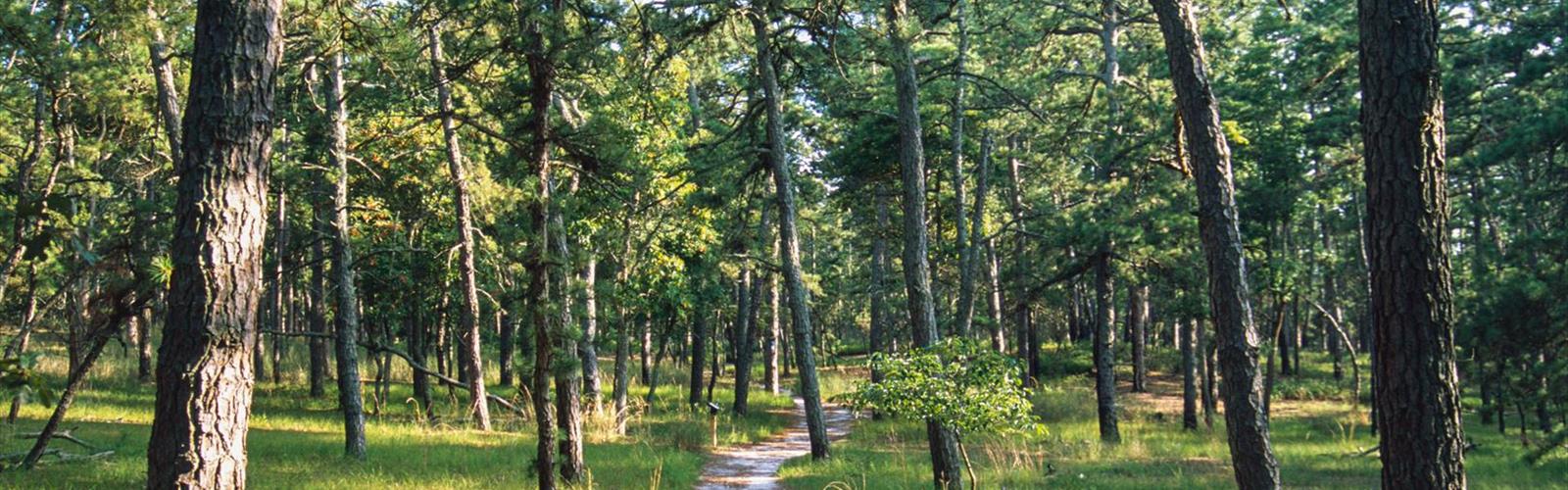
The Pine Barrens is one of the most genuinely surprising wilderness areas in the entire northeastern United States. Spanning over one million acres across southern New Jersey, it's a place that consistently catches first-time visitors off guard — not because it's dramatic or rugged, but because it feels so completely unlike anything else in the region. You're still in New Jersey, one of the most densely populated states in the country, yet out here you can walk for hours without seeing another person.
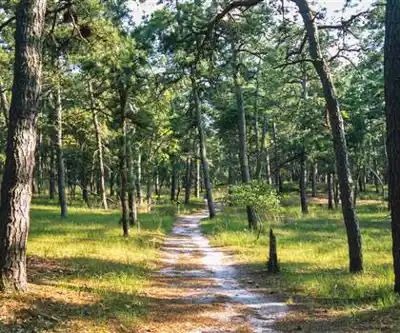
The landscape itself is the main attraction. Forget the rocky, root-tangled trails typical of the Northeast — the Pine Barrens runs on soft, sandy ground that shifts quietly underfoot and gives the whole experience a different rhythm. The forest is dominated by pitch pine, shortleaf pine, and several oak species, all of them adapted to nutrient-poor, well-drained soils that most trees wouldn't tolerate. The understory fills in with mountain laurel, blueberry bushes, and dense shrub thickets that create a layered, textured environment unlike anything else in New Jersey.
The Trail Experience
With a distance of 15 km, minimal elevation gain of just 10 meters, and an estimated time of around 3 hours and 45 minutes, this is a genuinely accessible outing — rated easy and appropriate for a wide range of hikers, including families with older kids. The flat terrain means you won't be grinding uphill, but don't mistake easy for effortless. Sandy soil has a way of working your legs more than you'd expect, and the remote character of many sections means you need to stay attentive to where you're going.
Many of the established routes follow old sand roads and historic logging paths that crisscross the region. These wide, open corridors give the hike a spacious feel and provide good sightlines for wildlife spotting. The relatively open canopy lets in plenty of light, which makes early morning and late afternoon particularly rewarding times to be out on the trail.
A Genuinely Unusual Ecosystem
What sets the Pine Barrens apart ecologically is the combination of acidic soils, low nutrients, and a hydrology unlike anything else in the region. These conditions have produced a plant community that includes carnivorous species — sundews and pitcher plants appear in the wetter, boggier sections, quietly trapping insects to compensate for what the soil can't provide. It's the kind of detail that makes you stop and look more carefully at everything around you.
The waterways here are equally distinctive. Cedar-stained streams and rivers wind through the landscape, their water carrying a deep tea color from the tannins leaching out of the surrounding vegetation. Despite the unusual appearance, these are some of the cleanest waterways in the region, naturally filtered through the sandy substrate and largely protected by the undeveloped nature of their watersheds.
Wildlife is present throughout, even if it doesn't always announce itself. White-tailed deer move through regularly, and black bears occasionally pass through from neighboring areas. Birdwatchers will find the Pine Barrens rewarding — warblers, woodpeckers, and raptors are all well-represented, and the transitions between dense interior forest and open clearings create varied habitat that attracts different species depending on where you are on the trail. The Pine Barrens tree frog, found nowhere else in New Jersey, calls from cedar swamps and bog areas during spring and summer evenings.
Navigation and Staying Found
The Pine Barrens has a reputation for swallowing hikers who aren't paying attention, and it's deserved. The forest has a visual uniformity that makes it easy to lose your bearings — one stretch of pitch pine and sandy path can look very much like the next. Old logging roads and ATV tracks intersect with official trails throughout the area, and not all of them are marked clearly.
Cell coverage is unreliable across much of the region, so a downloaded offline map or a dedicated GPS device is genuinely useful here, not just a nice-to-have. The sandy ground does show footprints and tire tracks clearly, which can help with route confirmation, but it also means that unofficial paths can look just as established as the real trail. Take a few minutes before you head out to familiarize yourself with the route.
Practical Information
Access to the Pine Barrens comes through multiple trailheads, ranging from proper parking areas with information kiosks to simple pull-offs along rural roads. Facilities vary significantly depending on which entry point you use, so it's worth checking ahead for the specific section you plan to hike.
Footwear matters here. The sandy terrain is forgiving on the joints, but low-lying areas can be wet and muddy, especially after rain. Waterproof or water-resistant hiking boots offer the best all-around protection, and gaiters are worth considering on longer outings to keep sand from working its way into your shoes. Bring more water than you think you'll need — the remote nature of the trails means there's no guarantee of resupply points along the way.
During warmer months, insect protection is non-negotiable. Mosquitoes, ticks, and biting flies can be intense near water and in dense vegetation. Long sleeves, long pants, and a reliable repellent will make the difference between an enjoyable hike and a miserable one. Tick checks after every outing are a standard part of hiking in the Pine Barrens.
Spring brings wildflower displays that are particularly vivid in areas where controlled burns have recently cleared the understory, while fall offers comfortable temperatures and a more subtle foliage change than you'd see in a hardwood forest — quieter, but worth appreciating on its own terms.
The Essential Hiking Checklist
Everything you need for your next hike. Bilingual, printable, 1 page.
Get your free hiking checklistRecommended gear for this trail
As an Amazon Associate I earn from qualifying purchases.


Ready to go?
Everything you need to know before you goStarting Point
The easiest way to get to the start of the trails at the the pine barrens is to take exit 57 off of the Garden State Parkway and drive south on County Road 563 for about six miles.
When?
How much?
As an Amazon Associate I earn from qualifying purchases.
Affiliate links — LGPO may earn a commission at no extra cost to you.
- Hiking shoes Essential
- → Salomon Elixir Tour Mid WP · 203.38 $
- Layered clothing Essential
- Rain jacket Essential
- Trekking poles
- → Black Diamond Trail Ergo Cork · 69.99 $
- Headlamp
- → Petzl Actik Core 625 · 103.95 $
FAQ - Frequently asked questions
Everything you need to knowSimilar hikes nearby
Discover other trails you might enjoy

Hammonton Lake Park Trail
Pine Barrens

Barnegat Branch Trail, South Trailhead Parking
Pine Barrens
Oswego Lake
Pine Barrens
Double Trouble State Park
Pine Barrens
Atsion Lake
Pine Barrens
Lake Absegami
Pine Barrens
Hiking near Trenton
0 trails to explore ~35 km away
We work hard to provide the most up-to-date and error-free data possible. If something seems incorrect, let us know! Your contribution helps the whole community.
Hikers' opinions
Be the first to review!
No hiker has shared their experience yet. Share your impressions and help other hikers!