Tired of getting caught off guard every time you organize an outdoor trip?
Because there's nothing more annoying than driving 5 hours only to realize you forgot your hiking boots or that the trail you planned to do is closed for the day.
To make your life easier, I've prepared a list of things to think about before you leave. You can use it as-is, enhance it to adapt it according to your needs and the type of outdoor trip you decide to take, or just read the text to get some ideas.
The important thing is that you're never caught unprepared again.
1. What do I want to experience?
We don't question enough the motivations that drive us to act the way we do. Most of the time, we just follow the wave without asking too many questions. All outdoor enthusiasts will tell you that simply being outdoors and moving is enough to fill them with happiness.
Yet, even an activity as simple as walking can be the gateway to a series of adventures, each as different from the others.
It's therefore important to know what we want before leaving. Do I just want to have fun, see new landscapes, challenge myself, reach a new summit, share a special moment with one of my favorite humans?
2. Is the site open?
Silly question, but very relevant. Several factors can contribute to the closure of an outdoor site, including weather, trail maintenance and safety. This is even more true in a pandemic context where several restrictions can be applied at the very last minute.
The road to get to the site can also be subject to construction work and cause detours or delays depending on traffic.
An outdoor site is usually a remote place far from major centers and the road network is not as developed in remote areas.
Checking the address, site accessibility and confirming opening and closing hours is always a good idea before leaving.
On this subject, it's always better to use the phone and check the day before or the same day of departure, because information on the internet is not necessarily updated in real time. It's also important to make these checks taking into consideration the length of the hike you plan to do. For example, the site may be open until 8 PM, but prohibit new departures after 2 PM on certain trails.
3. Does the site suit my needs?
There are beautiful photos on the website of the place you dream of going to, but you're going hiking with your children and your dog and you have no idea if there are trails adapted to your needs.
You can also have in mind a long 7-hour hike and realize on site that the longest trail is only 4 kilometers.
Most sites will include a trail map on their website. This is always an interesting starting point to get a more detailed idea of a site's potential.
There are also several hiker forums or outdoor enthusiast forums to get comments on the difficulty level and particularities of the routes.
To avoid being caught off guard, it's better to ask all these questions before leaving: are dogs allowed, are there trails for long hiking, is there a summit to reach, picnic areas and amenities, a possibility to rent equipment (paddleboards, canoe, kayak, bike)?
You also need to think about permits that are sometimes necessary to camp in certain places, ensure the availability of shelters if you plan to spend the night there, and fees for wood and other services.
4. Do I have the prerequisites to carry out my outdoor project?
Sometimes, you have the motivation to crawl around the world and you're looking for a challenge that matches your aspirations. But since you're a beginner, you don't have the technical knowledge, physical condition or necessary equipment to carry out your project successfully without risking your life.
As with all things, it's always advisable to go step by step to familiarize yourself with the particularities of a new experience. When we talk about hiking, you must first become aware of the fact that the longer you go and the further you get from services, the more things there are to plan and prepare.
However, no matter where you go to walk in the forest, in addition to the equipment you should think about bringing with you (see my other text on the subject), there are a few items we tend to forget and that we should always have with us every time we go into the woods:
- Sufficient water (consult my other text on the subject);
- Trail map;
- Emergency phone numbers;
- Charge your phone and GPS battery, bring a solar charger when going for several days;
- Check the weather; wind, snow, rain and all other conditions that can influence how you prepare;
- Always have spare clothes, plan for extreme conditions: rain, snow, cold;
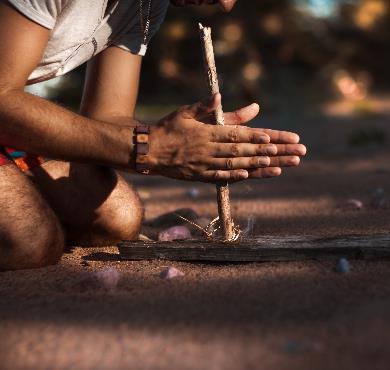
- A fire starter and tinder (or paper) protected from moisture;
- A multi-function knife;
- A bag or container to collect your waste;
- Headlamp and spare batteries.
5. What are the particularities of the wildlife in the area where I'm going?
When going to a new wild environment, it's important to have an idea of the practical experience that awaits us. Learning about the particularity of the topography, fauna and flora is always something that allows you to better prepare for your experience.
It's not just mosquitoes that can become an inconvenience. There are also a good number of harmful or dangerous plants and insects, periods when wild animals are more present and likely to be more stressed and unpredictable (like birthing season).
Anticipating potential dangers and finding a way to deal with them significantly reduces the risk of injuries and accidents, all these precautions contribute to improving your peace of mind.
6. How can I be rescued in case of emergency?
When going to an outdoor site and planning to spend several hours or several days in the forest, it's important to stop at reception to report your presence and intentions.
Even if you don't plan to take a long walk, everything becomes far when an emergency situation arises.
For your own safety, if someone knows your car's license plate number and you haven't returned after the time you had planned, park authorities can begin searches to come to your aid.
Due to the complexity of helping someone lost in the forest, rescue services are very expensive for those who request them. For this reason, many outdoor enthusiasts decide to contribute to insurance that will cover rescue costs in case of emergency.
Some sports associations will include insurance in the price of their membership card. Otherwise, group insurance with your employer may cover certain costs, but it's often a bit complicated when an accident occurs in the context of sports practice, especially in the forest.
Insurance for all types of accidents is an inexpensive option that can prove very useful for the dedicated outdoor enthusiast who wants to engage in their favorite activities with peace of mind. For a few dozen dollars per year, this type of insurance covers a wide range of injury types and a host of paramedical costs related to rescue.
7. What are the amenities and other attractions nearby?
Going to a site to engage in outdoor activities is one of the most beautiful pretexts that exists to explore our planet. But sometimes, it can be interesting to know what's near the place where you're going to optimize your stay.
For example, going to Gaspésie without taking the trouble to go for a sea tour or taste freshly caught seafood doesn't allow us to understand with as much depth the importance of the river for the people of the region.
Whatever place you go to, plenty of enriching experiences can complement your forest stay such as: wine culture tours, visiting a spa or a restaurant typical of the region, proximity to a concert hall, a festival, hotels or conventions.
It's better to know before leaving in order to plan time and money to enjoy these little extras that sometimes make the difference between a beautiful experience and the adventure of a lifetime.
If you don't really like "checklists" because you're afraid of losing your spontaneity, know that the more experience you have outdoors, the more you'll be able to react wisely when the unexpected happens. It's the quality of your experience that makes your planning effective.
It's only once your head is freed from all anxiety that you'll be able to follow the flow of happiness in nature...and there's nothing better than a good checklist to leave with peace of mind.
Sources:

About the author
François Dumaine
Founder of Let's Go Play Outside
A passionate hiker, photographer and content creator, François has been hiking the trails of Quebec and Alberta since 2014. He founded Let's Go Play Outside to give you the information he wished he had before heading out.
Newsletter
Content that makes you want to go outside
Every week, a trail idea, a reflection on nature, or a tip worth the detour. Zero spam. Only the essentials.
Joined by 12,000+ outdoor enthusiasts
Read next