
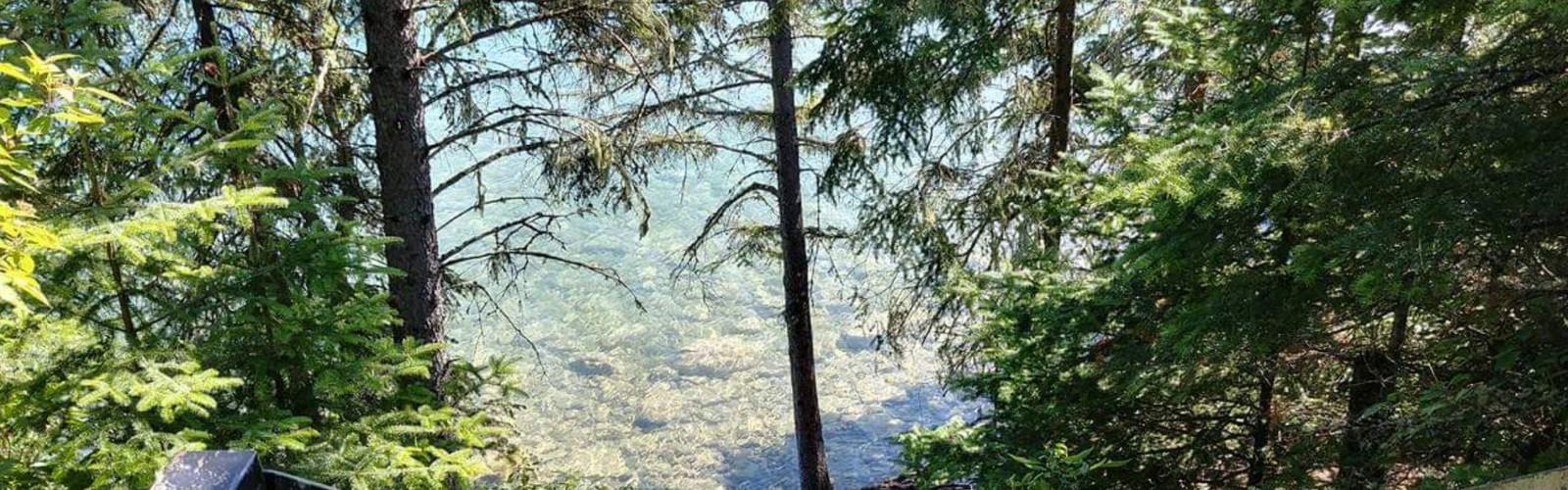

Ready to explore Karst Spring Trail? Here's everything you need to know before you go!
Discover the trail
Oh no! We don't have any photos 😢
This trail hasn't been captured yet. Be the first to share your adventure!Trail description
The Karst Spring Trail in Manitoba's Northern Region offers one of the province's most unusual short hikes — a compact, accessible walk through boreal forest that leads to a genuine geological curiosity. At just 1.6 kilometers with only 30 meters of elevation gain, this easy trail can be completed in about 30 minutes, but most visitors linger well beyond that once they reach the spring itself.
The Trail Experience
The path winds through mature boreal forest, the kind of dense, quiet woodland that defines northern Manitoba. Spruce and birch dominate the canopy, filtering light down to a lush understory. The forest floor is soft underfoot in dry conditions, though roots and occasional wet patches near water sources are part of the terrain — nothing technical, but worth watching your step.
With only 30 meters of elevation change over the entire route, the trail stays gentle throughout. There are no sustained climbs or exposed scrambles. This makes it genuinely accessible for families with young children, older hikers, or anyone looking for a rewarding walk without a demanding physical commitment.
The destination is the karst spring itself — a spot where cold, clear water pushes up continuously from underground limestone formations. The water emerges from the bedrock and pools at the surface, remarkably transparent, with the constant gentle upwelling giving it an almost animated quality. The surrounding moss-covered rocks and the sound of flowing water make this a natural stopping point. It's the kind of place that earns its reputation not through dramatic scenery but through something quieter and more specific: you don't see this kind of feature often, and it holds your attention.
What Makes This Trail Worth Doing
Karst topography — landscapes shaped by the dissolution of soluble bedrock like limestone — is uncommon in Manitoba. The spring here is a direct expression of that geology: water moving through underground passages in the limestone and emerging at the surface. It's a simple phenomenon to observe but a rare one to encounter on a short, easy trail in this part of the country.
The boreal forest setting adds to the experience. The trail passes through habitat that supports white-tailed deer, various woodpeckers, and the usual cast of northern forest birds. Smaller wildlife — chipmunks, squirrels, amphibians near the water — are reliably present for anyone paying attention. Black bears inhabit the broader area, though encounters on this short trail are uncommon.
Planning Your Visit
The trail is best visited from late spring through fall. Early in the season, expect muddy sections and potentially higher water near the spring. Mid-summer brings the most reliable conditions underfoot, though insects — mosquitoes and blackflies especially — can be active near water sources and in dense forest. Bring repellent if you're visiting between late May and mid-July.
Footwear with decent grip is the right call here. The terrain doesn't demand hiking boots, but trail runners or shoes with some traction handle the roots and wet spots better than casual sneakers. The 1.6-kilometer distance is short enough that most people won't need to carry much — water, a snack, and insect repellent cover the basics.
Cell coverage can be unreliable in forested sections of northern Manitoba, so don't count on it for navigation or emergencies. The trail is well-marked and straightforward, but it's worth letting someone know your plans if you're heading out solo.
Getting There
The Karst Spring Trail is located in Manitoba's Northern Region. Check current park access information before your visit, as road conditions and seasonal closures can affect access in northern Manitoba. Parking at the trailhead is limited, so arriving earlier in the day on summer weekends is a practical move.
The short distance makes this trail easy to combine with other activities in the area, whether that's additional hiking, paddling, or simply spending time in the boreal landscape that defines this part of Manitoba.
The Essential Hiking Checklist
Everything you need for your next hike. Bilingual, printable, 1 page.
Get your free hiking checklistRecommended gear for this trail
As an Amazon Associate I earn from qualifying purchases.


Ready to go?
Everything you need to know before you goStarting Point
The karst spring trail is located in Manitoba, Canada. To get to the start of the trails, take Highway 59 north from Winnipeg and turn left onto PR 307. The trailhead is located about 5 km down the road.
When?
How much?
As an Amazon Associate I earn from qualifying purchases.
Affiliate links — LGPO may earn a commission at no extra cost to you.
- Hiking shoes Essential
- → Salomon Elixir Tour Mid WP · 203.38 $
- Layered clothing Essential
- Rain jacket Essential
- Trekking poles
- → Black Diamond Trail Ergo Cork · 69.99 $
- Headlamp
- → Petzl Actik Core 625 · 103.95 $
FAQ - Frequently asked questions
Everything you need to knowSimilar hikes nearby
Discover other trails you might enjoy
Hiking near Saskatoon
4 trails to explore ~475 km away
We work hard to provide the most up-to-date and error-free data possible. If something seems incorrect, let us know! Your contribution helps the whole community.
Hikers' opinions
Be the first to review!
No hiker has shared their experience yet. Share your impressions and help other hikers!