


Ready to explore New River Beach Provincial Park? Here's everything you need to know before you go!
Discover the trail

Trail description
New River Beach Provincial Park: Coastal hiking character in New Brunswick
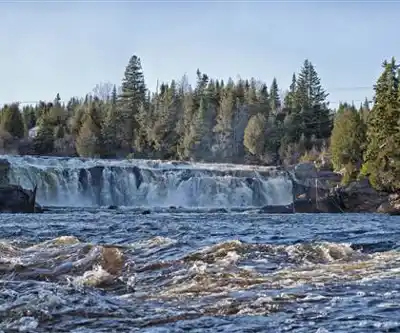
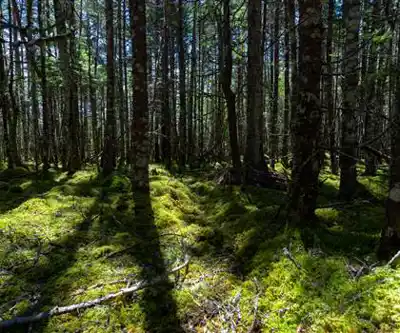
New River Beach Provincial Park sits on New Brunswick’s coastline, and its hiking identity is defined less by “big mountain” ambition and more by the kind of field-real, coastal movement that rewards attentiveness. This is a place where the appeal comes from being outdoors in a provincial park setting—walking with purpose, scanning the terrain as it changes underfoot, and settling into the steady, practical rhythm that coastal hikes often demand. The experience tends to feel immediate and grounded: you’re not chasing far-off objectives as much as you’re moving through a managed natural space with a strong sense of place, where the environment and your pacing do most of the talking.Because this hike is anchored inside New River Beach Provincial Park, the setting carries that distinctly park-based feel: established access, a clearly identified destination, and an outing that naturally fits into a wider day outside. It’s the kind of location that works equally well when you want to keep things simple—get moving, get fresh air, and return without logistical complexity—or when you want a focused training walk that emphasizes smooth form, efficient breathing, and consistent stride over time.
Terrain feel and the shape of the effort
With an elevation gain of 20 m, the effort profile is best understood as modest and approachable, but not entirely flat. That small climb matters in practice: even minimal elevation can change how the hike feels through your calves and hips, especially if you’re repeating short rises, transitioning between slightly different grades, or moving at a brisk pace. In coastal parks, that kind of gentle up-and-down tends to translate into a hike that’s easy to manage but still engaging—enough change in pitch to remind you to hike with intention rather than simply stroll.The most effective way to approach this kind of outing is to hike “clean”: keep your steps light, your posture tall, and your cadence steady so that the little rises don’t spike your effort. Think of it as a controlled progression rather than a single challenge. Settle into a comfortable baseline pace early, and then let the terrain guide micro-adjustments—shortening your stride slightly on any incline, relaxing your shoulders on the way back down, and maintaining a breathing pattern you can hold without strain.
That’s where this hike’s value shows up. When the elevation is low, the effort isn’t about powering through; it’s about rhythm, consistency, and awareness. You can use the subtle climbing to practice efficient movement: engage your glutes instead of overloading your quads, keep your foot placement confident, and manage energy so your pace stays even instead of surging on the ups and dragging on the flats.
How the hike “progresses” on the ground
Even without a long list of metrics, the hike’s progression can be read in how your body responds to small changes in grade. Early on, the outing typically feels effortless—ideal for warming up your ankles and knees, dialing in comfortable breathing, and letting your layers and pack settle. As you move further into the park, the small elevation gain becomes the cue to stay disciplined: avoid the common habit of leaning forward too much on minor climbs or overstriding on the way down. Those habits don’t feel like much in the moment, but they’re exactly what can make an easy hike feel oddly tiring by the end.Instead, treat the rises as a gentle prompt to hike “economically.” If you’re newer to hiking, it’s a chance to learn what sustainable effort feels like—moving continuously without needing frequent stops. If you’re more experienced, it’s the kind of terrain where you can intentionally hold a steady pace and focus on technique, using the modest elevation to keep your legs working without tipping into heavy fatigue.
Because the climb is limited, endurance management becomes more about comfort and consistency than about conserving energy for a major crux. Your goal is to keep the outing smooth: drink before you feel thirsty, snack before you feel flat, and adjust layers before you’re overheated or chilled. That practical, proactive mindset is what makes park hikes feel effortless and keeps them enjoyable in changing conditions.
Who this hike suits best
New River Beach Provincial Park is well-suited to hikers who want a lower-commitment outing that still feels like a real hike. The modest elevation gain supports a wide range of abilities: beginners who want a confidence-building introduction to hiking effort, casual hikers looking for a straightforward walk with a touch of climbing, and returning hikers rebuilding fitness who need something manageable that won’t punish them the next day.It also suits hikers who care about movement quality. If you’re training for larger objectives, this is the kind of place where you can practice the fundamentals—steady pacing, efficient breathing, and consistent footwork—without the distraction of big elevation or time pressure. If you’re hiking with a mixed-ability group, the gentle effort profile makes it easier to keep everyone moving together, with fewer forced breaks and less risk of one person getting overextended early.
For families, first-timers, or anyone easing into hiking, the main advantage is psychological as much as physical: you can focus on the experience of being in the park and building good habits rather than worrying about whether you’ll “make it.” And for experienced hikers, the simplicity becomes a feature—an opportunity to be outdoors on purpose, even when time, energy, or conditions don’t align with a bigger day.
Practical preparation mindset for a coastal provincial park hike
A hike in a provincial park setting is most enjoyable when you show up ready to be flexible. Dress and pack for comfort and change rather than for extremes: you want to stay dry enough, warm enough, and mobile enough to keep moving at a steady pace. In modest elevation terrain, it’s easy to underestimate how quickly you can cool down when you stop, or how quickly you can warm up once you start climbing—even a small rise can nudge your body temperature up if you’re overdressed or pushing the pace.Footwear choice matters less for major traction demands and more for stability and comfort over uneven ground. Aim for what keeps your feet happy for the entire outing, not just the first fifteen minutes. Carry water and a small amount of food even if the hike feels short or easy—because the difference between “pleasant” and “dragging” often comes down to basic fueling and hydration, not fitness.
Finally, approach the hike with field awareness. Move at a pace that lets you see the terrain and place your feet deliberately. Keep your attention on how the surface changes and how your body responds—tightening up, speeding up, or losing form—then correct early. New River Beach Provincial Park lends itself to exactly that kind of attentive hiking: not a sufferfest, not a gimmick, but a grounded New Brunswick park outing where modest elevation and steady movement combine into a genuinely satisfying day on foot.
Recommended gear for this trail


Ready to go?
Everything you need to know before you goStarting Point
The easiest way to get to the start of the trails at the new river beach provincial park is to drive to the park and park in the lot. From there, you can walk to the beach and then follow the trail that leads to the start of the trails.
When?
How much?
- Hiking shoes Essential
- → Salomon Elixir Tour Mid WP · 203.38 $
- Layered clothing Essential
- Rain jacket Essential
- Trekking poles
- → Black Diamond Trail Ergo Cork · 69.99 $
- Headlamp
- → Petzl Actik Core 625 · 103.95 $
FAQ - Frequently asked questions
Everything you need to know
25 hikes under 2 hours from Montreal
Distance, elevation, parking and season for each one. The ones we go back to ourselves.
Get the guideSimilar hikes nearby
Discover other trails you might enjoy

Dickson Falls
Fundy Coast
Irishtown Nature Park
Fundy Coast
Irving Nature Park
Fundy Coast
Laverty Falls
Fundy Coast
Rockwood Park
Fundy Coast
Roosevelt Campobello International Park
Fundy Coast
Hiking near Saint John
17 trails to explore ~40 km away
We work hard to provide the most up-to-date and error-free data possible. If something seems incorrect, let us know! Your contribution helps the whole community.
Hikers' opinions