
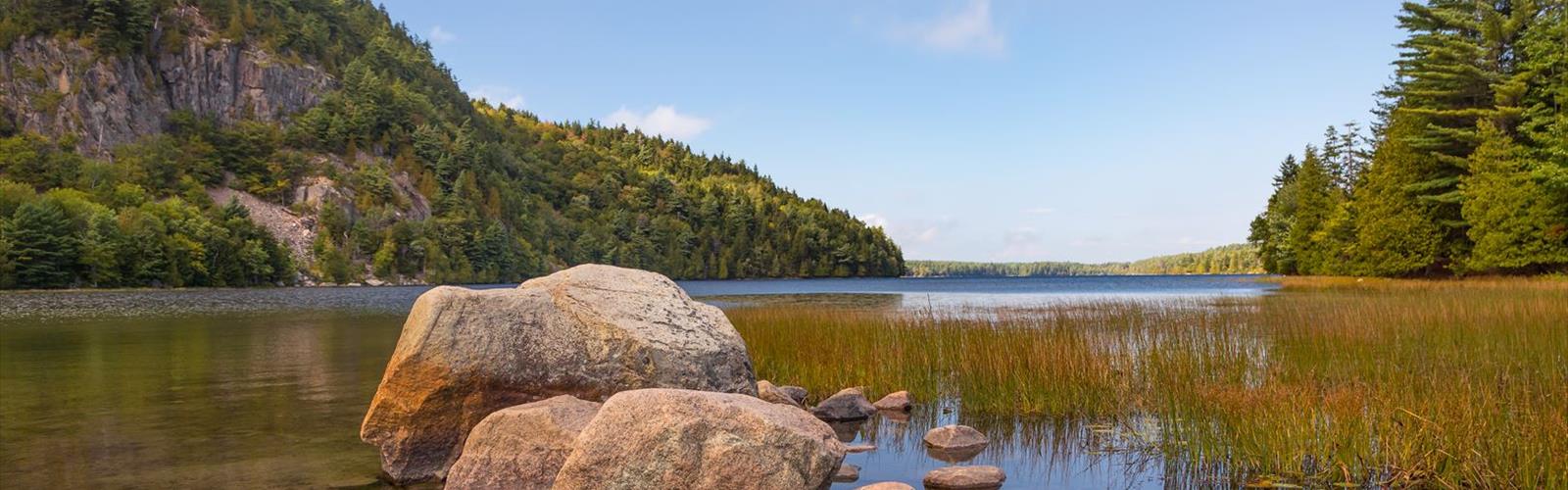

Ready to explore St Sauveur Mountain? Here's everything you need to know before you go!
Discover the trail
Available trails
| TrailTrails | Dist.Distance | GainElevation | TimeDuration | Difficulty | GPX |
|---|---|---|---|---|---|
|
|
3.06 km | — | 41min | GPX |
GPX track: © OpenStreetMap contributors — ODbL 1.0
Trail description
St. Sauveur Mountain rises 679 feet above sea level in the quieter southwest section of Acadia National Park on Mount Desert Island. While crowds flock to Cadillac Mountain and the Precipice Trail, this modest peak offers something increasingly rare in Acadia: solitude paired with genuinely spectacular views. The mountain sits perfectly positioned to showcase Somes Sound, the only true fjord on the U.S. East Coast, along with sweeping vistas across Mount Desert Island's forested interior.
What makes St. Sauveur special isn't just its relative obscurity—it's the quality of the hiking experience. The trail delivers classic Maine mountain terrain in a compact package: dense spruce-fir forest, granite slabs warmed by afternoon sun, and multiple viewpoints that reveal different perspectives of Acadia's landscape. The 207-meter elevation gain happens gradually enough that most hikers find the ascent pleasant rather than punishing, yet steep enough sections keep things interesting.
The Trail Experience
The St. Sauveur Mountain Trail forms a loop that can be hiked in either direction, though most people prefer the clockwise route for better views on the ascent. The trailhead sits along Route 102 near Echo Lake, marked by a small wooden sign that's easy to miss if you're not watching carefully.
The first section winds through typical Acadia forest—a mix of red spruce, balsam fir, and paper birch that creates a cool, green tunnel even on hot summer days. The trail surface here is soft with pine needles and decomposing leaves, punctuated by the occasional root or small boulder. This opening stretch gives your legs time to warm up while your eyes adjust to the forest's filtered light.
About halfway up, the character changes as you begin climbing more earnestly. The trees thin slightly, and granite begins asserting itself—first as scattered boulders, then as the dominant feature. Pink granite slabs, polished smooth by countless seasons of weather, create natural staircases and viewing platforms. These open sections offer your first glimpses of Somes Sound cutting its narrow path between mountains.
The summit area isn't a single peak but rather a series of granite domes connected by easy scrambles. Each offers slightly different views, so take time to explore rather than stopping at the first overlook. The main viewpoint faces east toward Somes Sound and Northeast Harbor, with Cadillac Mountain's bulk dominating the horizon. On clear days, you can pick out the Cranberry Isles floating in the distance and watch sailboats navigating the sound's protected waters.
What Sets This Trail Apart
The beauty of St. Sauveur lies in its accessibility without compromise. You get legitimate mountain views and classic Acadia granite scenery without the technical challenges or crowds that define many of the park's marquee hikes. The trail strikes that sweet spot where families with older kids can tackle it confidently, while experienced hikers appreciate the peaceful alternative to busier peaks.
The granite formations here tell the story of ancient geological forces. These pink granite domes formed deep underground millions of years ago, then were exposed and sculpted by glacial action during the last ice age. The smooth, rounded surfaces and occasional deep scratches in the rock face provide clear evidence of the massive ice sheets that once covered this landscape.
Connecting Trails and Extended Options
St. Sauveur works well as a standalone hike, but it also connects to other trails for those wanting more mileage. The Valley Peak Trail intersects near the summit, adding another option if you're feeling ambitious. Valley Peak's summit offers western views toward the mainland that complement St. Sauveur's eastward perspectives.
The Flying Mountain Trail provides another extension option, though it requires a short road walk to connect. Flying Mountain is even shorter than St. Sauveur but offers dramatic views straight down Somes Sound from its clifftop perch. Combining these peaks makes for a solid half-day adventure for hikers looking to explore multiple viewpoints in the area.
Wildlife and Natural Features
The mixed forest environment supports typical Maine woodland wildlife. White-tailed deer browse the understory, especially in early morning and evening hours. Red squirrels chatter from spruce branches, and chipmunks scurry across the granite slabs. Birdwatchers should listen for the haunting calls of hermit thrushes echoing through the forest, along with the drumming of pileated woodpeckers working dead trees for insects.
The transition from dense forest to open granite creates distinct microenvironments. In the sheltered woods, you'll find typical understory plants like bunchberry and wild sarsaparilla. On the exposed summit areas, specialized plants adapted to thin soils and harsh conditions cling to cracks in the rock, creating miniature gardens that deserve careful observation.
Seasonal Considerations and Timing
Late spring through early fall offers the most reliable hiking conditions, with trails typically clear of snow from May through October. Summer brings warm temperatures that make the shaded forest sections particularly pleasant, though the exposed granite can get quite hot by midday. Early morning starts help you avoid both heat and crowds.
Fall transforms the deciduous trees into brilliant displays of red and gold, making September and early October prime times for photography. The contrast between colorful foliage and pink granite creates some of Acadia's most striking scenery. Winter hiking is possible for experienced hikers with proper equipment, but ice on the granite slabs can create hazardous conditions.
Practical Planning Information
Sturdy hiking boots provide essential traction on the granite sections, especially if conditions are wet. The rock can be surprisingly slippery when damp, and the consequences of a fall on these hard surfaces are more serious than on typical dirt trails. Bring plenty of water—more than you think you'll need—since the exposed summit areas offer little shade on sunny days.
A camera is essential for capturing the Somes Sound views, but consider bringing binoculars as well. The elevated perspective lets you spot boats, wildlife, and details of the surrounding landscape that aren't visible to the naked eye. Pack snacks or a light lunch to enjoy at the summit, where several flat granite areas provide comfortable seating with views.
Follow Leave No Trace principles by packing out all trash and staying on marked trails to protect the fragile summit vegetation. The granite may look indestructible, but the thin soils and specialized plants that grow in rock crevices are easily damaged by foot traffic.
The Essential Hiking Checklist
Everything you need for your next hike. Bilingual, printable, 1 page.
Get your free hiking checklistRecommended gear for this trail
As an Amazon Associate I earn from qualifying purchases.


Ready to go?
Everything you need to know before you goStarting Point
To access the hiking trails, you can start at the Acadia Mountain Trailhead. The parking lot is located on Route 102, approximately 5 miles south of Somesville. Another option is the Echo Lake Beach parking area, which is also on Route 102, about 6 miles south of Somesville. Both locations provide access to different trailheads for your hike.
When?
How much?
As an Amazon Associate I earn from qualifying purchases.
Affiliate links — LGPO may earn a commission at no extra cost to you.
- Hiking shoes Essential
- → Salomon Elixir Tour Mid WP · 203.38 $
- Layered clothing Essential
- Rain jacket Essential
- Trekking poles
- → Black Diamond Trail Ergo Cork · 69.99 $
- Headlamp
- → Petzl Actik Core 625 · 103.95 $
FAQ - Frequently asked questions
Everything you need to knowSimilar hikes nearby
Discover other trails you might enjoy
Precipice Trail
Down East & Acadia
Branch Lake Public Forest
Down East & Acadia
Giant's Stairs Trail
Down East & Acadia
Valley Peak
Down East & Acadia
Gorham Mountain Trailhead
Down East & Acadia
Cutler Coast Public Reserved Land
Down East & Acadia
Hiking near Bar Harbor
0 trails to explore ~13 km away
We work hard to provide the most up-to-date and error-free data possible. If something seems incorrect, let us know! Your contribution helps the whole community.
Hikers' opinions
Be the first to review!
No hiker has shared their experience yet. Share your impressions and help other hikers!