
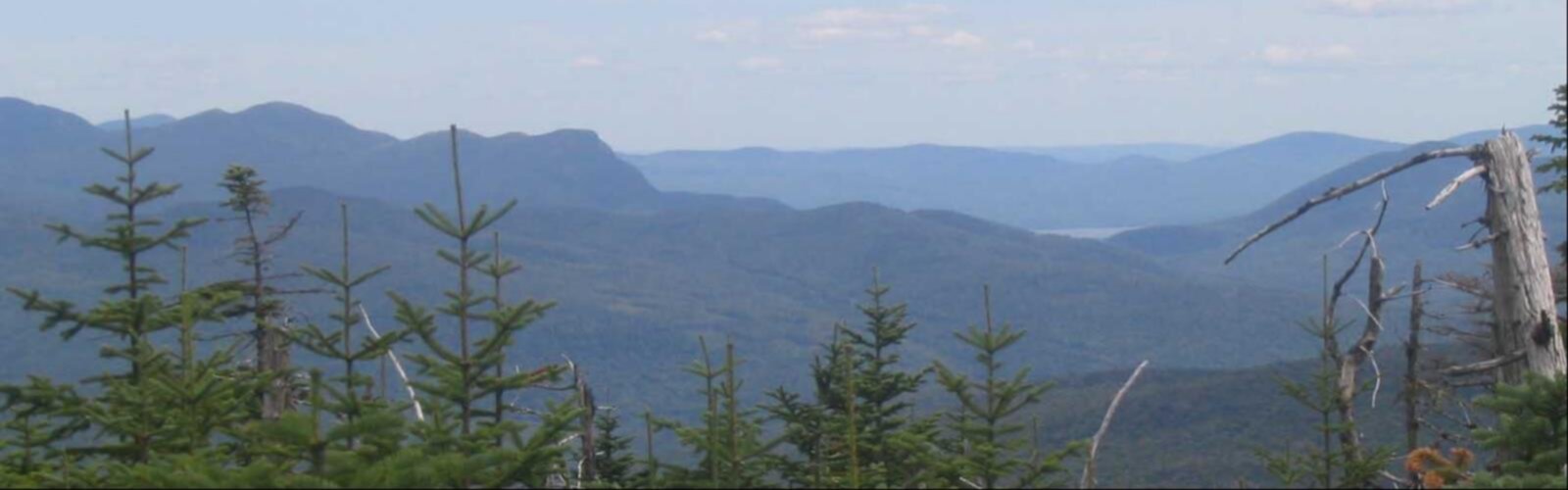

Ready to explore Bemis Mountain, Maine? Here's everything you need to know before you go!
Discover the trail
Oh no! We don't have any photos 😢
This trail hasn't been captured yet. Be the first to share your adventure!Trail description
Bemis Mountain rises to 3,592 feet in Maine's Western Mountains, and it earns its "very hard" rating honestly. At 13.8 kilometers with 1,091 meters of elevation gain, this is a full-day commitment — plan on roughly 6.5 hours of moving time, and that's assuming you're in solid shape and moving with purpose. The Appalachian Trail runs through here, and this stretch gives you a genuine taste of what makes Maine's section of the AT so demanding and so memorable.
What the Trail Actually Feels Like
The opening kilometers lull you into a false sense of ease. The trail winds through dense mixed forest — maple, birch, and pine — with a gentle grade that feels almost like a warm-up. Seasonal streams cross the path in spots, and on cool mornings the light filters through the canopy in a way that makes it easy to forget what's coming. The white blazes of the AT guide you clearly, and the footing is straightforward.
That changes as you gain elevation. The moderate lower slopes give way to sustained, unrelenting climbs that start to accumulate in your legs. Rocky outcroppings appear with increasing frequency, and the trail begins demanding real attention — granite slabs, boulders, and sections where you're picking your line rather than just walking. This is where the hike separates itself from a casual outing. Your breathing deepens, your pace slows, and the terrain keeps asking more of you.
The final third of the ascent is where Bemis Mountain makes its full case. The trail steepens noticeably, the rocky scrambles become the norm rather than the exception, and careful foot placement becomes non-negotiable. Hiking poles are genuinely useful here — not just for the climb, but for protecting your knees on the way back down, which is longer and harder on the body than many hikers anticipate.
The Summit
The top of Bemis Mountain delivers the kind of views that justify the effort. The summit is open and exposed, with rocky platforms that give you unobstructed sightlines in all directions. Wave after wave of forested peaks fill the horizon — this is Maine's mountainous interior at its most expansive, and on a clear day the scale of it is genuinely striking. Morning hikers often catch valleys filled with fog while the peaks stand clear above it, a sight that's hard to describe and easy to remember.
The exposure that makes the views so good also means wind and cold are real factors. Even in summer, the summit can feel significantly colder than the forest below, and the wind can be sharp. Pack a warm layer and a wind shell regardless of what the morning weather looks like at the trailhead.
Forest and Wildlife
The forest changes character as you climb. The mixed hardwoods of the lower elevations — the maples and birches that color the hillsides in fall — gradually give way to spruce and fir as you gain altitude. These coniferous stands are adapted to the harsher conditions up high: shorter growing seasons, heavier snow loads, and persistent wind. Near the summit, the trees become stunted and sparse, and the landscape opens up well before you reach the top.
White-tailed deer are common in the lower sections, particularly early in the morning or toward evening. Moose are present in the area, especially near any wetland pockets at lower elevations — you're more likely to hear one moving through the brush than to spot one directly. Birdlife is varied throughout the ascent: woodpeckers and nuthatches in the lower forest, warblers in the transition zones, and ravens working the updrafts near the summit.
Trail Conditions and Navigation
The AT's white blazes keep navigation simple for the most part, though the upper rocky sections require more attention to stay on route. Trail crews maintain the path regularly, but spring conditions and periods of heavy rain bring mud, particularly in the lower forest sections. The upper trail is rocky enough that mud is less of an issue, but wet granite slabs demand respect — they can be slippery in ways that catch hikers off guard.
The trail is well-established and the blazes are reliable, but this is still remote Maine terrain. Cell service is not something to count on, and the distance from the trailhead means that a twisted ankle in the upper sections is a serious situation. Go prepared.
What to Bring
Footwear matters more on Bemis Mountain than on many hikes. The rocky upper sections require boots with solid ankle support and aggressive tread — worn-out soles on wet granite are a genuine hazard. This is not a trail for trail runners unless you're experienced on technical terrain.
Carry more water than you think you need. The sustained climbing over 6-plus hours pushes your hydration requirements higher than a typical day hike, and the mountain air accelerates fluid loss. Food for sustained energy is equally important — this is a long day with no bailout options once you're committed to the upper mountain.
Layers are essential regardless of season. The temperature differential between the trailhead and the exposed summit can be dramatic, and weather in the Western Mountains can shift quickly. A rain shell, a warm mid-layer, and sun protection cover the bases for most conditions you're likely to encounter.
The Essential Hiking Checklist
Everything you need for your next hike. Bilingual, printable, 1 page.
Get your free hiking checklistRecommended gear for this trail
As an Amazon Associate I earn from qualifying purchases.


Ready to go?
Everything you need to know before you goStarting Point
To access the hiking trails, you can start at the Bemis Mountain Trailhead. The primary trailhead is located on Bemis Road, which is accessible from Route 17. There are no specific addresses for these trailheads, but Bemis Road is a well-known entry point for hikers in the area. Ensure your vehicle is suitable for gravel roads, as conditions may vary.
When?
How much?
As an Amazon Associate I earn from qualifying purchases.
Affiliate links — LGPO may earn a commission at no extra cost to you.
- Hiking shoes Essential
- → Salomon Elixir Tour Mid WP · 203.38 $
- Layered clothing Essential
- Rain jacket Essential
- Trekking poles
- → Black Diamond Trail Ergo Cork · 69.99 $
- Headlamp
- → Petzl Actik Core 625 · 103.95 $
FAQ - Frequently asked questions
Everything you need to knowSimilar hikes nearby
Discover other trails you might enjoy
Long Mountain
Western Mountains
Pleasant Mountain
Western Mountains
Witt's End Trail
Western Mountains
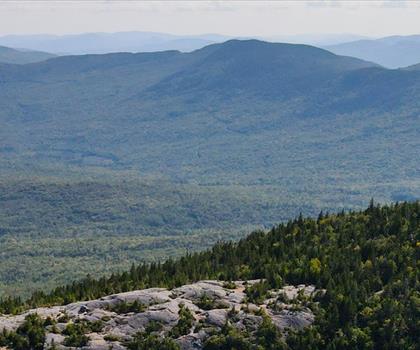
Tumbledown Mountain
Western Mountains

Bear Mountain Inn + Barn Maine
Western Mountains
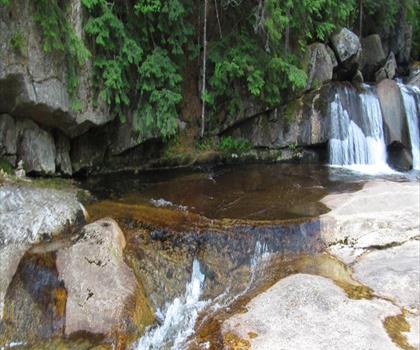
Screw Auger Falls
Western Mountains
Hiking near North Conway
0 trails to explore ~87 km away
We work hard to provide the most up-to-date and error-free data possible. If something seems incorrect, let us know! Your contribution helps the whole community.
Hikers' opinions
Be the first to review!
No hiker has shared their experience yet. Share your impressions and help other hikers!