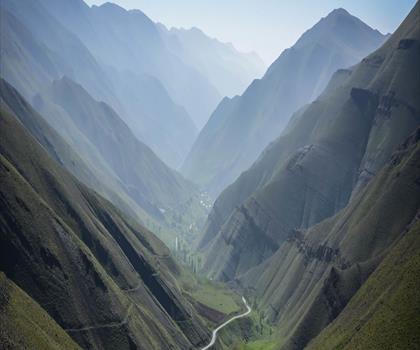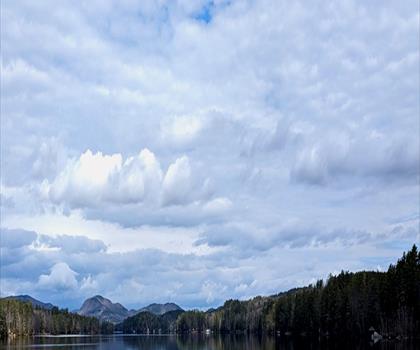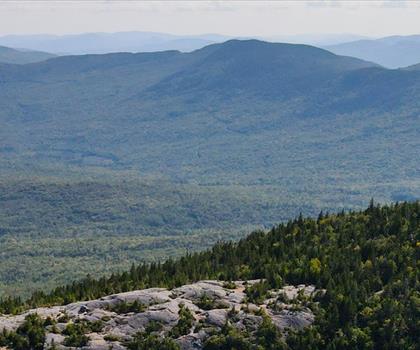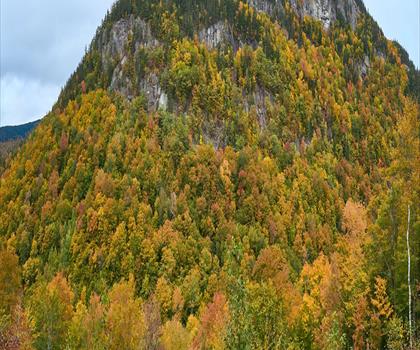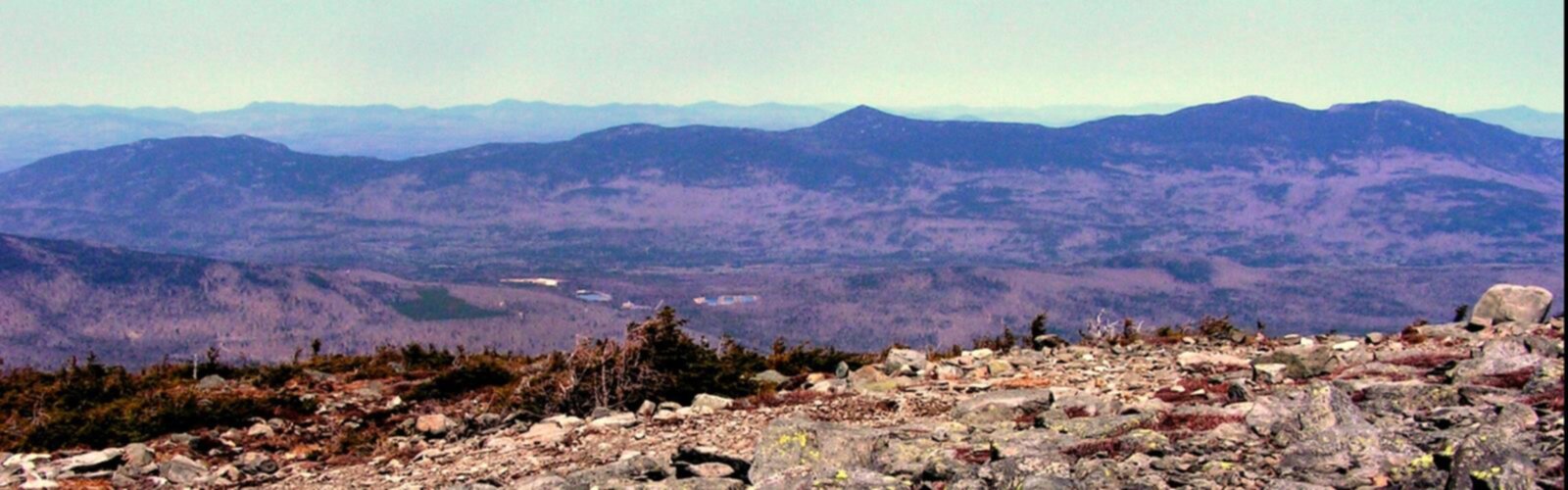
Hiking Bigelow Mountain, Maine - panoramic view
--°C
Loading...
See forecast →

Hiking in Bigelow Mountain, Maine: trails, map and practical info

Western Mountains • Maine

4.9 Appreciated by 41 hikers
François Dumaine
By François DumaineContributor since 2015Updated 01/04/2026
Difficulty
Moderate
Distance
18 km
Elevation
1,263 m
Duration
6h30
Max altitude
1,234 m

Conquer Maine's 17.5 km moderate trail across the historic Bigelow Range, where Major Timothy Bigelow scouted for Benedict Arnold in 1775. This 6 to 8-hour adventure in the Western Mountains features multiple summits including West Peak at 4,145 feet.

Recommended for :
Intermediate hikers

Ready to explore Bigelow Mountain, Maine? Here's everything you need to know before you go!

Discover the trail

3 community photos

Trail description

Description

Mount Bigelow stands as one of Maine's most impressive mountain ridges, stretching across Franklin and Somerset counties in the western part of the state. This isn't just a single peak but an entire range of summits connected by a long, dramatic ridgeline that offers some of the most rewarding hiking in New England. The mountain takes its name from Major Timothy Bigelow, who made the rugged climb to the summit in late October 1775 on a reconnaissance mission as one of Colonel Benedict Arnold's division commanders during the failed invasion of Canada. Arnold's expeditionary force traveled along what was then the Dead River, now flooded to create Flagstaff Lake at the northern base of the range.

The Bigelow Range forms part of the larger Rangeley-Stratton mountain system, sharing the landscape with other notable peaks like Sugarloaf Mountain, Crocker Mountain, Saddleback Mountain, Mount Abraham, and Mount Redington. What sets Bigelow apart is its distinctive ridgeline traverse, which takes hikers across multiple summits and offers constantly changing perspectives of the surrounding wilderness.

The Peaks and Terrain

West Peak claims the title of highest point on the range at 4,145 feet, providing expansive views across western Maine's mountainous terrain. The traverse continues to Avery Peak, named Myron H. Avery Peak after a prominent figure in Appalachian Trail history, which rises to 4,088 feet and offers equally spectacular vistas. Between these major summits, hikers encounter The Horns at 3,805 feet, a distinctive double-peaked formation that gives this section of the ridge its memorable name.

The eastern end of the range includes Cranberry Peak at 3,194 feet and Little Bigelow Mountain at approximately 3,070 feet, extending the hiking opportunities for those wanting to explore the full extent of the range. Each summit provides its own character and viewpoints, from intimate glimpses of alpine ponds to sweeping panoramas of Maine's western mountains.

The terrain varies considerably along the 17.5-kilometer traverse. Hikers start in dense hardwood and mixed forests, gradually transitioning through spruce-fir zones as elevation increases. The upper reaches feature exposed granite ledges and occasional scrambles over rocky outcrops. Weather can change rapidly above treeline, and the exposed ridgeline offers little protection from wind and storms.

Trail Experience and Logistics

The full Bigelow traverse represents a serious undertaking, typically requiring 6 to 8 hours for experienced hikers to complete. The 1,263 meters of elevation gain, combined with the technical terrain and distance, earns this hike its moderate to difficult rating. The trail follows sections of the Appalachian Trail, benefiting from the excellent maintenance provided by the Maine Appalachian Trail Club.

Most hikers approach the range from either the Stratton Brook Pond Road on the east or the Fire Warden's Trail from the west. The eastern approach offers a more gradual ascent through varied forest types, while the western route provides a steeper, more direct path to the main ridge. Both routes eventually connect with the Appalachian Trail for the ridge traverse.

The trail crosses several distinct ecosystems as it gains elevation. Lower slopes feature typical northern hardwood forests with maple, birch, and beech giving way to mixed woods with increasing amounts of spruce and fir. Above 3,000 feet, the forest becomes predominantly coniferous, and the highest peaks feature areas of krummholz and exposed bedrock typical of Maine's alpine zones.

Backcountry Camping and Facilities

The Maine Appalachian Trail Club maintains two popular backcountry camping areas along the ridge. Horns Pond, nestled between The Horns and the main peaks, provides a scenic camping spot beside a small alpine tarn. The setting offers dramatic views of the surrounding peaks and serves as an excellent base for exploring the higher summits. Bigelow Col, the saddle between the major peaks, offers another designated camping area with easier access to both West Peak and Avery Peak.

Both camping areas operate under a caretaker system during peak season, typically from late spring through early fall. The caretakers help maintain the sites, provide information to hikers, and ensure that camping practices protect the fragile alpine environment. Camping fees apply at both locations, and reservations are recommended during busy periods, particularly in fall when foliage draws additional visitors.

Water sources exist at both camping areas, though hikers should always treat water from natural sources. The camping areas provide basic facilities including designated tent sites and privy facilities, but visitors must pack out all trash and follow Leave No Trace principles strictly in these sensitive alpine environments.

Wildlife and Natural Features

The Bigelow Range supports diverse wildlife populations typical of Maine's northern forests. Black bears frequent the area, particularly during berry season in late summer, and hikers should follow proper food storage protocols. Moose commonly browse in the lower elevation wetlands and can occasionally be spotted from the higher viewpoints. White-tailed deer inhabit the mixed forest zones, while smaller mammals like red squirrels, chipmunks, and various mouse species are common throughout the range.

Birdlife varies by elevation and season. Lower forests host typical woodland species, while the higher elevations attract boreal specialists like gray jays, boreal chickadees, and various warbler species during migration. Raptors including broad-winged hawks and the occasional peregrine falcon may be spotted from the exposed ridgeline.

The range's geological features tell the story of ancient mountain building and glacial sculpting. Exposed granite and metamorphic rock formations provide evidence of the intense geological forces that shaped this landscape millions of years ago. Glacial erratics scattered across the higher elevations remind visitors of the ice sheets that once covered this region.

Seasonal Considerations

Winter conditions on Bigelow can be severe, with deep snow, high winds, and extreme cold making the traverse a serious mountaineering undertaking requiring specialized equipment and experience. Spring brings mud season to lower elevations while snow may persist on the higher peaks well into May. Summer offers the most reliable hiking conditions, though afternoon thunderstorms can create dangerous conditions on the exposed ridge.

Fall attracts many visitors for the spectacular foliage displays, but weather becomes increasingly unpredictable, and early season storms can bring snow to the higher elevations. Regardless of season, hikers should prepare for rapidly changing conditions and carry appropriate gear for the elevation and exposure encountered on this substantial mountain traverse.

Ready to go?

Everything you need to know before you go

Where?

Address
Not available
GPS coordinates
45.1472769, -70.2892339
Phone
Not available

Starting Point

The best way to get to the start of the trails at the Bigelow Mountain is to drive to the Sugarloaf Mountain Resort and take the ski lift up.

When?

Opening hours
From sunrise to sunset
Varies by season
Best season
Fall
Spectacular colors
Best time
Early morning
Less crowded
Weather (next days)
Loading

How much?

Entry fees
Adult
Not available
Child
What to bring?
Gear
  • Hiking shoes Essential
  • Layered clothing Essential
  • Rain jacket Essential
  • Trekking poles
  • Headlamp
Download the PDF checklist
Water & food
2L minimum
No water point on the trail
Bring energy snacks for a 4h+ hike
Good to know
Park rules
No dogs
Safety
Download the GPX before you go
Limited cellular coverage on the trail
Slippery after rain
Be careful on rocky sections
In an emergency
Emergency
911
Parking GPS
45.1472769, -70.2892339
Center
Not available

Hikers' opinions

4.9
18 Reviews
R6
Review 6
Apr 5, 2024
Very good place. I recommand this place. Mt Bigelow offers a fantastic moderate hiking experience in the Western Mountains. The 6-8 hour timeframe is perfect for a full day adventure, and the trail's 17.5 km length provides excellent value. Just remember to plan ahead since parking isn't free.
R5
Review 5
Mar 25, 2024
Beautifull! The Western Mountains scenery from Mt Bigelow is absolutely breathtaking. Every meter of that 1263m elevation gain rewards you with increasingly stunning views. The 17.5 km distance allows you to fully appreciate the changing landscapes and natural beauty of this remarkable trail.
R6
Review 6
Mar 20, 2024
Very good place. I recommend this place. Mt Bigelow delivers an excellent hiking experience with its 17.5km moderate trail and 1263m elevation gain. The Western Mountains location provides beautiful scenery throughout the 6-8 hour journey. Access via Sugarloaf Resort is straightforward and worth the visit.
R5
Review 5
Mar 12, 2024
Beautiful! The scenery along Mt Bigelow is absolutely stunning. The 17.5km trail through the Western Mountains offers incredible views that make the 1263m climb worthwhile. Budget 6-8 hours for this moderate hike - the natural beauty will leave you speechless.
R4
Review 4
Mar 10, 2024
I have lot of funny there. Mt Bigelow delivered an amazing day out with friends! The 1263m climb was tough but we had great laughs along the way. The moderate rating means it's challenging enough to be exciting without being intimidating. Definitely budget the full day for this adventure.

FAQ - Frequently asked questions

Everything you need to know
Moderate
1263.00 M
1234.00 M
6h30
No
No
The Mt Bigelow trail is rated as moderate difficulty. This makes it suitable for hikers with some experience and a reasonable fitness level.
The Mt Bigelow trail is 17.5 km long and typically takes 6 to 8 hours to complete. Plan for a full day hike with proper preparation and supplies.
The Mt Bigelow trail has an elevation gain of 1263 m. This significant elevation change contributes to the moderate difficulty rating of the hike.
No, dogs are not allowed on the Mt Bigelow trail. Plan to leave your pets at home or arrange alternative care for your hiking day.
Yes, there is a fee to access Mt Bigelow as it requires taking the ski lift up at Sugarloaf Mountain Resort. Check current pricing and operating hours before your visit.
Didn't find your answer?
Free 1 pages

The Essential Hiking Checklist

Everything you need for your next hike. Bilingual, printable, 1 page.

Download the free checklist
Top 10 best hiking in Western Mountains
Our ranking based on hiker reviews

Hiking near Bangor

0 trails to explore ~125 km away

View trails
Did you spot an error?

We work hard to provide the most up-to-date and error-free data possible. If something seems incorrect, let us know!

Update : June 2026