
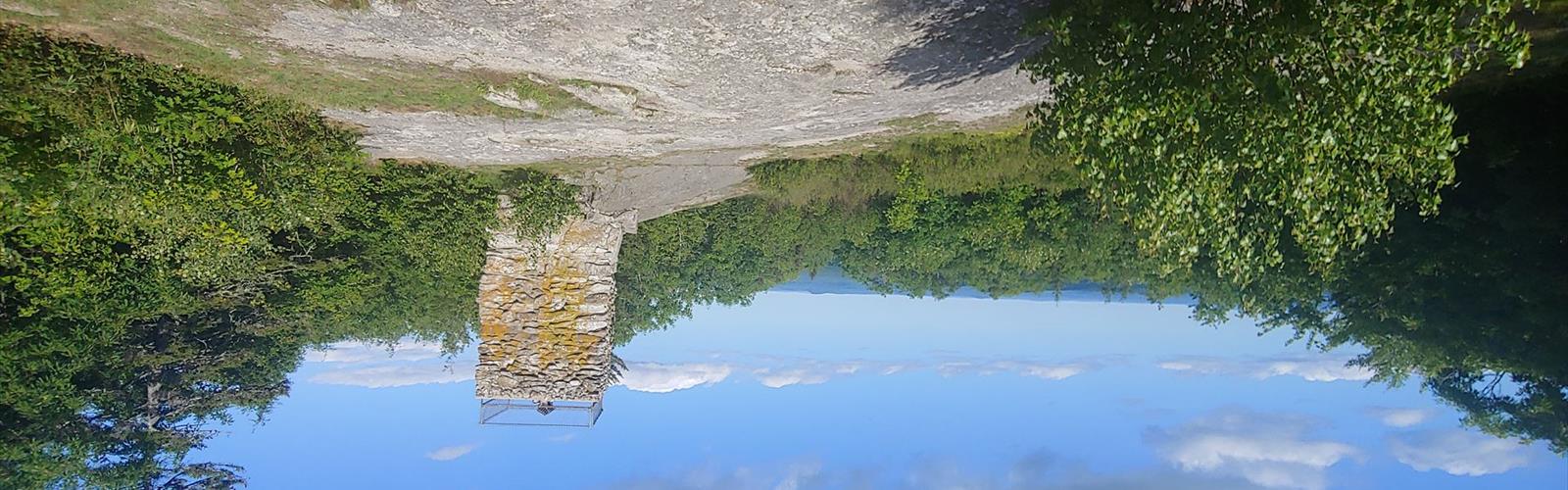

Ready to explore Douglas Mountain? Here's everything you need to know before you go!
Discover the trail

Trail description
Douglas Mountain, also known as Douglas Hill, rises 2,145 feet above the lakes region of western Maine in the town of Sebago. This modest peak punches well above its weight in terms of popularity and scenic payoff, drawing hikers from across New England to its distinctive stone tower summit. Named after early European settlers John and Andrew Douglas who arrived in the 1830s, the mountain sits as part of the Saddleback Hills range on the western shore of Sebago Lake.
The mountain's most distinctive feature is the sixteen-foot stone observation tower that crowns its summit, built in 1892 by Dr. William Blackman, a New York surgeon who purchased the mountain and surrounding lands. This sturdy stone structure transforms what would already be excellent views into truly panoramic vistas that stretch across the lakes and mountains of western Maine. On clear days, hikers can spot the White Mountains of New Hampshire rising to the west, while Sebago Lake spreads out like a blue mirror far below to the east.
The Trail Experience
The hike up Douglas Mountain covers 2.4 kilometers with 107 meters of elevation gain, making it an ideal choice for families and hikers looking for a rewarding adventure without excessive difficulty. Most people complete the round trip in about an hour and fifteen minutes, though the summit views often inspire longer stays at the top.
The trail begins in dense mixed forest typical of Maine's western mountains, where well-maintained paths wind through stands of maple, birch, and oak interspersed with pine and fir. The route is generally well-marked and easy to follow, though hikers should watch their footing on rocky sections and root-crossed areas that characterize New England forest trails.
The moderate grade means you'll work up a good sweat without feeling punished by the climb. The forest canopy provides welcome shade during summer months, while glimpses of Sebago Lake begin appearing through the trees as you gain elevation, building anticipation for what awaits at the summit.
As you approach the top, the forest opens up and the historic stone tower comes into view, serving as both a landmark and the gateway to some of the finest views in western Maine. The final push to the summit feels rewarding rather than exhausting, setting the stage perfectly for the panoramic experience that follows.
Summit Views and the Stone Tower
The stone tower summit of Douglas Mountain delivers views that feel completely outsized for such a modest peak. Sebago Lake dominates the eastern vista, its pristine waters stretching toward the horizon and dotted with islands and hidden coves. The lake's reputation as one of Maine's cleanest and most beautiful bodies of water becomes immediately apparent from this elevated perspective.
Climbing the sixteen-foot stone tower adds another dimension to the already impressive views, providing a 360-degree perspective that showcases the rolling landscape of western Maine. To the west, the White Mountains of New Hampshire create a dramatic backdrop, with Mount Washington and the Presidential Range visible on exceptionally clear days. The middle distance fills with layers of ridgelines that fade into blue-gray silhouettes toward the horizon.
The tower itself tells a story of Maine's recreational history, its solid stone construction having weathered more than a century of New England seasons. Photographers will find stable shooting platforms at multiple levels, allowing for varied compositions that can include both the historic stonework and the expansive natural landscape.
Wildlife and Forest Ecology
The forests surrounding Douglas Mountain support a healthy population of Maine wildlife that adds excitement to any hiking experience. Black bears inhabit these woods, though sightings remain relatively uncommon due to the mountain's popularity and bears' natural tendency to avoid human activity. White-tailed deer appear more frequently, particularly during early morning or late afternoon hikes when they venture closer to the trails to feed.
Moose occasionally wander through the area, especially in the lower elevations near seasonal water sources. While thrilling to observe, these massive animals require respectful distance and extra caution, particularly during rutting season in fall or when cows are protecting calves in spring and early summer.
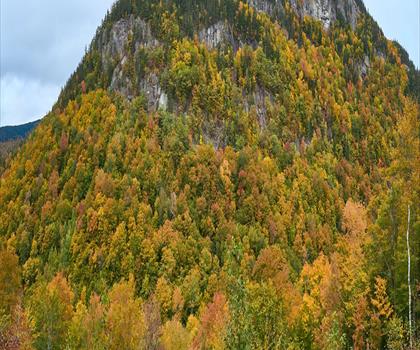
The forest ecosystem transitions beautifully with elevation and season. Mixed hardwoods dominate the lower slopes, gradually giving way to more coniferous species as you climb. Autumn transforms the maples, birches, and oaks into a spectacular foliage display that perfectly complements the summit views. Spring brings delicate wildflowers to the forest floor, while summer offers the full green canopy experience that makes Maine's forests so appealing to hikers.
Conservation Success Story
Douglas Mountain represents one of Maine's conservation success stories, ensuring that this scenic gem remains accessible for future generations. After Dr. Blackman's original ownership in the late 1800s, The Nature Conservancy recognized the area's exceptional ecological and recreational value, stepping in to purchase the land and protect it from development pressures that threatened many scenic areas in Maine's rapidly growing lakes region.
The Nature Conservancy later transferred ownership to the town of Sebago, creating a community-based management model that has proven highly effective. This approach balances conservation goals with recreational access, ensuring the trails stay well-maintained while the summit tower remains in excellent repair for visitors to enjoy.
The mountain's protection extends beyond just the peak itself, encompassing the surrounding forests and watersheds that contribute to the region's ecological health. This comprehensive conservation approach helps maintain the wildlife habitat and water quality that make the area valuable both environmentally and recreationally, proving that smaller peaks can deliver experiences every bit as rewarding as their taller neighbors.
The Essential Hiking Checklist
Everything you need for your next hike. Bilingual, printable, 1 page.
Get your free hiking checklistRecommended gear for this trail
As an Amazon Associate I earn from qualifying purchases.


Ready to go?
Everything you need to know before you goStarting Point
The douglas mountain trails are located in the town of Turner, Maine. To get to the trails, take exit 63 from I-95 and head east on Route 4. The trails are located on the left side of the road.
When?
How much?
As an Amazon Associate I earn from qualifying purchases.
Affiliate links — LGPO may earn a commission at no extra cost to you.
- Hiking shoes Essential
- → Salomon Elixir Tour Mid WP · 203.38 $
- Layered clothing Essential
- Rain jacket Essential
- Trekking poles
- → Black Diamond Trail Ergo Cork · 69.99 $
- Headlamp
- → Petzl Actik Core 625 · 103.95 $
FAQ - Frequently asked questions
Everything you need to knowSimilar hikes nearby
Discover other trails you might enjoy
Long Mountain
Western Mountains

Pleasant Mountain
Western Mountains
Witt's End Trail
Western Mountains
Tumbledown Mountain
Western Mountains
Royce Mt. Trailhead
Western Mountains

Bald Pate Mountain
Western Mountains
Hiking near North Conway
0 trails to explore ~40 km away
We work hard to provide the most up-to-date and error-free data possible. If something seems incorrect, let us know! Your contribution helps the whole community.
Hikers' opinions
Be the first to review!
No hiker has shared their experience yet. Share your impressions and help other hikers!