
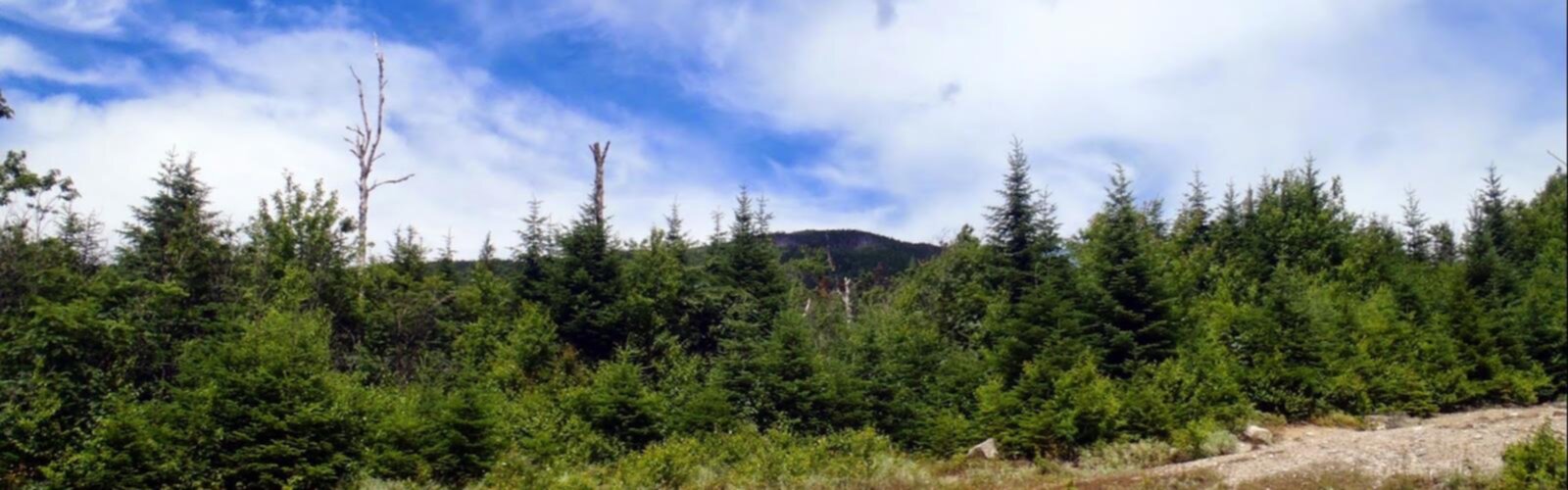

Ready to explore Elephant Mountain, Maine? Here's everything you need to know before you go!
Discover the trail


Trail description
Elephant Mountain rises from the remote wilderness of Piscataquis County, Maine, offering hikers a moderately challenging climb through dense forest to reach views of the surrounding backcountry. Located about 5 miles southeast of Moosehead Lake in Bowdoin College Grant West, this peak sits in true North Woods territory, far from the crowds that flock to more accessible mountains in the state.
The mountain's position places it strategically among other notable peaks in the region—2 miles southwest of Baker Mountain and 5 miles west of White Cap Mountain. This cluster of mountains creates a rugged landscape of rolling summits and deep valleys that characterizes Maine's interior wilderness. The area remains largely undeveloped, with logging roads providing the primary access routes through miles of working forest.
The Trail Experience
A hiking trail leads visitors through typical Maine woods terrain, climbing steadily through mixed hardwood and coniferous forest. The path gains approximately 1,150 meters of elevation, making for a substantial workout that typically requires 4 to 5 hours to complete. Despite being rated as easy in terms of technical difficulty, the elevation gain and remote location mean hikers should come prepared for a full day in the backcountry.
The trail itself follows old logging roads for portions of the route before branching onto footpaths that wind through increasingly dense forest as you gain elevation. Expect to encounter typical Maine trail conditions: rocky sections, root-crossed paths, and potentially muddy areas, especially during spring snowmelt and after heavy rains. The forest canopy provides good shade during summer months, though this also means limited views until you approach the summit area.
Historical Significance
Elephant Mountain carries a sobering piece of Cold War history. On January 24, 1963, a United States Air Force B-52 Stratofortress crashed on the mountain during a training mission. The wreckage remains scattered across the mountainside, and pieces of the aircraft are still visible today. The hiking trail leads visitors to the crash site area, where a memorial has been established to honor the crew members who lost their lives in the accident.
This historical element adds a unique dimension to the hiking experience. The memorial site serves as both a destination for the hike and a place for reflection on this tragic event in aviation history. Visitors should treat the crash site and memorial with appropriate respect, as it represents both a significant historical event and a place where lives were lost.
Geography and Watershed
Elephant Mountain sits within the extensive watershed of the Piscataquis River, which eventually flows into the Penobscot River and reaches the Atlantic Ocean through Penobscot Bay. The mountain's slopes feed several different waterways depending on which face you're exploring. The western slopes drain into North Brook, which flows through Upper Wilson Pond, Lower Wilson Pond, and eventually into Big Wilson Stream before joining the Sebec Lake system and the Piscataquis River.
Water from the south and southeast faces follows South Brook directly into Upper Wilson Pond, while the northeastern slopes contribute to Baker Brook. This water travels through Mountain Pond and Mountain Pond Brook before joining the West Branch of the Pleasant River on its way to the Piscataquis. Understanding these drainage patterns helps explain the lush forest environment and the numerous small streams and wet areas hikers encounter along the trail.
Planning Your Visit
The remote location of Elephant Mountain means careful planning is essential. Access typically involves driving on logging roads that may be gated or restricted depending on active forestry operations. The roads can be rough and may require a vehicle with good clearance, especially during mud season in spring or after heavy rains. Winter access becomes significantly more challenging and may require snowmobiles or skiing to reach the trailhead.
The mountain's elevation and northern location create a shorter hiking season compared to peaks in southern Maine. Snow can linger well into May at higher elevations, and early snowfall in October can make the trail treacherous. The best hiking conditions typically occur from late May through early October, with peak foliage season in late September offering spectacular colors throughout the surrounding forest.
Given the 4 to 5 hour duration and remote setting, hikers should carry plenty of water, food for a full day, and be prepared for changing weather conditions. The elevation gain of over 1,000 meters means temperatures at the summit can be significantly cooler than at the trailhead, especially during shoulder seasons. Layered clothing and rain gear are essential, as weather can change quickly in this region.
What to Expect
The forest environment on Elephant Mountain showcases classic Maine woods ecology. Lower elevations feature mixed hardwood forests with maple, birch, and beech trees, while higher elevations transition to more coniferous species including spruce and fir. Wildlife sightings may include white-tailed deer, black bears, moose, and various bird species typical of northern New England forests.
The trail's moderate technical difficulty means most hikers with basic fitness levels can complete the route, though the significant elevation gain requires steady endurance. Rocky sections and root systems create natural steps and obstacles that add interest to the climb without requiring technical scrambling skills. Stream crossings may be necessary depending on recent weather and seasonal water levels.
Views from the summit area provide perspectives over the vast Maine woods, with glimpses of distant peaks and the sprawling forest that characterizes this region. On clear days, hikers can spot other mountains in the area and gain appreciation for the scale of Maine's interior wilderness. The crash site and memorial add historical context to the natural experience, creating a hike that combines outdoor recreation with historical remembrance.
The Essential Hiking Checklist
Everything you need for your next hike. Bilingual, printable, 1 page.
Get your free hiking checklistRecommended gear for this trail
As an Amazon Associate I earn from qualifying purchases.


Ready to go?
Everything you need to know before you goStarting Point
The Elephant Mountain trails are located in the town of Turner, Maine. To get to the start of the trails, take exit 63 from I-95 and head east on Route 4. The trailhead is located on the left side of the road.
When?
How much?
As an Amazon Associate I earn from qualifying purchases.
Affiliate links — LGPO may earn a commission at no extra cost to you.
- Hiking shoes Essential
- → Salomon Elixir Tour Mid WP · 203.38 $
- Layered clothing Essential
- Rain jacket Essential
- Trekking poles
- → Black Diamond Trail Ergo Cork · 69.99 $
- Headlamp
- → Petzl Actik Core 625 · 103.95 $
FAQ - Frequently asked questions
Everything you need to knowSimilar hikes nearby
Discover other trails you might enjoy

Long Mountain
Western Mountains

Pleasant Mountain
Western Mountains

Witt's End Trail
Western Mountains
Tumbledown Mountain
Western Mountains

Bear Mountain Inn + Barn Maine
Western Mountains
Screw Auger Falls
Western Mountains
Hiking near North Conway
0 trails to explore ~84 km away
We work hard to provide the most up-to-date and error-free data possible. If something seems incorrect, let us know! Your contribution helps the whole community.
Hikers' opinions
Be the first to review!
No hiker has shared their experience yet. Share your impressions and help other hikers!