
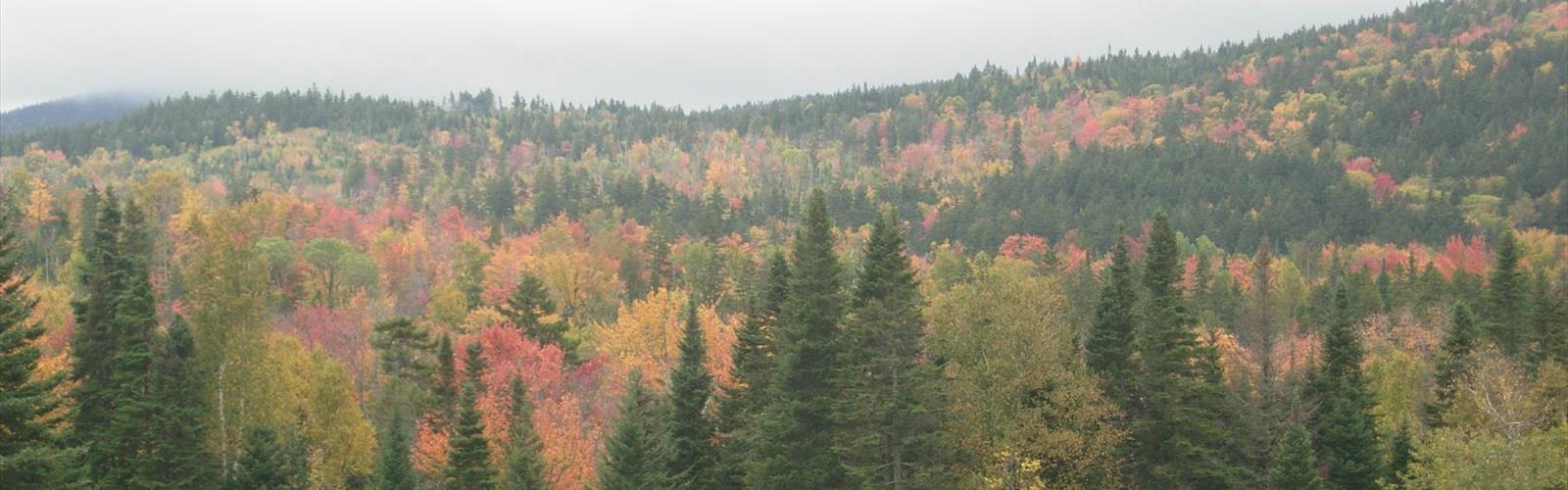

Ready to explore Four Ponds Mountain, Maine? Here's everything you need to know before you go!
Discover the trail

Trail description
Four Ponds Mountain sits in Maine's Western Mountains region, offering a rewarding climb through varied terrain to open summit views. The peak connects to the Appalachian Trail corridor, which makes it a natural stop for section hikers moving through the area as well as day visitors looking to explore Maine's backcountry on their own terms.
The mountain gets its name from four distinct water bodies spread across the surrounding landscape: Long Pond, Sabbath Day Pond, Moxie Pond, and Little Swift River Pond. These aren't just scenic backdrops — they shape the entire character of the hike. Each pond creates its own microenvironment, draws different wildlife, and gives hikers natural rest points that break the route into manageable sections. That combination of summit goal and multiple pond destinations is what sets Four Ponds Mountain apart from other peaks in the Western Mountains.
Trail Stats
The route covers 6.4 kilometers with 892 meters of elevation gain, and most hikers complete it in around 3 hours and 5 minutes. It's listed as easy in difficulty, which reflects the trail's steady, manageable grades rather than any lack of physical effort — that elevation gain is real and you'll feel it. Think of it as a trail that rewards consistent effort without throwing technical surprises at you.
What the Trail Feels Like
The hike starts in dense mixed forest typical of Maine's interior. Towering pines and hardwoods form a solid canopy overhead, filtering light down to the forest floor in shifting patterns throughout the day. The trail surface transitions from soft forest duff in the lower sections to rockier ground as you gain elevation, giving you a feel for the geological variety this part of Maine has to offer.
The lower grades ease you into the climb before the trail pitches upward through steeper sections that ask for more deliberate footwork. Root systems cross the path regularly, and you'll encounter occasional stream crossings that add a bit of texture to the route without creating real obstacles for anyone wearing decent footwear. The terrain keeps you engaged without demanding technical skills.
As you move through the elevation range, the forest ecosystem shifts noticeably. The lower sections near the pond edges support aquatic-adjacent habitat, while the mid-mountain forest transitions toward the more open conditions near the summit. Each zone has its own feel, and the change in character from one section to the next keeps the hike from becoming monotonous.
Wildlife and Nature
The habitat diversity created by the four ponds makes wildlife observation genuinely productive here. Squirrels and chipmunks are reliable trail companions throughout the route. Moose frequent the area, particularly near the water sources, so it's worth slowing down and scanning the pond edges when you pass through. Bird activity is strongest in the early morning hours, which is one good reason to start the hike early if that's an option.
The combination of aquatic edges, dense forest interior, and open summit terrain supports different species across the elevation range. You're not locked into one habitat type for the whole hike — each section offers its own opportunities for observation, which makes the route interesting for anyone who pays attention to what's moving around them.
Summit and Views
The summit delivers the kind of panoramic views that make the elevation gain worthwhile. The rolling terrain of the Western Mountains spreads out in every direction, with forested ridges layering toward distant peaks. On a clear day, the visibility extends across miles of Maine's backcountry, revealing the dense network of lakes, ponds, and waterways that define this part of the state.
The summit area has enough space for groups to spread out comfortably. There are multiple vantage points rather than a single narrow opening, which means you can move around and find your preferred angle without crowding. That makes it a good spot to actually spend time at the top rather than just checking the box and heading back down.
The four ponds become visible from various points along the upper trail, each one appearing as a distinct patch of blue set into the surrounding forest. They serve as natural landmarks for orienting yourself on the mountain and make for strong photography subjects at different points in the climb.
Planning Your Visit
Four Ponds Mountain works well as a day hike given the distance and estimated duration, but the Appalachian Trail corridor nearby also opens up options for multi-day trips with camping for those who want to extend the experience.
- Footwear: Sturdy hiking boots handle the mix of soft forest floor, root-covered sections, and rocky outcroppings better than trail runners or casual shoes.
- Water: Carry enough for the full 6.4 kilometers. The elevation gain and forest humidity during warmer months mean you'll go through more than you expect. The pond locations are natural break points if you need to stop and refuel.
- Timing: Early starts pay off for wildlife observation and give you the summit to yourself before other hikers arrive.
- Weather: Clear days maximize the summit views. Rain makes the rocky sections slippery and the trail muddier, so check conditions before heading out. Overcast days are cooler and often more comfortable for the climb itself, even if the views suffer.
Seasonal conditions affect the trail meaningfully. Spring can bring muddy sections and higher water at stream crossings. Fall shifts the forest into full color, making the hike through the lower mixed forest particularly strong visually. Winter requires cold-weather gear and experience with the conditions that come with it.
Why This One Stands Out
Most peaks in the Western Mountains offer a summit and a view. Four Ponds Mountain layers in four distinct water bodies that function as intermediate destinations, natural rest stops, and wildlife hotspots all at once. If someone in your group isn't up for the full summit push, the ponds give them a worthwhile goal on their own. If you are going to the top, the ponds make the approach more interesting than a straight climb through uniform forest.
The easy difficulty rating combined with nearly 900 meters of elevation gain also makes this a smart choice for hikers building toward harder routes — you get a genuine physical workout on terrain that stays forgiving, which is a useful combination when you're working on endurance without wanting to take on technical challenges at the same time.
The Essential Hiking Checklist
Everything you need for your next hike. Bilingual, printable, 1 page.
Get your free hiking checklistRecommended gear for this trail
As an Amazon Associate I earn from qualifying purchases.


Ready to go?
Everything you need to know before you goStarting Point
To access the hiking trails, you can start at the Height of Land parking area on Route 17. Another option is to begin at the trailhead located off South Shore Road near Mooselookmeguntic Lake. Both locations provide convenient access to the trails.
When?
How much?
As an Amazon Associate I earn from qualifying purchases.
Affiliate links — LGPO may earn a commission at no extra cost to you.
- Hiking shoes Essential
- → Salomon Elixir Tour Mid WP · 203.38 $
- Layered clothing Essential
- Rain jacket Essential
- Trekking poles
- → Black Diamond Trail Ergo Cork · 69.99 $
- Headlamp
- → Petzl Actik Core 625 · 103.95 $
FAQ - Frequently asked questions
Everything you need to knowSimilar hikes nearby
Discover other trails you might enjoy
Long Mountain
Western Mountains
Pleasant Mountain
Western Mountains
Witt's End Trail
Western Mountains
Tumbledown Mountain
Western Mountains

Bear Mountain Inn + Barn Maine
Western Mountains
Screw Auger Falls
Western Mountains
Hiking near North Conway
0 trails to explore ~96 km away
We work hard to provide the most up-to-date and error-free data possible. If something seems incorrect, let us know! Your contribution helps the whole community.
Hikers' opinions
Be the first to review!
No hiker has shared their experience yet. Share your impressions and help other hikers!