
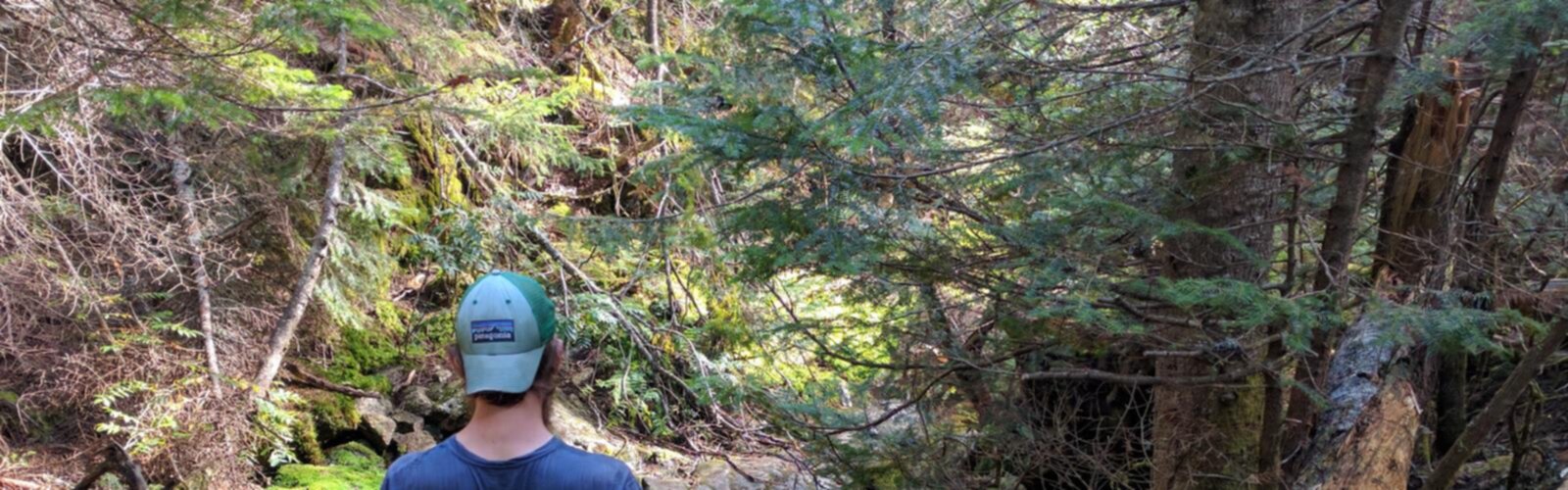

Ready to explore Lone Mountain, Maine? Here's everything you need to know before you go!
Discover the trail
Trail description
Lone Mountain stands out as one of the more rewarding hikes in Maine's Western Mountains region — a place where the numbers actually make sense together. You're looking at a 3.2-kilometer route with 994 meters of elevation gain, which means this trail climbs hard and fast. That combination is what makes it interesting: the distance is short enough to feel manageable, but the elevation gain is real enough to make you work for the summit.
Despite being rated easy, don't let that classification fool you into underestimating the climb. The easy rating reflects the trail's straightforward navigation and non-technical terrain, not a casual stroll. The 994-meter gain packed into 3.2 kilometers means a sustained, consistent uphill push from start to finish. Plan for around 2 hours and 15 minutes to complete the hike, and you'll have a solid half-day adventure with a genuine sense of accomplishment at the top.
Trail Terrain and What to Expect Underfoot
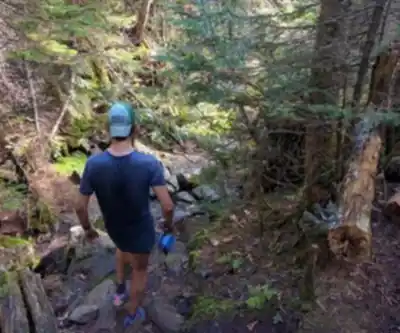
The trail climbs steadily through Maine's characteristic mixed forest, and the grade stays consistent throughout. There's no scrambling, no exposed ledges requiring hands-on navigation — just a well-defined path that keeps pushing upward. That consistency is actually one of the trail's strengths: you can settle into a rhythm and focus on the forest around you rather than constantly watching your footing.
The lower sections move through dense woodland, where the canopy closes in overhead and the sounds of the surrounding forest take over. As you gain elevation, the forest composition shifts noticeably. The understory opens up, light filters through more freely, and the character of the trail changes in a way that keeps the climb from feeling monotonous. These natural transitions between forest zones give the hike a sense of progression that makes the elevation gain feel earned rather than relentless.
The lower trail network offers a different experience entirely for those who want to explore without committing to the full summit push. These paths move through meadow areas and follow water features, providing a quieter, more horizontal perspective on the mountain's ecosystem. For groups with mixed fitness levels or families with younger kids, this lower network makes Lone Mountain genuinely versatile.
The Summit
The views from the top are the payoff for all that elevation gain. From the summit, you get a wide look across the rolling, forested hills that define Maine's Western Mountains — ridge after ridge of dense green canopy stretching toward the horizon, with distant peaks layering into blue-green silhouettes. It's the kind of view that reminds you why you climbed in the first place.
The summit area gives you room to stop, eat, and actually absorb where you are. Looking back down the mountain and tracing your route through the trees below adds a satisfying sense of scale to the whole experience. On clear days, visibility extends well across the surrounding region, giving you a real sense of the landscape's depth and character.
Wildlife Along the Trail
Lone Mountain's varied terrain supports a solid range of wildlife, and the transition between forest zones creates good conditions for spotting animals throughout the hike. Deer move through the area regularly, particularly during early morning and late afternoon. Their trails frequently cross the hiking path, and if you're moving quietly, you have a reasonable chance of catching a glimpse — especially in the lower sections near the meadow areas.
Fox are present in the area but tend to stay out of sight during daylight hours. You're more likely to notice their tracks near water sources and in the meadow zones than to spot one directly. The bird life is more consistently visible and audible throughout the hike. Different species occupy different elevation zones, so the soundscape shifts as you climb — deep forest species in the lower sections, different calls as the canopy opens higher up.
The brooks along the lower trail network are worth slowing down for, both for the wildlife activity around them and for the scenery itself. Moss-covered rocks, small cascades, and quiet pools make these water features some of the most photogenic spots on the mountain.
Practical Preparation
The elevation gain is the main factor to prepare for. Nearly 1,000 meters of climbing in 3.2 kilometers means your body is working hard the entire time, and hydration needs go up significantly compared to a flat trail of the same distance. Carry more water than you think you'll need, especially in warmer months. Bring enough food to sustain energy through the full 2-hour-plus effort — this isn't a trail where a light snack will cut it.
Footwear matters here. The trail doesn't require technical gear, but good hiking boots with ankle support will make a real difference over a sustained climb and on the descent, when fatigue starts to affect your footing. Trail runners work well for hikers who are comfortable in them, but avoid casual sneakers given the length and intensity of the elevation gain.
Weather at the summit can differ significantly from conditions at the trailhead. The elevation gain alone is enough to bring noticeably cooler temperatures and stronger wind at the top, even on a warm morning below. Pack a wind layer and rain protection regardless of what the forecast looks like when you start — conditions in the Western Mountains can shift quickly.
When to Go
Late spring through early fall is the reliable window for Lone Mountain. Spring brings the forest back to life, with wildflowers appearing in the meadow areas and the brooks running full from snowmelt — the lower trail network is particularly worth exploring during this period. Summer offers stable conditions and the best overall visibility from the summit, though the forest canopy provides natural shade on the climb even on hot days. Early fall turns the mountain into a showcase of foliage color, and the summit views take on a completely different character when the surrounding ridgelines are lit up with reds, oranges, and yellows.
Winter access depends on conditions and your gear — the elevation gain becomes a more serious undertaking in snow and ice, and the trail's easy rating applies to three-season conditions only.
The Essential Hiking Checklist
Everything you need for your next hike. Bilingual, printable, 1 page.
Get your free hiking checklistRecommended gear for this trail
As an Amazon Associate I earn from qualifying purchases.


Ready to go?
Everything you need to know before you goStarting Point
The Lone Mountain trails are located in the town of Carrabassett Valley, Maine. To get to the start of the trails, take Route 27 north from Kingfield, Maine. The trailhead is located on the left side of the road, just past the Sugarloaf Mountain Resort.
When?
How much?
As an Amazon Associate I earn from qualifying purchases.
Affiliate links — LGPO may earn a commission at no extra cost to you.
- Hiking shoes Essential
- → Salomon Elixir Tour Mid WP · 203.38 $
- Layered clothing Essential
- Rain jacket Essential
- Trekking poles
- → Black Diamond Trail Ergo Cork · 69.99 $
- Headlamp
- → Petzl Actik Core 625 · 103.95 $
FAQ - Frequently asked questions
Everything you need to knowSimilar hikes nearby
Discover other trails you might enjoy
Long Mountain
Western Mountains
Pleasant Mountain
Western Mountains
Witt's End Trail
Western Mountains
Tumbledown Mountain
Western Mountains

Bear Mountain Inn + Barn Maine
Western Mountains
Screw Auger Falls
Western Mountains
Hiking near North Conway
0 trails to explore ~119 km away
We work hard to provide the most up-to-date and error-free data possible. If something seems incorrect, let us know! Your contribution helps the whole community.
Hikers' opinions
Be the first to review!
No hiker has shared their experience yet. Share your impressions and help other hikers!