

Ready to explore Mahoosuc Mountain, Maine? Here's everything you need to know before you go!
Discover the trail
Trail description
Mahoosuc Mountain stands as one of Maine's most formidable hiking challenges, anchoring the rugged Mahoosuc Range in the state's western mountains. This isn't your typical weekend stroll—the 18.8-kilometer trek demands serious commitment with 1,049 meters of elevation gain through some of the most technically demanding terrain in New England. Plan on spending 7.5 hours minimum on this very hard route, though most experienced hikers find themselves out there closer to 8 to 10 hours when you factor in the inevitable delays navigating the mountain's legendary obstacles.
The mountain's reputation centers on the notorious Mahoosuc Notch, a boulder-choked ravine that Appalachian Trail hikers know as the "toughest mile" on the entire 2,190-mile trail. Here, the path disappears into a chaotic jumble of house-sized granite blocks, forcing you to crawl, squeeze, and scramble through dark crevices where ice lingers well into summer. What looks like a short section on the map can easily consume two hours as you navigate this natural obstacle course, testing both your route-finding skills and your comfort with exposure.
Trail Experience and Terrain
The approach to Mahoosuc Mountain takes you through dense mixed forests of spruce, fir, and hardwoods, where the trail climbs steadily over rocky, root-laced terrain. Early sections wind through typical Maine woodland, but as elevation increases, the character shifts dramatically. Granite slabs become more frequent, and the forest opens to reveal glimpses of the surrounding peaks.
The trail demands constant attention to foot placement and route selection. You'll encounter everything from muddy bog bridges in the lower elevations to exposed granite ledges that require basic scrambling skills. Stream crossings punctuate the route, and while most are straightforward rock-hops during normal conditions, spring snowmelt or heavy rains can turn them into more serious obstacles.
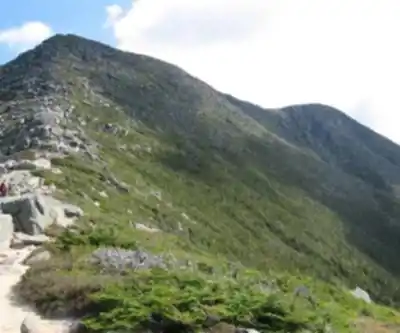
Beyond the notorious notch, the trail continues its relentless climb over exposed ridgelines where weather can change rapidly. The final push to the summit involves scrambling over bare rock faces and navigating narrow ledges that demand sure footing and a head for heights. This isn't a trail where you can zone out—the technical terrain keeps you fully engaged throughout the day, making it as much a mental challenge as a physical one.
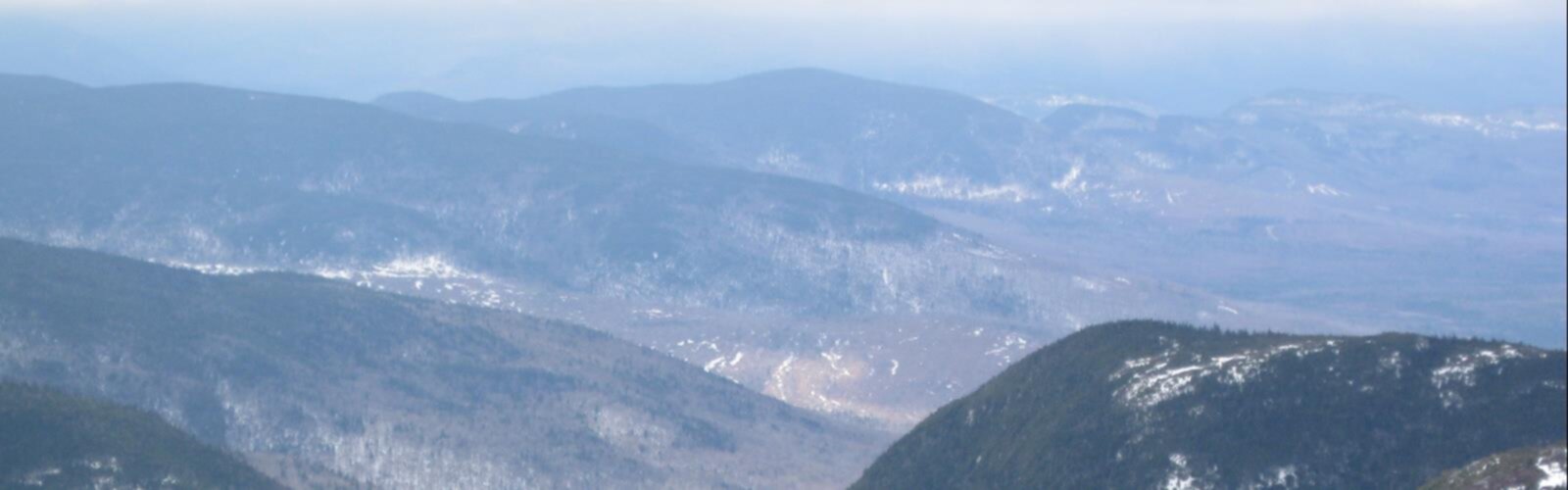
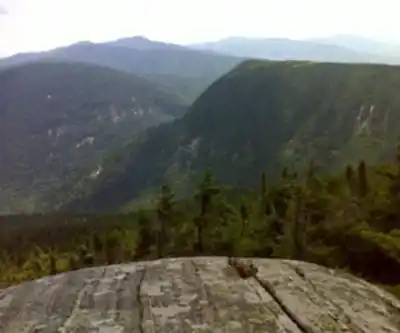
The payoff comes in the form of sweeping panoramic views across Maine's vast wilderness. From the summit and various viewpoints along the ridge, you'll see an unbroken carpet of forest stretching to the horizon, punctuated by distant peaks and the occasional glint of remote lakes. On clear days, the White Mountains of New Hampshire dominate the western skyline, while the Rangeley Lakes region spreads out to the north.
Wildlife and Natural Features
The Mahoosuc Range supports a robust population of Maine's iconic wildlife. Moose frequent the lower elevations, particularly in boggy areas and near water sources, with early morning and late afternoon offering the best viewing opportunities. Black bears are common throughout the region, making proper food storage essential for overnight trips. The diverse elevation zones support an impressive array of bird species, from deep-woods dwellers like pileated woodpeckers in the valleys to alpine specialists on the exposed ridges.
The geological features here tell the story of ancient mountain-building and glacial sculpting. The massive boulder fields that create the notch resulted from freeze-thaw cycles splitting the granite bedrock, while glacial action carved the dramatic valleys visible from the summit. These same forces created the numerous caves and crevices that make navigation through the notch so challenging and time-consuming.
Keep an eye out for the unique microclimate within Mahoosuc Notch itself. The deep, shadowy gaps between boulders create pockets where temperatures remain significantly cooler than the surrounding forest, sometimes harboring ice formations that persist through the summer months. This creates an almost cave-like environment that supports different plant communities than you'll find elsewhere on the mountain.
Seasonal Considerations
Each season transforms the Mahoosuc experience completely. Fall brings spectacular foliage displays as the hardwood forests explode in brilliant reds, oranges, and yellows, typically peaking in late September to early October. However, this popular season also means sharing the trail with more hikers and dealing with potentially unpredictable weather as winter approaches.
Winter hiking here requires advanced skills and specialized equipment. The notch becomes even more treacherous with ice and snow filling the gaps between boulders, while the exposed ridges face the full fury of Maine's winter storms. Only experienced winter mountaineers should attempt this route during the cold months, and even then, conditions can make the notch completely impassable.
Spring brings its own challenges as snowmelt creates muddy, slippery conditions and swells the numerous stream crossings. The notorious Maine mud season can make the lower sections nearly impassable, while ice may still lurk in the shadowy depths of the notch well into May. However, spring also awakens the wildflower displays and brings migrating birds back to the region.
Summer offers the most stable conditions with lush green forests and generally clear weather, though afternoon thunderstorms can develop quickly on the exposed ridges. The dense canopy provides welcome shade during the forest sections, but the open summit areas can be surprisingly hot and exposed to intense sun.
Planning Your Adventure
The very hard difficulty rating reflects both the technical challenges and the sustained physical demands of this route. The combination of distance, elevation gain, and technical terrain makes this suitable only for experienced hikers in excellent physical condition. The boulder scrambling through Mahoosuc Notch requires basic rock climbing skills and comfort with exposure, plus the flexibility to squeeze through tight spaces.
Most hikers tackle this as a challenging day hike, but the region also offers excellent opportunities for multi-day backpacking expeditions. Several established campsites along the Appalachian Trail corridor provide options for breaking the journey into more manageable segments, allowing time to fully appreciate the unique character of this remarkable landscape.
Water sources are generally reliable throughout the hiking season, but the exposed nature of much of the route means weather protection is crucial. Conditions can deteriorate rapidly on the ridges, and the technical terrain of the notch becomes significantly more dangerous when wet. Pack layers for temperature swings and always carry rain gear, even on seemingly perfect days.
The Essential Hiking Checklist
Everything you need for your next hike. Bilingual, printable, 1 page.
Get your free hiking checklistRecommended gear for this trail
As an Amazon Associate I earn from qualifying purchases.


Ready to go?
Everything you need to know before you goStarting Point
To access the hiking trails, you can start at several trailheads:
Grafton Notch State Park Trailhead: Located on Route 26 in Newry, Maine. There is a parking area available for hikers.
Success Pond Road Trailhead: Accessible via Success Pond Road, which is off Route 16 near Berlin, New Hampshire. This road leads to various entry points along the trails.
Speck Pond Trailhead: Found at the end of Success Pond Road, this trailhead provides access to the trails from a different angle.
Ensure your vehicle is suitable for unpaved roads if using Success Pond Road, as conditions can vary.
When?
How much?
As an Amazon Associate I earn from qualifying purchases.
Affiliate links — LGPO may earn a commission at no extra cost to you.
- Hiking shoes Essential
- → Salomon Elixir Tour Mid WP · 203.38 $
- Layered clothing Essential
- Rain jacket Essential
- Trekking poles
- → Black Diamond Trail Ergo Cork · 69.99 $
- Headlamp
- → Petzl Actik Core 625 · 103.95 $
FAQ - Frequently asked questions
Everything you need to knowSimilar hikes nearby
Discover other trails you might enjoy
Long Mountain
Western Mountains

Pleasant Mountain
Western Mountains
Witt's End Trail
Western Mountains
Tumbledown Mountain
Western Mountains

Bear Mountain Inn + Barn Maine
Western Mountains
Screw Auger Falls
Western Mountains
Hiking near North Conway
0 trails to explore ~56 km away
We work hard to provide the most up-to-date and error-free data possible. If something seems incorrect, let us know! Your contribution helps the whole community.
Hikers' opinions
Be the first to review!
No hiker has shared their experience yet. Share your impressions and help other hikers!