

Ready to explore Glendale Falls? Here's everything you need to know before you go!
Discover the trail
Oh no! We don't have any photos 😢
This trail hasn't been captured yet. Be the first to share your adventure!Trail description
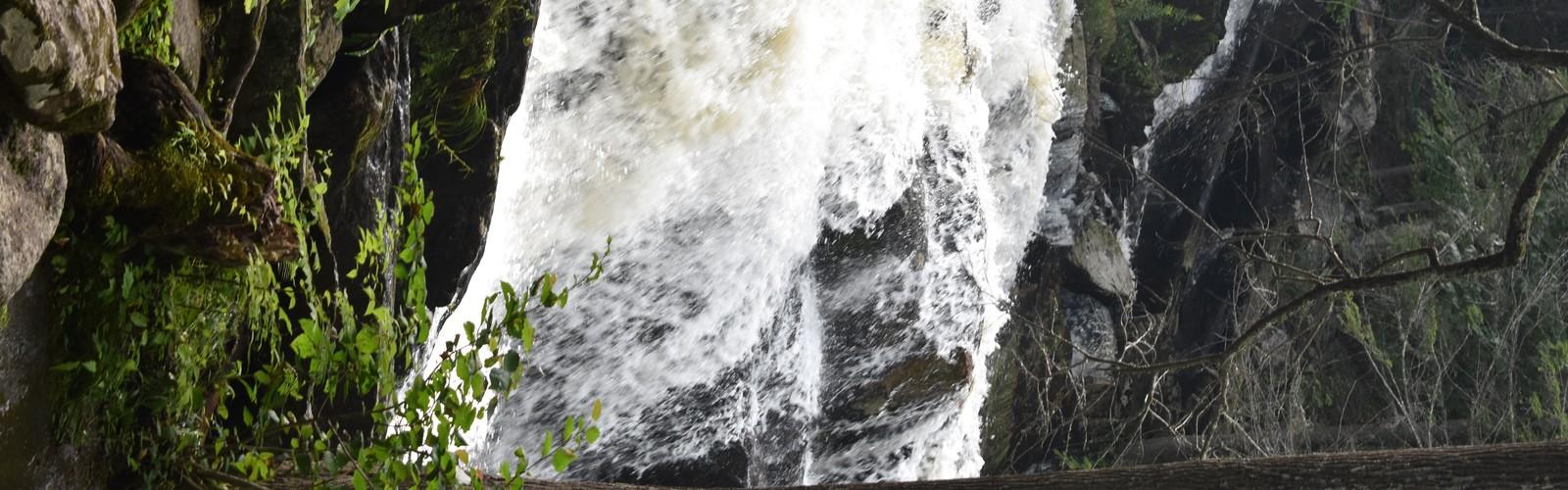
Tucked into Chester-Blandford State Forest in western Massachusetts, Glendale Falls is one of the most impressive waterfalls in the Pioneer Valley — and honestly, one of the most underrated in the entire state. The cascade drops through a series of granite ledges in multiple tiers, making it one of the longest continuous waterfall displays in Massachusetts. For a hike that clocks in at just 1.6 km with only 61 meters of elevation change, the payoff is genuinely outsized.
The falls are highly responsive to recent weather. After a good rain, the water thunders down the rock face and you can hear it well before you see it — the sound carries through the trees and pulls you forward on the trail. During drier stretches, the flow thins into ribbons that trace the natural grooves worn into the granite over centuries, which actually makes for some of the best photography. Both versions are worth seeing.
The Trail
The route is short and rated easy, with an estimated 30 minutes of hiking time. That said, "easy" here refers to the overall effort — the trail starts with a gentle descent through mature mixed forest, and the final stretch near the falls involves uneven footing and potentially slick rock surfaces. Waterproof footwear with solid grip is a smart call, especially if there's been any recent precipitation.
The forest along the way is classic western Massachusetts hardwood-conifer mix: oaks, maples, white pines, with a dense understory that keeps things shaded and cool. The trail floor is often carpeted with ferns and moss, particularly as you get closer to the water. Small stream crossings and rocky sections break up the walk and give you a sense of the terrain building toward something bigger.
Wildlife is present but not guaranteed — chipmunks and forest birds are common, and deer are occasionally spotted during early morning visits. The trail isn't heavily trafficked compared to more well-known waterfall hikes in the region, which adds to the appeal if you're looking for a quieter experience.
At the Falls
The main drop is the showstopper, but it's worth taking time to explore both above and below the primary viewing area. The multi-tiered structure means there are several distinct cascades and pools to discover, each with its own character. The granite bedrock has been polished and sculpted by the water into smooth basins and channels that are genuinely interesting to look at up close.
The pools at the base stay cold year-round. Swimming isn't really practical given the temperature and the rocky conditions, but the pools make for excellent foreground elements in photos. The surrounding rocks offer multiple vantage points — just move carefully, because wet granite is deceptively slippery.
The space immediately around the falls is relatively compact, so if you arrive when others are already there, it can feel a bit crowded. Weekday mornings are your best bet for having the place largely to yourself. The rocky walls create a natural amphitheater effect that amplifies the sound of the water, which makes the whole experience feel more immersive than the trail length might suggest.
Seasonal Considerations
Spring delivers the most dramatic flow — snowmelt and spring rains push the falls to their peak volume, and the surrounding forest is coming back to life with fresh green growth. Fall is arguably the most visually striking time to visit, with the hardwood canopy turning and the contrast between the autumn colors, white water, and dark granite making for compelling scenery. Summer is the most comfortable for hiking and gives you the best access to the various viewpoints around the falls.
Lighting at the falls shifts considerably throughout the day depending on the canopy cover and the orientation of the gorge. Mid-morning tends to offer the most even, workable light for photography.
Planning Your Visit
Budget around one to two hours total to hike in, spend time at the falls, and hike back out at a relaxed pace. The short distance doesn't mean you need to rush — there's enough to explore around the falls to justify lingering. Bring water and a snack, and pack out everything you bring in.
Chester-Blandford State Forest has additional trails beyond the Glendale Falls route, so if you want to extend the outing, there are options to explore more of the forest without having to drive elsewhere. For a standalone destination, though, Glendale Falls delivers a genuinely memorable waterfall experience in a compact, accessible package.
The Essential Hiking Checklist
Everything you need for your next hike. Bilingual, printable, 1 page.
Get your free hiking checklistRecommended gear for this trail
As an Amazon Associate I earn from qualifying purchases.


Ready to go?
Everything you need to know before you goStarting Point
The glendale falls is located in Massachusetts. To get to the start of the trails, take exit 16 off of I-91 and head west on Route 2. Take a right onto Route 112 and drive for 1.5 miles. The falls will be on your left.
When?
How much?
As an Amazon Associate I earn from qualifying purchases.
Affiliate links — LGPO may earn a commission at no extra cost to you.
- Hiking shoes Essential
- → Salomon Elixir Tour Mid WP · 203.38 $
- Layered clothing Essential
- Rain jacket Essential
- Trekking poles
- → Black Diamond Trail Ergo Cork · 69.99 $
- Headlamp
- → Petzl Actik Core 625 · 103.95 $
FAQ - Frequently asked questions
Everything you need to knowSimilar hikes nearby
Discover other trails you might enjoy
Mount Tom State Reservation
Pioneer Valley
Chapel Falls
Pioneer Valley
Lake Wyola
Pioneer Valley
Spirit Falls Trail head
Pioneer Valley
Mill River Conservation Area
Pioneer Valley
Poet's Seat Tower
Pioneer Valley
Hiking near Springfield
0 trails to explore ~42 km away
We work hard to provide the most up-to-date and error-free data possible. If something seems incorrect, let us know! Your contribution helps the whole community.
Hikers' opinions
Be the first to review!
No hiker has shared their experience yet. Share your impressions and help other hikers!