

Ready to explore windham rail trail? Here's everything you need to know before you go!
Discover the trail
Trail description
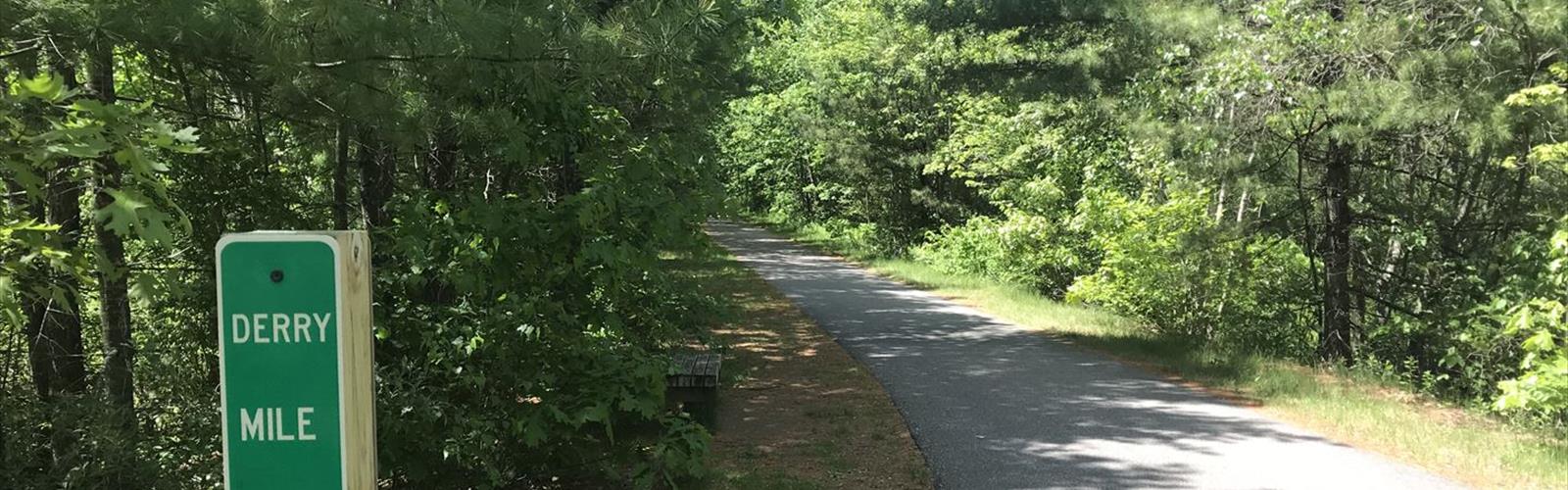
The Windham Rail Trail follows a former Boston and Maine Railroad corridor through the heart of New Hampshire's Merrimack Valley, making it one of the most accessible and genuinely enjoyable rail-trails in southern New Hampshire. At 8.5 kilometers (about 4.1 miles) end to end with only 15 meters of elevation change across the entire route, this is as flat and forgiving as trails get — the kind of place where you can actually look around and take things in rather than watching your footing the whole time.
The trail traces the old Worcester Nashua line, and the railroad's original engineering still shapes the experience today. Gentle curves, strategic routing through the landscape's natural low points, and that remarkably consistent grade all come from the same logic that once guided steam locomotives through this corridor. What worked for trains turns out to work beautifully for hikers, cyclists, and families pushing strollers.
Trail Experience and Terrain
The surface here is one of the trail's biggest practical advantages. Unlike many forest paths in the region that turn muddy after rain or require careful footwork around roots and rocks, the Windham Rail Trail offers consistent, reliable footing throughout. Running shoes work just as well as hiking boots, and the width and condition make it genuinely stroller-friendly — not just technically possible, but actually comfortable.
The 8.5-kilometer distance takes most people around two hours and ten minutes at a relaxed pace, though that can vary depending on how much time you spend at the wetland sections. The route moves through a mix of dense woodland and open wetland areas, and those transitions are where the trail earns its appeal. The forest stretches provide a solid canopy overhead, while the wetland openings break things up and give you a chance to stop, look around, and spot whatever's moving through the reeds and water.
There are no technical sections, no steep pitches, and nothing that would challenge even a first-time hiker. That said, "easy" doesn't mean uninteresting — the changing scenery along the corridor keeps the walk engaging from start to finish.
Wildlife and Natural Features
The mix of forest and wetland habitat along the trail creates good conditions for wildlife observation. The quiet, non-motorized nature of the corridor means animals tend to be less spooked than on busier trails, and early morning visits in particular can reward patience. The wetland sections are the most productive spots — these transitional habitats support species that you won't find in the denser forest stretches.
The forest itself is typical of southern New Hampshire's mixed hardwood and softwood composition, with the canopy shifting character as you move along the route. The trail is well-known locally as a fall destination, when the foliage along the corridor puts on a strong display without requiring any significant effort to reach or navigate.
Access and Practical Considerations
Multiple access points along the trail give you flexibility in how you approach the visit. You can walk the full 8.5 kilometers out and back, or pick a shorter segment depending on your group's energy and available time. This makes it a practical option for families or groups where fitness levels vary — it's easy to meet up at different points along the route without anyone feeling like they're holding the group back.
The trail accommodates hikers, cyclists, and multi-use visitors comfortably. The width and surface quality mean that different user groups can share the space without much friction, which is part of why it functions well as a community trail rather than just a destination hike.
Year-round use is realistic here. The maintained surface handles seasonal weather better than most natural trails in the area, which extends the practical window for visits into shoulder seasons when other local options might be too muddy or snow-covered to be enjoyable.
Historical Context
Walking the Windham Rail Trail puts you directly on the route of the Boston and Maine Railroad's Worcester Nashua line, which once moved passengers and freight through this exact corridor and connected communities across southern New Hampshire. The infrastructure that made sense for railroad operations — the gentle grades, the strategic routing, the careful management of the landscape — now makes for an ideal recreational trail.
The conversion from active rail line to public trail is part of a broader pattern across New England, where abandoned corridors have been repurposed as outdoor spaces that serve local communities. The Windham Rail Trail is a solid example of that transformation: the original engineering is still doing its job, just for a different purpose and a different kind of traveler.
The forests and wetlands that railroad passengers once glimpsed briefly from moving train windows are now the main attraction, and the slower pace of foot travel gives you a very different relationship with the same landscape.
The Essential Hiking Checklist
Everything you need for your next hike. Bilingual, printable, 1 page.
Get your free hiking checklistRecommended gear for this trail
As an Amazon Associate I earn from qualifying purchases.


Ready to go?
Everything you need to know before you goStarting Point
The best way to get to the start of the trails at the windham rail trail in New Hampshire is to drive there.
When?
How much?
As an Amazon Associate I earn from qualifying purchases.
Affiliate links — LGPO may earn a commission at no extra cost to you.
- Hiking shoes Essential
- → Salomon Elixir Tour Mid WP · 203.38 $
- Layered clothing Essential
- Rain jacket Essential
- Trekking poles
- → Black Diamond Trail Ergo Cork · 69.99 $
- Headlamp
- → Petzl Actik Core 625 · 103.95 $
FAQ - Frequently asked questions
Everything you need to knowSimilar hikes nearby
Discover other trails you might enjoy

Uncanoonuc Mountains
Merrimack Valley
Benson Park
Merrimack Valley
Derry Rail Trail
Merrimack Valley
Mine Falls Park
Merrimack Valley
South Uncanoonuc
Merrimack Valley
Twin Bridge Park
Merrimack Valley
Hiking near Manchester
0 trails to explore ~21 km away
We work hard to provide the most up-to-date and error-free data possible. If something seems incorrect, let us know! Your contribution helps the whole community.
Hikers' opinions
Be the first to review!
No hiker has shared their experience yet. Share your impressions and help other hikers!