

Ready to explore Appalachian Trail Boardwalk? Here's everything you need to know before you go!
Discover the trail
Trail description
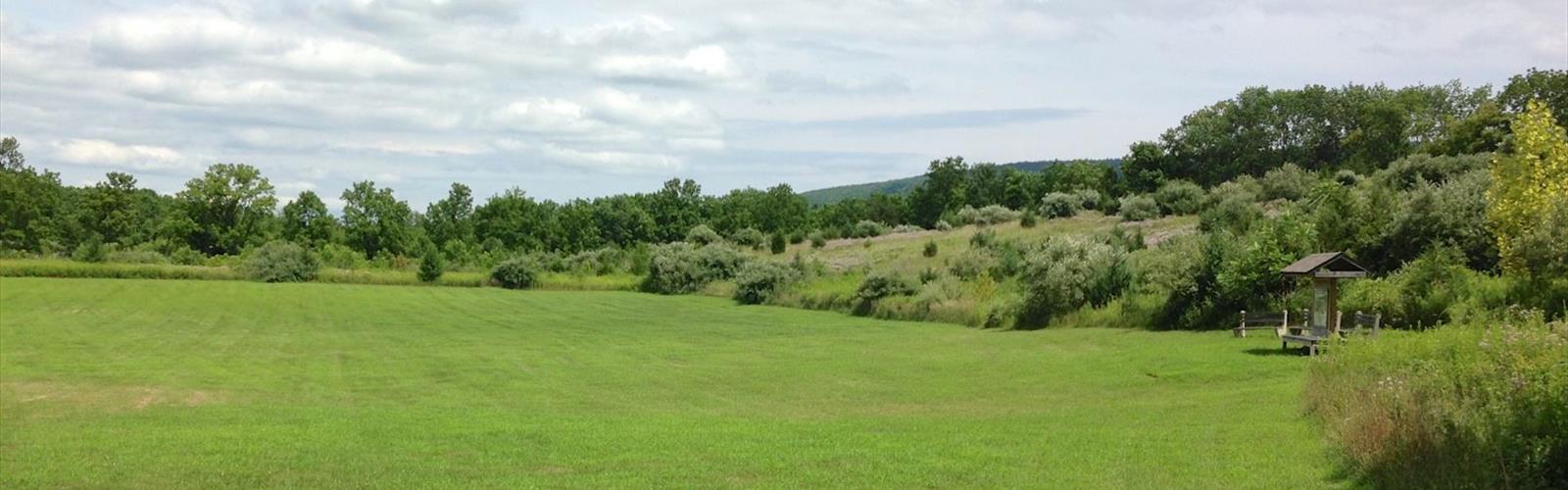
The Appalachian Trail Boardwalk in the Delaware Water Gap area of New Jersey offers one of the most distinctive stretches along the entire Appalachian Trail. This elevated wooden pathway cuts through the Pochuck Valley wetlands, turning what would otherwise be an impassable muddy slog into a smooth, accessible walk through some of New Jersey's most intact marsh ecosystems. At just 1.6 km with only 3 meters of elevation gain, it's an easy 30-minute outing that punches well above its weight in terms of scenery and experience.
What the Trail Actually Feels Like
Walking this section is genuinely unlike most of what the Appalachian Trail throws at you in New Jersey. Forget the rocky scrambles and root-tangled paths — here, the wooden planks underfoot are level and consistent, and your eyes are free to wander across the open marsh rather than watching every step. The boardwalk is elevated enough to give you a real sense of floating above the wetlands, with the water and vegetation spreading out on both sides.
The pathway varies in width. Some sections are narrow enough that you'll step aside to let oncoming hikers pass, while others open up enough for two people to walk side by side comfortably. The structure is generally well-maintained, but the wooden surface can get slippery when wet, so footwear with decent grip is worth wearing even on a trail this flat.
The Pochuck Suspension Bridge
The clear highlight of this section is the Pochuck Suspension Bridge, a 130-foot span that crosses above the wetlands. It has a gentle sway to it as you walk across, which adds a bit of unexpected excitement to an otherwise mellow outing. The bridge is fitted with handrails, and the views from the middle — looking out over the open marsh in both directions — are genuinely impressive. It's one of the better photography spots in the area, especially in the early morning or late afternoon when the light hits the grasses and water at a low angle.
From the bridge, you're at the right height to spot wildlife without disturbing it. Great blue herons are a common sight, moving slowly through the shallows below. Red-winged blackbirds are almost always present in the warmer months, perched on cattails and making themselves heard. Various waterfowl use the channels beneath the bridge, and the elevated vantage point makes it easier to observe them than any ground-level trail would allow.
Wildlife and the Wetland Ecosystem
The Pochuck Valley wetlands are a functioning, ecologically significant landscape. These marshes filter water, buffer against flooding, and provide habitat for species that have lost ground elsewhere in the region as development has consumed similar environments. Walking the boardwalk gives you a close look at this ecosystem without actually setting foot in it — which is precisely the point of the elevated design.
Spring is prime time for birdwatching, with migrating species moving through and resident birds returning. Summer brings the most active wildlife and the best wildflower displays across the marsh. Fall shifts the palette entirely, with the surrounding hardwood forest going through its full range of reds and golds, all of it reflected in the still water below. Winter is quieter but has its own appeal — the stark, open landscape of a frozen marsh is worth seeing, though ice on the boardwalk and bridge demands careful footing.
Accessibility and Family Hiking
This is one of the most genuinely accessible sections of the Appalachian Trail anywhere along its length. The flat profile and short distance make it a realistic option for families with young children, older hikers, or anyone who wants a nature experience without a significant physical commitment. The boardwalk's defined edges act as natural boundaries, which parents of young kids will appreciate.
Children tend to respond well to the suspension bridge — the movement underfoot and the open views make it feel like more of an adventure than a typical nature walk. The wetland setting also gives parents and educators a natural context for talking about ecosystems, water cycles, and wildlife in a way that's immediate and concrete rather than abstract.
Connecting to Longer Routes
The boardwalk doesn't exist in isolation. On both ends, it connects directly to the broader Appalachian Trail, which transitions quickly into the more rugged terrain typical of New Jersey's Highlands — rocky paths, rooted climbs, and moderate elevation changes. For hikers who want more than 30 minutes on the trail, the boardwalk works well as either a starting point or a midpoint rest on a longer day.
The contrast between the open, flat boardwalk and the denser, more demanding trail sections on either side gives you a good sense of the range of experiences the Appalachian Trail offers in this part of New Jersey. Many hikers use this section as a warm-up before heading into hillier terrain, or as a relaxed finish after a longer push.
A Note on Trail Design
The boardwalk represents a practical solution to a real problem: the Pochuck Valley wetlands are ecologically sensitive and seasonally impassable on foot. Rather than routing the trail around the wetlands entirely — which would have meant losing the valley views — or building a causeway that would have disrupted water flow, the elevated boardwalk threads through the marsh while leaving the ecosystem intact beneath it. The result is a trail section that's both more accessible and more interesting than a standard reroute would have been.
The Essential Hiking Checklist
Everything you need for your next hike. Bilingual, printable, 1 page.
Get your free hiking checklistRecommended gear for this trail
As an Amazon Associate I earn from qualifying purchases.


Ready to go?
Everything you need to know before you goStarting Point
The appalachian trail boardwalk is located in the Delaware Water Gap National Recreation Area. To get there, take exit 5 from Interstate 80 and follow the signs to the park.
When?
How much?
As an Amazon Associate I earn from qualifying purchases.
Affiliate links — LGPO may earn a commission at no extra cost to you.
- Hiking shoes Essential
- → Salomon Elixir Tour Mid WP · 203.38 $
- Layered clothing Essential
- Rain jacket Essential
- Trekking poles
- → Black Diamond Trail Ergo Cork · 69.99 $
- Headlamp
- → Petzl Actik Core 625 · 103.95 $
FAQ - Frequently asked questions
Everything you need to knowSimilar hikes nearby
Discover other trails you might enjoy
Mt Tammany Red Dot Trail
Delaware Water Gap

Lebanon Lake
Delaware Water Gap
AMC Mohican Outdoor Center
Delaware Water Gap
Hamburg Mountains High Point, New Jersey
Delaware Water Gap
Hiking near Newark
0 trails to explore ~61 km away
We work hard to provide the most up-to-date and error-free data possible. If something seems incorrect, let us know! Your contribution helps the whole community.
Hikers' opinions
Be the first to review!
No hiker has shared their experience yet. Share your impressions and help other hikers!