

Ready to explore Camp Smith? Here's everything you need to know before you go!
Discover the trail

Available trails
| TrailTrails | Dist.Distance | GainElevation | TimeDuration | Difficulty | GPX |
|---|---|---|---|---|---|
|
|
5.47 km | — | 1h30 | GPX |
GPX track: © OpenStreetMap contributors — ODbL 1.0
Trail description
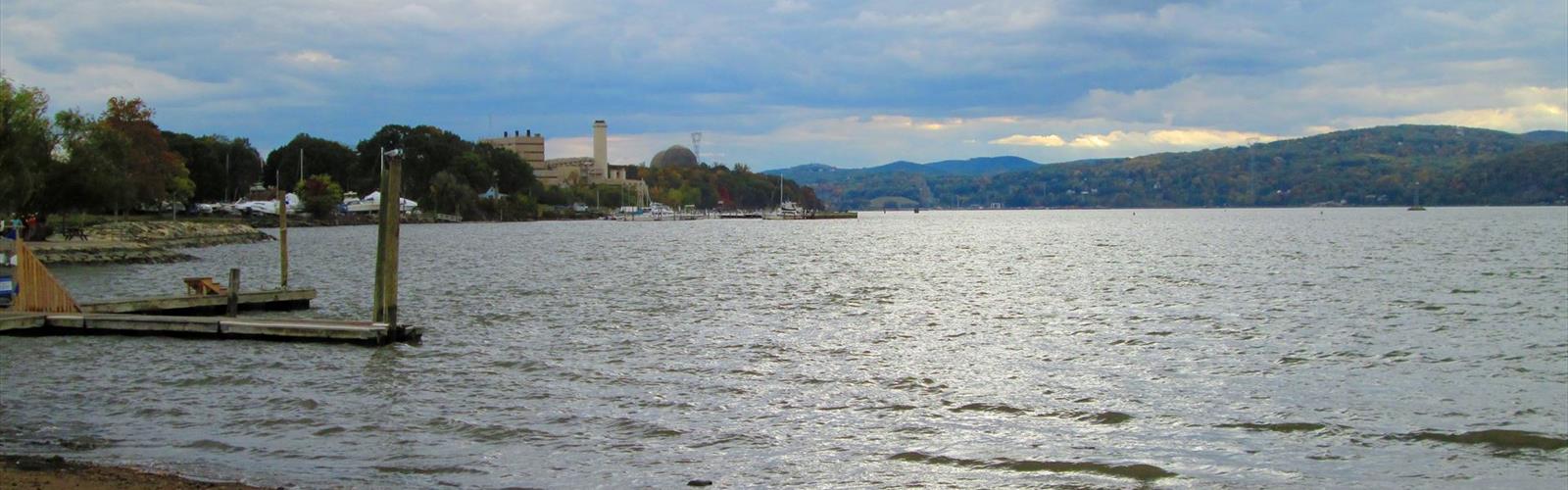
Camp Smith sits on a bluff overlooking the Hudson River in New York's Hudson Valley, offering hikers a unique combination of natural beauty and military history. This active New York Army National Guard training facility opens its scenic trails to the public, providing access to some of the region's most rewarding viewpoints without the crowds found at nearby Bear Mountain State Park.
The property spans rugged terrain along the Hudson's eastern shore, where rocky outcrops and mature hardwood forests create diverse hiking conditions. Established as a military reservation in 1882, Camp Smith has maintained much of its original character while serving various military functions over more than a century. Today, it continues as an active training site, but hikers can explore designated trail areas that showcase the Hudson Valley's dramatic landscape.
The Camp Smith Trail
The main hiking route stretches approximately 3.5 miles through varied terrain that challenges hikers with moderate difficulty. The trail begins in dense woodland where oak, maple, and hickory trees create a canopy that filters sunlight into dappled patterns on the forest floor. As you progress, the path becomes rockier, winding through granite outcroppings that hint at the spectacular views ahead.
The trail's character changes as you gain elevation, transitioning from sheltered forest paths to more exposed rocky sections. These open areas provide glimpses of the Hudson River below and the surrounding valley, building anticipation for the main viewpoint. The terrain requires steady footing, especially on the rocky sections, but remains accessible to hikers with basic experience.
Most hikers complete the full trail in 3 to 4 hours, though the pace varies depending on time spent at viewpoints and photography stops. The moderate challenge level makes it suitable for regular hikers looking for a satisfying workout without extreme difficulty.
Anthony's Nose Viewpoint
The trail's crown jewel is Anthony's Nose, a prominent rocky outcrop that delivers panoramic views across the Hudson Valley. From this vantage point, hikers look directly down at the Bear Mountain Bridge spanning the river below, with the Hudson stretching north and south through the valley. The perspective encompasses both shores, revealing the patchwork of forests, towns, and waterways that define this historic region.
The viewpoint sits high enough above the river to provide a true bird's-eye perspective, making it an exceptional spot for photography. Morning light illuminates the eastern shore while afternoon sun highlights the western mountains, offering different moods depending on your timing. The rocky platform provides stable footing for extended viewing, though hikers should exercise caution near the edges.
Beyond the immediate river views, the panorama extends to distant mountain ridges and the broader Hudson Valley landscape. On clear days, visibility stretches for miles in multiple directions, showcasing why this location has held strategic importance throughout American history.
Forest and Wildlife
The trail passes through mature deciduous forest typical of the Hudson Valley region. Large oaks and maples dominate the canopy, while understory plants include mountain laurel, ferns, and seasonal wildflowers. The forest composition changes with elevation and exposure, creating microhabitats that support diverse plant communities.
Wildlife sightings are common throughout the hiking area. White-tailed deer frequently browse in forest clearings, while various bird species inhabit different forest levels. Hawks and other raptors often soar above the river valley, taking advantage of thermal currents rising from the water. The diverse habitat supports both forest-dwelling species and those adapted to rocky, exposed areas near the viewpoints.
Seasonal changes dramatically alter the hiking experience. Spring brings wildflowers and fresh green foliage, while fall transforms the forest into brilliant displays of red, orange, and yellow. Winter hiking is possible but requires appropriate gear for potentially icy conditions on rocky sections.
Access and Restrictions
As an active military installation, Camp Smith operates under specific access protocols that hikers must observe. Entry restrictions may apply during training exercises or security operations, so checking current conditions before visiting is essential. These limitations are typically temporary, but they can affect trail availability on short notice.
The military status also means that certain areas remain off-limits to civilian hikers. Clearly marked boundaries indicate where public access ends, and hikers must respect these restrictions. The designated hiking areas provide ample exploration opportunities while maintaining necessary security for ongoing military operations.
Parking availability connects to the facility's operational schedule, and hikers should verify access points and any required procedures before arriving. The combination of military function and public recreation creates a unique situation that requires advance planning compared to typical state or local parks.
Historical Context
Camp Smith's military heritage adds depth to the hiking experience, connecting visitors to more than 140 years of American military history. The facility has adapted to changing defense needs while maintaining its strategic position overlooking the Hudson River. Evidence of this long military presence appears throughout the property, though active areas remain separate from public hiking zones.
The location's strategic value becomes obvious from the Anthony's Nose viewpoint, where the commanding view of the river and surrounding terrain explains why military planners chose this site. The Hudson River served as a crucial transportation route throughout American history, making control of key viewpoints militarily significant during various conflicts.
This historical dimension distinguishes Camp Smith from purely recreational hiking areas, offering visitors a chance to experience landscape that has played active roles in regional and national defense. The continuing military function maintains this connection to living history rather than preserved historical sites.
The Essential Hiking Checklist
Everything you need for your next hike. Bilingual, printable, 1 page.
Get your free hiking checklistRecommended gear for this trail
As an Amazon Associate I earn from qualifying purchases.


Ready to go?
Everything you need to know before you goStarting Point
The camp smith trails can be accessed from the main gate on Route 9D, about 1.5 miles north of the Bear Mountain Bridge.
When?
How much?
As an Amazon Associate I earn from qualifying purchases.
Affiliate links — LGPO may earn a commission at no extra cost to you.
- Hiking shoes Essential
- → Salomon Elixir Tour Mid WP · 203.38 $
- Layered clothing Essential
- Rain jacket Essential
- Trekking poles
- → Black Diamond Trail Ergo Cork · 69.99 $
- Headlamp
- → Petzl Actik Core 625 · 103.95 $
FAQ - Frequently asked questions
Everything you need to knowSimilar hikes nearby
Discover other trails you might enjoy
West Mountain
Hudson Valley

Witches Hole
Hudson Valley
Appalachian Trail
Hudson Valley
Little Dam Lake
Hudson Valley
Raven's Rock
Hudson Valley
Sterling Forest Fire Tower
Hudson Valley
Hiking near Poughkeepsie
0 trails to explore ~44 km away
We work hard to provide the most up-to-date and error-free data possible. If something seems incorrect, let us know! Your contribution helps the whole community.
Hikers' opinions
Be the first to review!
No hiker has shared their experience yet. Share your impressions and help other hikers!