

Ready to explore Dunderberg Mountain, New York? Here's everything you need to know before you go!
Discover the trail
Trail description
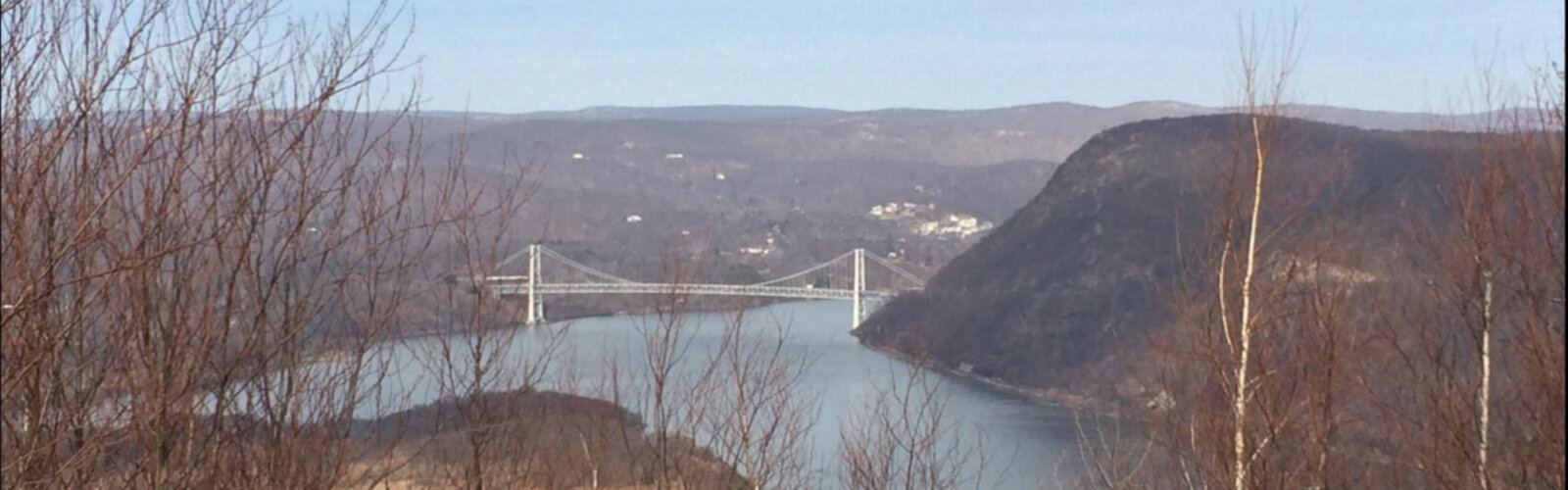
Dunderberg Mountain rises from the Hudson Valley's western shore, offering hikers an 11.27-kilometer journey through both natural beauty and forgotten history. This challenging peak in Harriman State Park delivers sweeping river views and fascinating glimpses into 19th-century ambition, making it a standout destination for experienced hikers seeking substance beyond the typical day hike.
The Trails and Terrain
The mountain's trail network accommodates different hiking preferences, though the 331-meter elevation gain and very hard difficulty rating demand respect and preparation. The signature route follows the Dunderberg Spiral Railway Loop, where you'll trace the path of an ambitious but ultimately failed railway project from the late 1800s. Stone foundations, rusted metal fragments, and carved rock cuts tell the story of engineers who dreamed of spiraling trains up this steep mountainside to reach a planned resort at the summit.
The terrain shifts constantly as you climb. Early sections wind through dense hardwood forests dominated by oak, maple, and birch, their canopy filtering sunlight into dappled patterns on the forest floor. As you gain elevation, the path becomes rockier and more exposed, requiring careful footing on loose stone and occasional scrambles over larger boulders. The railway remnants appear intermittently throughout the hike, creating an unusual blend of industrial archaeology and wilderness experience.
For hikers wanting to extend their adventure, the Cornell Mine Trail and Timp-Torne Trail provide additional options within Harriman State Park's extensive network. These connecting routes offer their own challenges and scenic rewards, allowing you to customize your day based on energy levels and available time.
Views and Landmarks
The payoff for Dunderberg's demanding climb comes in stages. Multiple viewpoints along the route reveal different perspectives of the Hudson River as it curves through the valley below. The river traffic—barges, pleasure boats, and occasional tall ships—provides a sense of scale for the landscape's grandeur. On exceptionally clear days, Manhattan's skyline appears as a distant glimmer to the south, a surprising urban counterpoint to the wilderness setting.
The views encompass more than just the river. To the east, the Hudson Highlands roll away in forested ridges, while Bear Mountain's distinctive profile dominates the northern horizon. These vantage points help you understand the strategic importance of this region during the Revolutionary War, when controlling the Hudson River meant controlling the flow of goods and troops between New England and the southern colonies.
Fort Montgomery, accessible near the trailhead, adds historical context to your visit. This Revolutionary War site witnessed fierce fighting as British forces attempted to break the chain barrier stretched across the Hudson River. Walking through the fort's earthworks before or after your hike helps connect the military significance of these heights with the natural advantages they provided.
Wildlife and Natural Features
The diverse habitats along Dunderberg's slopes support a healthy variety of wildlife. White-tailed deer are common throughout the area, often visible in early morning or late afternoon. Red and gray foxes hunt in the understory, though you're more likely to spot their tracks than the animals themselves. The bird life is particularly rich, with pileated woodpeckers hammering dead trees, hawks circling overhead, and songbirds filling the canopy during migration seasons.
The forest composition changes with elevation and exposure. Protected valleys harbor moisture-loving species like ferns and mosses, while exposed ridges support hardy shrubs and grasses adapted to wind and sun. This variety creates constantly changing scenery as you progress through the 4 to 5-hour hike, preventing the monotony that can plague longer trail experiences.
Planning Your Visit
Dunderberg Mountain's very hard difficulty rating isn't arbitrary—this hike demands proper preparation and realistic self-assessment. The combination of distance, elevation gain, and technical terrain challenges even experienced hikers. Pack more water than you think you'll need, especially during summer months when the exposed sections offer little shade. Sturdy hiking boots with good ankle support are essential for navigating the rocky terrain safely.
The trailheads near Route 9W provide convenient parking for day-trippers, though spaces can fill quickly on popular weekend mornings. If you're driving from Verplanck or Peekskill, allow extra time for parking and gear preparation. The well-marked trails reduce navigation concerns, but the challenging terrain means you should inform someone of your hiking plans and expected return time.
Weather conditions significantly impact the hiking experience on Dunderberg. Rain makes the rocky sections slippery and potentially dangerous, while winter conditions require microspikes or crampons for safe travel. Spring brings mud season challenges, though it also delivers spectacular wildflower displays in the lower elevations.
Respecting the Environment
Dunderberg Mountain's popularity among Hudson Valley hikers means your actions directly impact other visitors' experiences. The Leave No Trace principles aren't just suggestions here—they're essential for preserving both the natural environment and the historical artifacts scattered along the trails. The railway remnants are particularly fragile and irreplaceable, so resist the urge to collect souvenirs or disturb the sites.
The mountain's ecosystem supports species that are sensitive to human disturbance. Staying on marked trails prevents erosion and protects plant communities, while proper food storage keeps wildlife from developing dangerous associations with human presence. Your respect for these guidelines helps ensure that Dunderberg Mountain continues offering its unique combination of natural beauty and historical intrigue to future generations of Hudson Valley adventurers.
The Essential Hiking Checklist
Everything you need for your next hike. Bilingual, printable, 1 page.
Get your free hiking checklistRecommended gear for this trail
As an Amazon Associate I earn from qualifying purchases.


Ready to go?
Everything you need to know before you goStarting Point
To access the hiking trails, you can start at the main trailhead located at the intersection of Route 9W and Jones Point Road. There is a parking area available for hikers. Another option is to begin from the trailhead near the Bear Mountain Bridge, where parking is also available. Both locations provide convenient access to the trails in the area.
When?
How much?
As an Amazon Associate I earn from qualifying purchases.
Affiliate links — LGPO may earn a commission at no extra cost to you.
- Hiking shoes Essential
- → Salomon Elixir Tour Mid WP · 203.38 $
- Layered clothing Essential
- Rain jacket Essential
- Trekking poles
- → Black Diamond Trail Ergo Cork · 69.99 $
- Headlamp
- → Petzl Actik Core 625 · 103.95 $
FAQ - Frequently asked questions
Everything you need to knowSimilar hikes nearby
Discover other trails you might enjoy
West Mountain
Hudson Valley

Witches Hole
Hudson Valley
Appalachian Trail
Hudson Valley
Little Dam Lake
Hudson Valley
Raven's Rock
Hudson Valley
Sterling Forest Fire Tower
Hudson Valley
Hiking near Poughkeepsie
0 trails to explore ~46 km away
We work hard to provide the most up-to-date and error-free data possible. If something seems incorrect, let us know! Your contribution helps the whole community.
Hikers' opinions
Be the first to review!
No hiker has shared their experience yet. Share your impressions and help other hikers!