
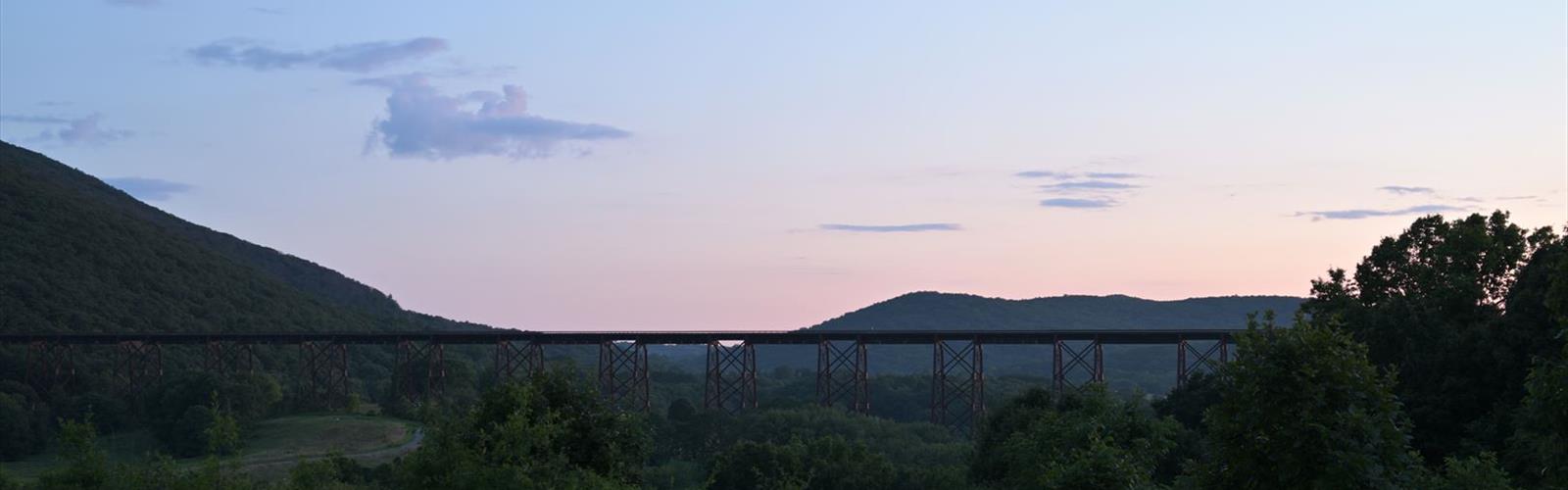

Ready to explore Schunnemunk Mountain State Park? Here's everything you need to know before you go!
Discover the trail

Trail description
Schunnemunk Mountain State Park is one of the Hudson Valley's most rewarding and underrated hiking destinations. Rising above the surrounding lowlands with a long, dramatic ridgeline, Schunnemunk offers a hiking experience that feels genuinely wild — open summits, sweeping views, and a sense of remoteness that's hard to find this close to New York City. Whether you're a seasoned hiker looking for a solid challenge or someone ready to step up from easier trails, Schunnemunk delivers.
The Mountain and Its Character
Schunnemunk Mountain covers more than 3,300 acres of rolling meadow and spectacular mountain terrain. The ridge opens up into exposed terrain with scrubby vegetation and characteristic rocky outcrops. This rock and terrain is visually striking, and it's part of what makes Schunnemunk feel different from the smoother, more forested peaks nearby. The mountain runs roughly north to south, with a main ridge and a parallel secondary ridge separated by a valley called the Sweet Clover Valley. That interior valley is one of the park's quieter pleasures — a peaceful corridor between the ridges that many hikers overlook.
The terrain shifts noticeably as you climb. Lower sections move through mixed hardwood forest, while the upper ridge opens up into more exposed terrain with scrubby vegetation and rocky outcrops. The views from the ridge are expansive — on a clear day you can see across the Hudson Valley to the Catskills to the north and the Hudson Highlands to the south and east, with portions of the distant Hudson River visible as well.
Trail Network
The park has eight marked trails totaling over 20 miles, with a well-developed trail network that can be combined into loops of varying lengths and difficulty. The main trails are blazed and maintained, though some sections involve steep, rocky climbing that requires sure footing. A few key trails worth knowing:
- Jessup Trail — One of the primary routes through the park, running along much of the main ridge. It's the backbone of most longer hikes in the park and gives access to the best summit views.
- Trestle Trail — A popular approach from the southern end of the park, named for the old railroad trestle near the trailhead. It's a solid way to start a loop hike.
- Sweet Clover Trail — Runs through the valley between the two ridges. It's a gentler option and a good connector for building loop routes.
- Dark Hollow Trail — Provides access from the western side of the mountain and connects into the broader trail network.
- Otterkill Trail — Another connector trail that links different parts of the park and allows for longer, more varied routes.
Most hikers approach Schunnemunk as a loop, combining the main ridge with the Sweet Clover Valley or using one of the connector trails to return on a different route. This gives you a much richer experience than an out-and-back, and it lets you see the variety the park has to offer.
What to Expect on the Trail
The hiking here is genuinely physical. The ridge sections involve real elevation gain, with hikers encountering elevations up to 1,664 feet. Some of the rocky stretches require careful footing and scrambling in places. Trekking poles are useful, especially on the descent. Trail conditions matter — this is a park where checking the weather before you go is worth the effort.
Trail signage is generally good, but carrying a map is still a smart move. The trail network has enough intersections that it's easy to take a wrong turn if you're not paying attention. The New York-New Jersey Trail Conference produces detailed maps of the area that are well worth picking up.
The park sees moderate use — busy on weekends in fall, quieter on weekdays and in the shoulder seasons. Even on a busy day, the trail network is spread out enough that you won't feel crowded once you're past the trailhead.
Access and Parking
There are multiple trailheads providing access to Schunnemunk Mountain State Park. The most commonly used is near Mountainville, off Taylor Road, which gives access to the Trestle Trail and the southern end of the ridge. There is also access from Otterkill Road on the western side. Parking areas are available at the main trailheads. The park is managed by the New York State Office of Parks, Recreation and Historic Preservation, in partnership with the Palisades Interstate Park Commission.
Practical Information
- Dogs: Dogs are permitted on leash in the park.
- Bikes: Mountain biking is not permitted on the hiking trails.
- Leave No Trace: Pack out everything you bring in. There are no facilities on the trail itself.
- Cell service: Spotty to nonexistent on the ridge — download your maps offline before you go.
- Water: There are no reliable water sources on the upper ridge. Bring everything you need from the trailhead.
Why Schunnemunk Stands Out in the Hudson Valley
The Hudson Valley has no shortage of good hiking, but Schunnemunk Mountain occupies a specific niche. It's more rugged and less trafficked than some of the more famous nearby peaks, and the combination of open ridge walking, interesting rocky terrain, and interior valley trails gives it a range that a lot of single-summit hikes can't match. The exposed rocky ridges and scenic vistas are genuinely striking — it's the kind of detail that sticks with you after the hike and makes Schunnemunk feel like its own place rather than just another wooded hill. For hikers based in the New York City metro area looking for something that punches above its weight, this park consistently delivers.
The Essential Hiking Checklist
Everything you need for your next hike. Bilingual, printable, 1 page.
Get your free hiking checklistRecommended gear for this trail
As an Amazon Associate I earn from qualifying purchases.


Ready to go?
Everything you need to know before you goStarting Point
The schunnemunk mountain state park is located in New York. To get to the start of the trails, take exit 16W on the New York State Thruway and head north on Route 208. The park entrance will be on the right.
When?
How much?
As an Amazon Associate I earn from qualifying purchases.
Affiliate links — LGPO may earn a commission at no extra cost to you.
- Hiking shoes Essential
- → Salomon Elixir Tour Mid WP · 203.38 $
- Layered clothing Essential
- Rain jacket Essential
- Trekking poles
- → Black Diamond Trail Ergo Cork · 69.99 $
- Headlamp
- → Petzl Actik Core 625 · 103.95 $
FAQ - Frequently asked questions
Everything you need to knowSimilar hikes nearby
Discover other trails you might enjoy
West Mountain
Hudson Valley

Witches Hole
Hudson Valley
Appalachian Trail
Hudson Valley
Little Dam Lake
Hudson Valley
Raven's Rock
Hudson Valley
Sterling Forest Fire Tower
Hudson Valley
Hiking near Poughkeepsie
0 trails to explore ~37 km away
We work hard to provide the most up-to-date and error-free data possible. If something seems incorrect, let us know! Your contribution helps the whole community.
Hikers' opinions
Be the first to review!
No hiker has shared their experience yet. Share your impressions and help other hikers!