🚣♂️ Why Starting Sea Kayaking in Quebec is the Best Decision You Can Make
You know what struck me the first time I dipped my paddle into the salty waters of the St. Lawrence? The silence. Not total silence, but that perfect blend of lapping waves and the feeling of being completely free. Starting sea kayaking in Quebec means discovering a unique perspective on our territory: that of the water. After exploring hundreds of terrestrial trails, I can tell you that sea kayaking offers something different. It's that sensation of gliding on water, seeing cliffs from a totally new angle, and realizing that Quebec isn't just about its mountains and forests. In this guide, I'll share everything I wish I had known before my first sea kayaking outing. From essential equipment to the best beginner spots, including mistakes to absolutely avoid. Whether you're already an outdoor enthusiast or a complete novice, you'll discover why this activity will transform how you see our coastlines.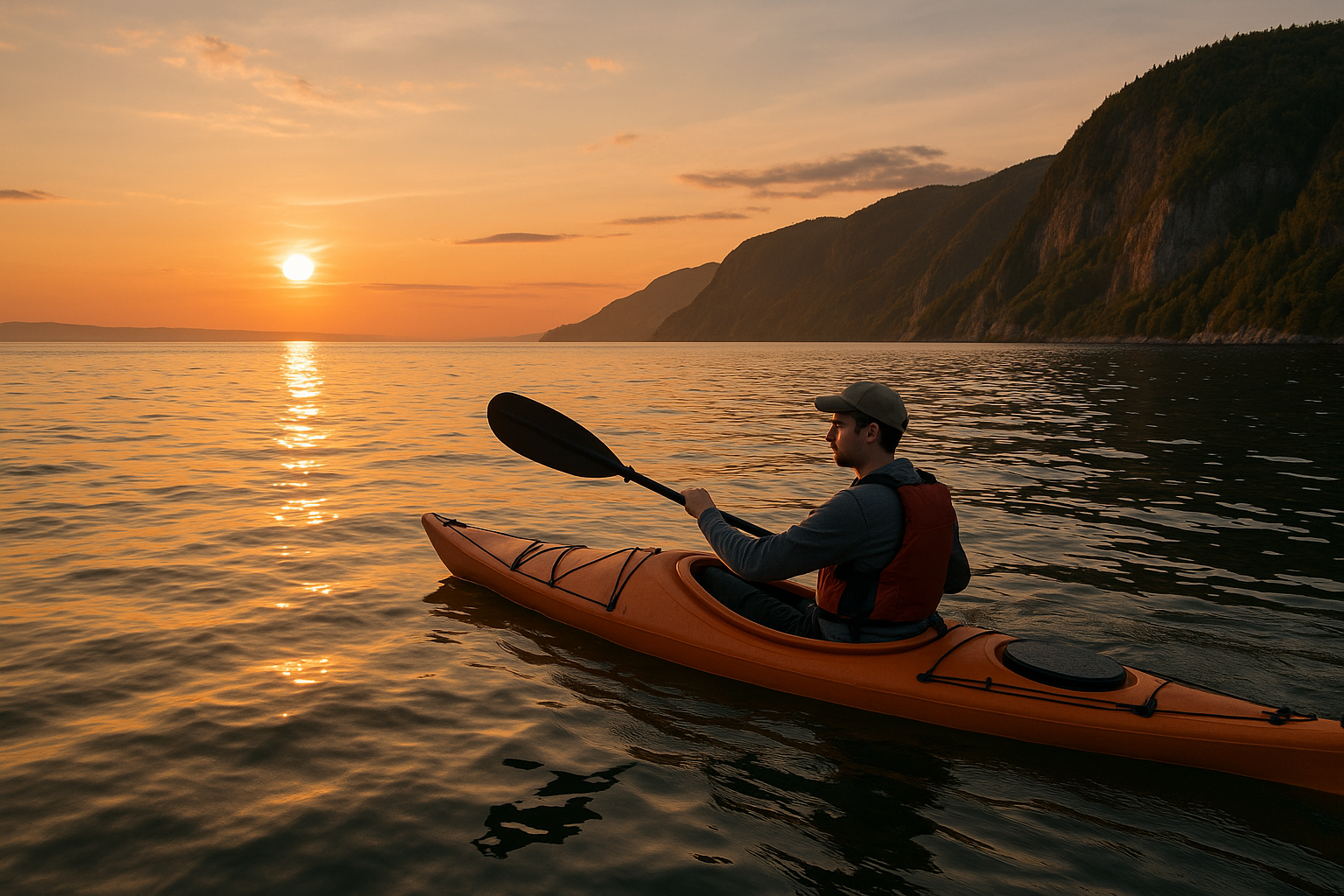
📥 Download our free gifts — Checklists, PDF guides and tools to better prepare your kayaking outings and other outdoor activities in Quebec.
Get my gifts →
Get my gifts →
🌊 What Makes Sea Kayaking So Special in Quebec?
Quebec has over 3 million lakes and rivers, not counting our privileged access to the St. Lawrence River and Gulf. When I realized this, I understood we literally had a gigantic aquatic playground right under our noses. What distinguishes sea kayaking from its cousins (river kayaking, canoeing) is first the craft itself. Longer, narrower, with watertight compartments and often a rudder, the sea kayak is designed to handle waves and cover long distances. You'll quickly understand why this matters when you face the St. Lawrence tides! Unique advantages in Quebec:- Environmental diversity: From the Saguenay fjord to the Mingan Islands, each region offers a different experience
- Exceptional marine wildlife: Whales, seals, seabirds... I've had encounters I'll never forget
- Extended season: From May to October, with perfect conditions for beginners between June and September
- Accessibility: Unlike other provinces, our sea kayaking spots are often close to urban centers
📌 Good to know — The term "sea kayaking" can be misleading in Quebec. We also use it for kayaking on the St. Lawrence and large lakes. What matters is the type of craft and techniques, not necessarily salt water!
The real magic is this sensation of connection with water. Unlike hiking where you observe the landscape, in kayaking, you're part of the ecosystem. You feel every wave, learn to read the wind, discover secret coves inaccessible by land.
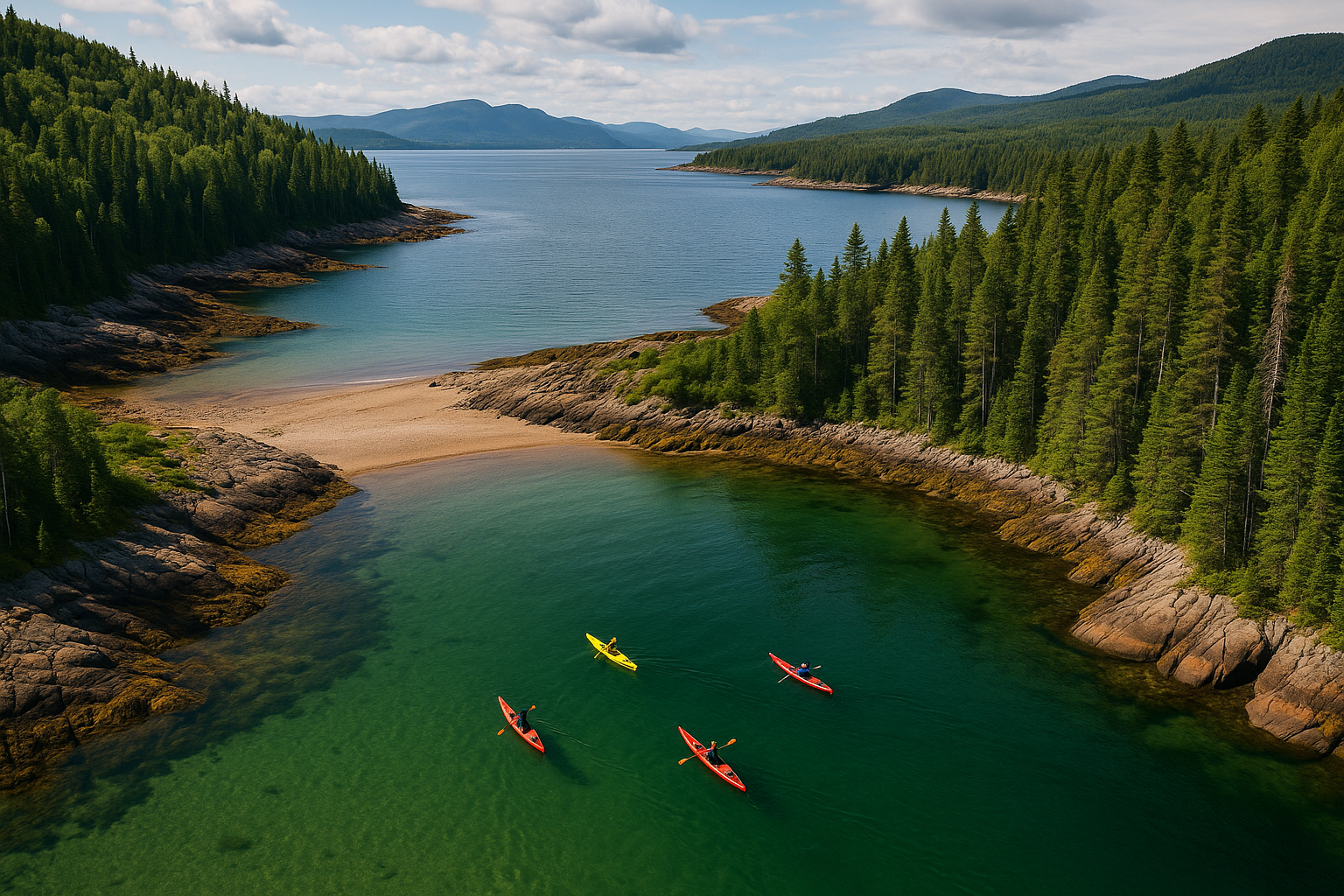
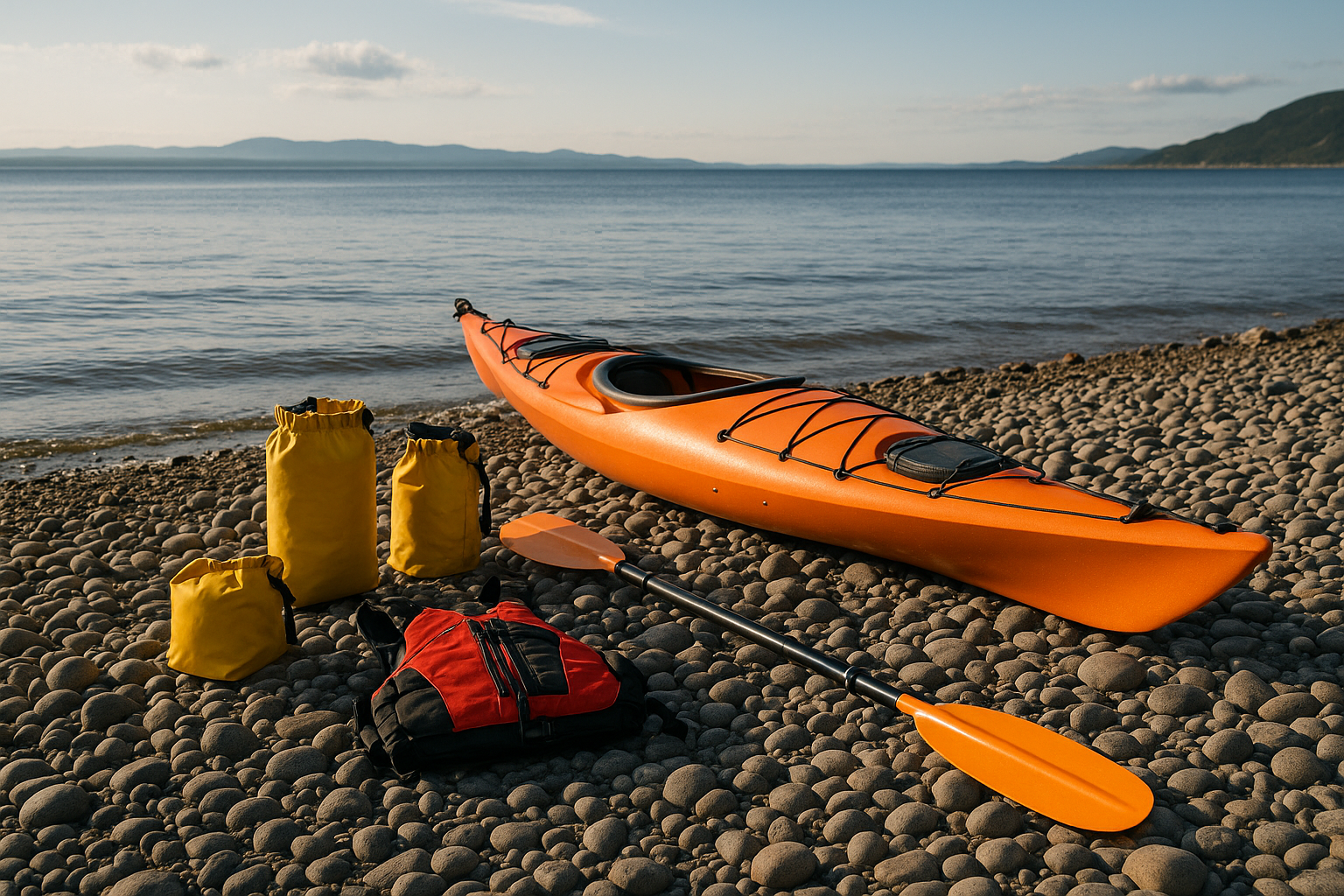
🎒 Essential Equipment for Starting Sea Kayaking (Without Breaking the Bank)
Let's talk equipment. I've seen too many beginners either get discouraged by unrealistic buying advice, or start poorly equipped and have a disappointing experience. The truth? You don't need to buy everything from the start.Basic Equipment (rental recommended for beginners)
| Equipment | Priority | Rental budget/day | Advice |
|---|---|---|---|
| Sea kayak | Essential | $40-60 | Prioritize stability over speed |
| Paddle | Essential | Included | Always have a spare paddle |
| Life jacket | Mandatory | Included | Must be approved for kayaking |
| Spray skirt | Recommended | $10-15 | Not essential in calm weather |
What You Should Buy From the Start
- Technical clothing: Forget cotton! Synthetic or merino, same principle as hiking
- Water shoes: Sport sandals or neoprene booties, your feet will get wet
- Sun protection: Hat, sunglasses, waterproof sunscreen - reflection on water is tricky
- Dry bag: For your phone, keys, snacks
💡 Pro tip — My golden rule for clothing: dress as if you're going to fall in the water. Because it will probably happen, and that's okay! Even after 10 years, I still end up in the water from time to time.
My money-saving trick: Start by renting all your equipment for your first 5-6 outings. It'll give you an idea of what you really like before investing. I've seen too many people buy a kayak after one outing only to sell it six months later.
⚠️ Warning — Never go alone for your first outings. Sea kayaking, even in calm weather, can become unpredictable. Find an experienced buddy or join an organized group.
🏞️ The 5 Best Spots to Start Sea Kayaking in Quebec
After testing dozens of bodies of water, here are my recommendations for your first outings. I chose these spots based on three criteria: safety, beauty and ease of access.1. Lac Saint-Jean (my favorite for beginners)
Okay, technically it's not the "sea," but it's perfect for learning! No tides, no strong currents, and breathtaking scenery. Conditions are predictable, and if you have trouble, you can always reach shore easily. Why I love this spot:- Calm water most of the time
- Multiple launch points
- On-site rental services
- View of the Valin Mountains - magical at sunset
2. Saguenay Fjord (for the more adventurous)
Once you have a few outings under your belt, the fjord is the ultimate experience. Rock walls plunging into water, the possibility of seeing whales... but be careful, it requires more preparation.3. Mingan Archipelago
Further away, but worth the trip. The rock formations are unique in the world, and water is generally calm in protected bays. Perfect for a first salt water experience.
📌 Good to know — For these three spots, I strongly recommend going with a local guide for your first outings. They know the conditions, tides, and little secrets you won't find in tourist guides.
4. Baskatong Reservoir (Outaouais)
One of my best-kept secrets. Large body of water, not crowded, and magnificent bays to explore. Water is warmer than elsewhere, making falls less dramatic!5. Parc national du Bic
The perfect combination of sea and mountains. You can kayak in the morning and hike in the afternoon. Islands and coves offer plenty of options depending on your comfort level.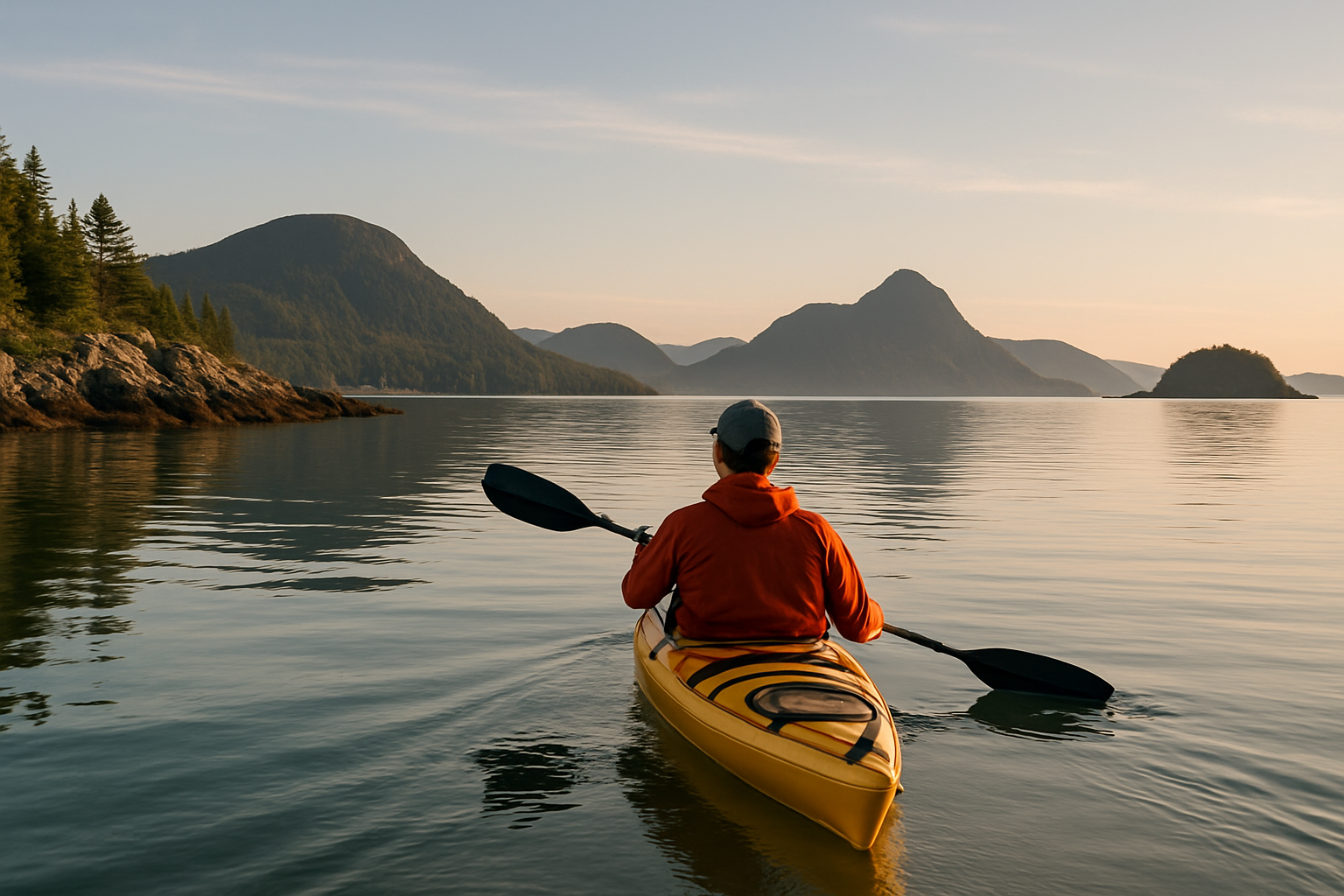
⚠️ Beginner Mistakes That Can Ruin Your Outing (and How to Avoid Them)
Let me tell you about my first real sea kayaking outing. I was so excited that I made pretty much every possible mistake. Result: a day that could have been magical turned into an endurance test. Here's what I should have known:Mistake #1: Underestimating Weather and Conditions
The 15 km/h wind forecast? On water, it becomes 25 km/h with waves. I learned this the hard way on Lac Saint-Jean. What seemed like a beautiful sunny day turned into a battle against the elements."In sea kayaking, weather isn't a suggestion, it's a commandment."My rule now: I check three different weather sources, and if wind over 20 km/h is forecast, I postpone. Period.
Mistake #2: Going Too Long or Too Far
First outing: 6 hours planned. After 2 hours, I was sore everywhere and exhausted. Kayaking works muscles you don't use in daily life, even if you're in shape. My advice: Start with 2-3 hour outings maximum. You can always extend if you feel good, but you can't shorten if you're in the middle of a lake!Mistake #3: Neglecting Hydration and Nutrition
On water, you don't realize how much you dehydrate. Sea air, sun, constant effort... your body needs fuel. I once had terrible cramps because I forgot to drink for 3 hours.- Bring more water than you think you need
- Salty snacks to compensate for sodium loss
- Avoid alcohol, even one beer - it dehydrates even more
💡 Pro tip — My perfect hydration setup: a hydration system (like those for cycling) that I can use without letting go of my paddle, plus a backup bottle in a dry bag.
Mistake #4: Poorly Adjusting Equipment
A life jacket too loose, a poorly adjusted seat, a paddle of the wrong length... All these small details become huge after a few hours on water.Mistake #5: Ignoring Basic Techniques
I spent my first year paddling any old way. Result: premature fatigue, back pain, and slow progress. Investing in a basic course is the best investment you can make.
⚠️ Warning — Never leave without learning basic eskimo roll technique and emergency kayak exit. Even if you don't plan to capsize, it can happen. Better to be prepared.
🌟 Basic Techniques Every Beginner Must Master
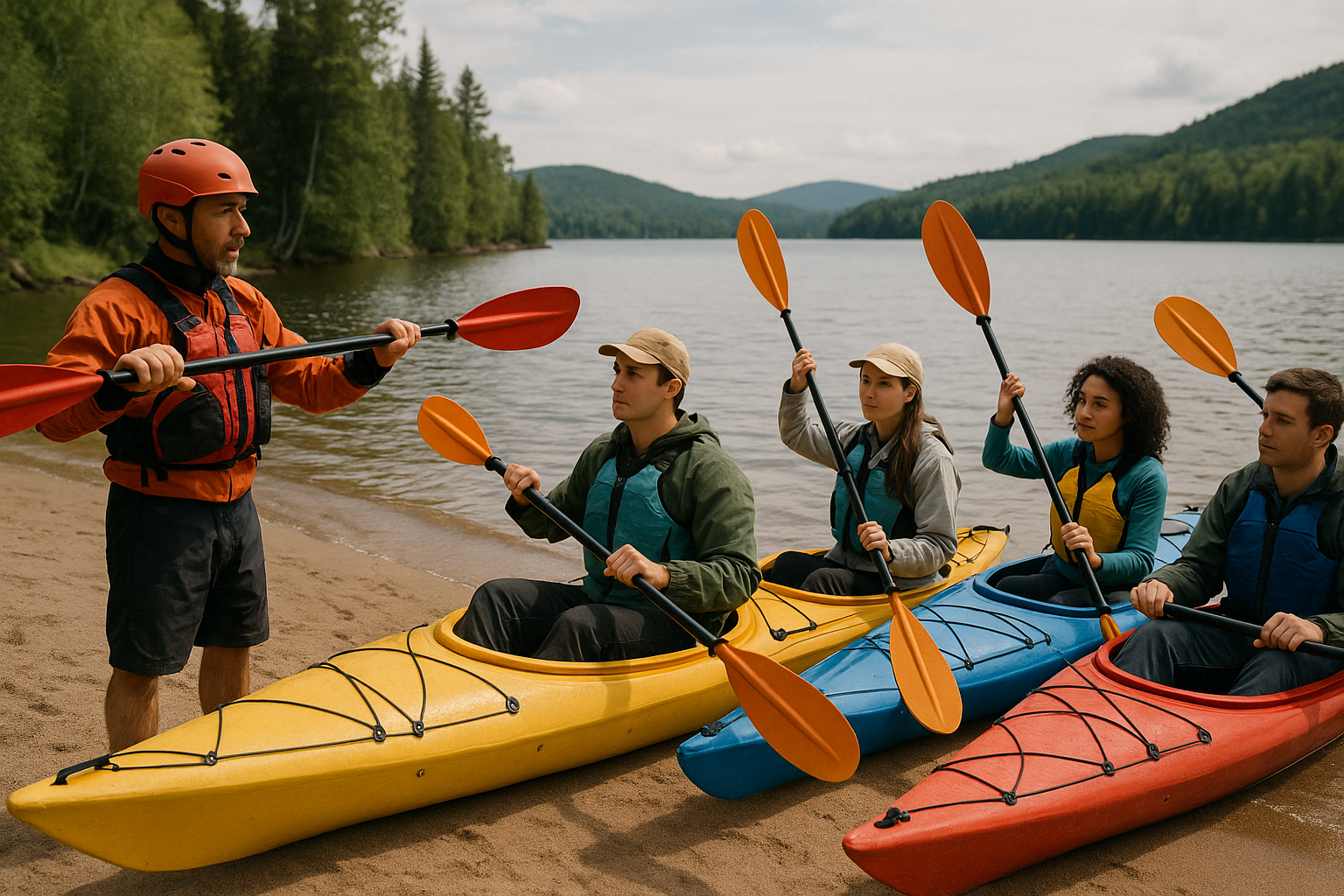
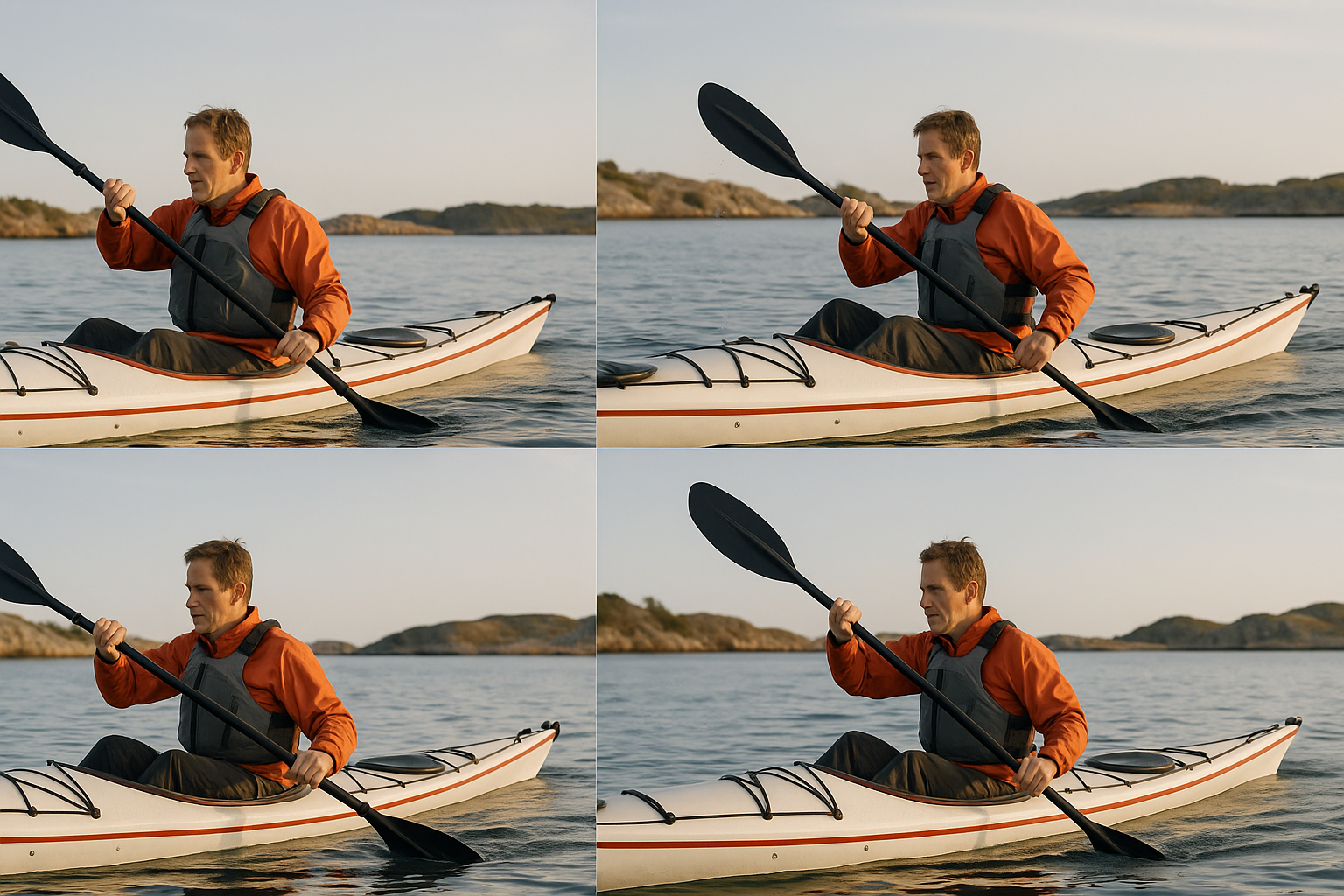
Let's talk technique. I know, it's not the sexiest part, but mastering the basics will transform your outings from chore to pure pleasure. Trust me, I've seen the difference!Paddling Technique (More Important Than You Think)
For months, I paddled with my arms. Massive mistake! Power comes from the core, not the arms. Imagine you want to turn your torso to the right: it's this rotation movement that gives power to your paddle stroke. The perfect sequence:- Immersion: The blade enters water near your feet
- Propulsion: You pull water backward by rotating your torso
- Exit: The blade exits water at hip level
- Return: You bring the paddle forward without forcing
The Art of Steering Your Kayak
At first, you'll feel like you're paddling in zigzags. That's normal! Each kayak has its personality, and you need to learn to "communicate" with it.
💡 Pro tip — To go straight, alternate your paddle strokes on each side, but vary the power slightly according to your kayak's drift. With experience, it becomes automatic.
Essential Safety Maneuvers
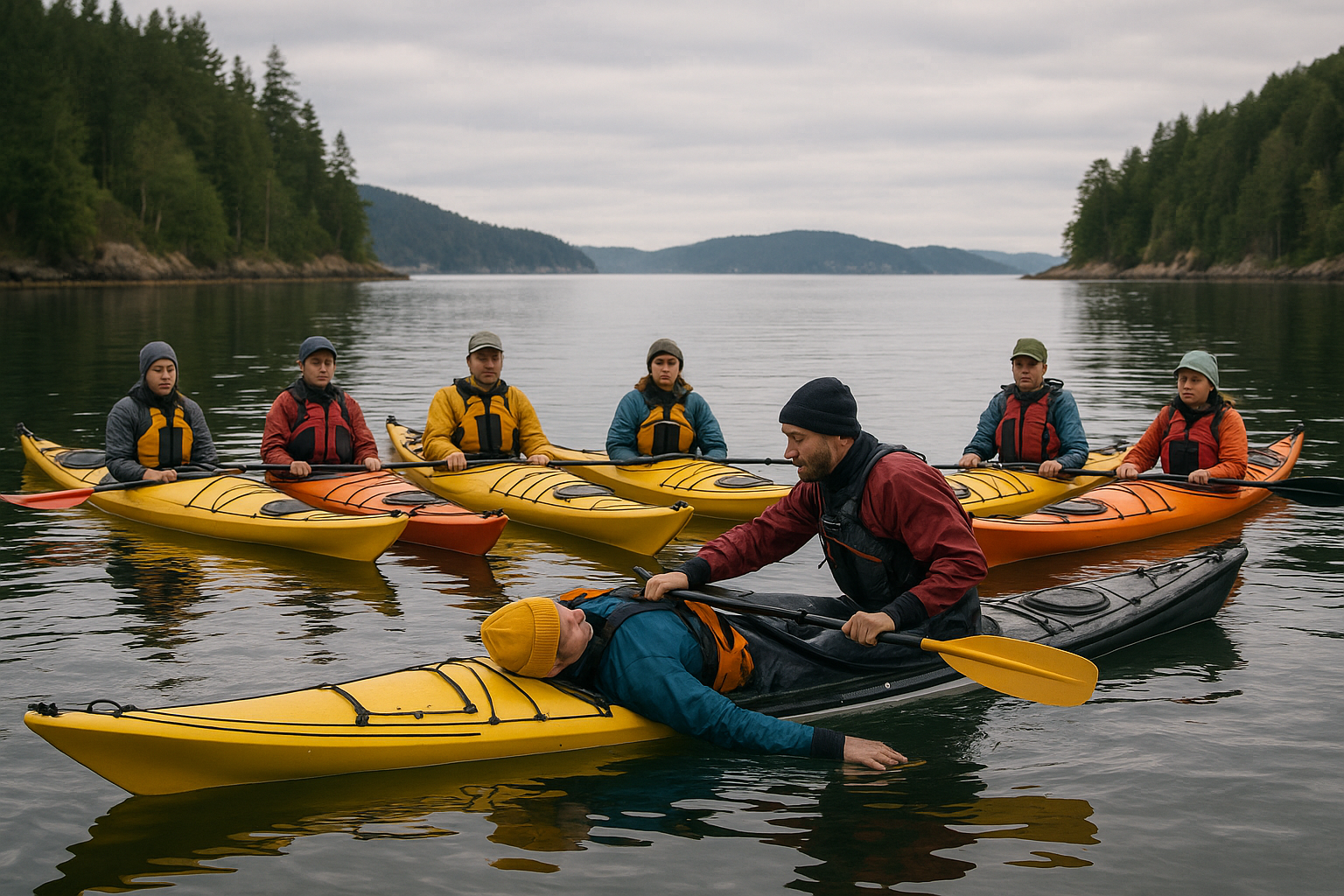
Wet-exit eskimo roll: If you capsize (and it will happen), you must know how to exit your kayak quickly and safely. We practice this in shallow water with supervision. Self-rescue: How to get back in your kayak from water. Harder than it looks, but essential to master. Assisted rescue: How to help a teammate who has capsized. Because we never go alone, right?| Technique | Difficulty Level | Learning Time | Importance |
|---|---|---|---|
| Basic paddling | Easy | 1-2 outings | Essential |
| Directional maneuvers | Medium | 3-5 outings | Important |
| Wet-exit | Easy | 1 course | Critical |
| Self-rescue | Difficult | Several courses | Critical |
| Eskimo roll | Very difficult | Full season | Advanced |
📌 Good to know — Complete eskimo roll (righting yourself without exiting the kayak) isn't essential for beginners. It's an advanced technique requiring lots of practice. Focus first on basic techniques!
📅 Planning Your First Outing: The Step-by-Step Guide
Alright, you have the equipment, know the basics, chosen your spot. Now, how do you plan this first outing so it's memorable for the right reasons?One Week Before: Mental Preparation
Check weather conditions over several days. In Quebec, weather can change quickly, especially near large bodies of water. My favorite apps: Environment Canada, Windy, and PredictWind for marine conditions. Reserve your equipment if renting. On beautiful weekends, good spots go fast, especially in popular locations like the Saguenay fjord.The Day Before: Final Preparations
- Reconfirm weather: Wind, air AND water temperature
- Prepare your dry bag: Phone, keys, snacks, water, basic first aid kit
- Inform someone: Say where you're going, with whom, and when you plan to return
- Charge your devices: Phone, GPS, camera
D-Day: Departure Checklist
2 hours before departure:
💡 Pro tip — My personal ritual: I always take 5 minutes sitting in my kayak on the beach before leaving. It lets me get used to the sensation and make final comfort adjustments.
During the Outing: Golden Rules
Stay grouped: Maximum 3 kayak lengths between you and your partner. On water, distances are deceiving. Communicate: Signal your intentions, fatigue level, needs. A simple "you okay?" can prevent many problems. Listen to your body: Thirst, hunger, fatigue, discomfort... don't play hero. Better to shorten an outing than turn it into an ordeal."The best kayaking outing is one where you can't wait to go back as soon as you set foot on dry land."
🎓 Where to Learn and Improve in Quebec
You can learn self-taught, but investing in a good course will accelerate your learning spectacularly. I would have saved months of trial and error if I had taken courses from the beginning.Recommended Schools and Guides
Quebec City Region:
📌 Good to know — Most courses include complete equipment. Perfect for trying different kayak models before buying your own.
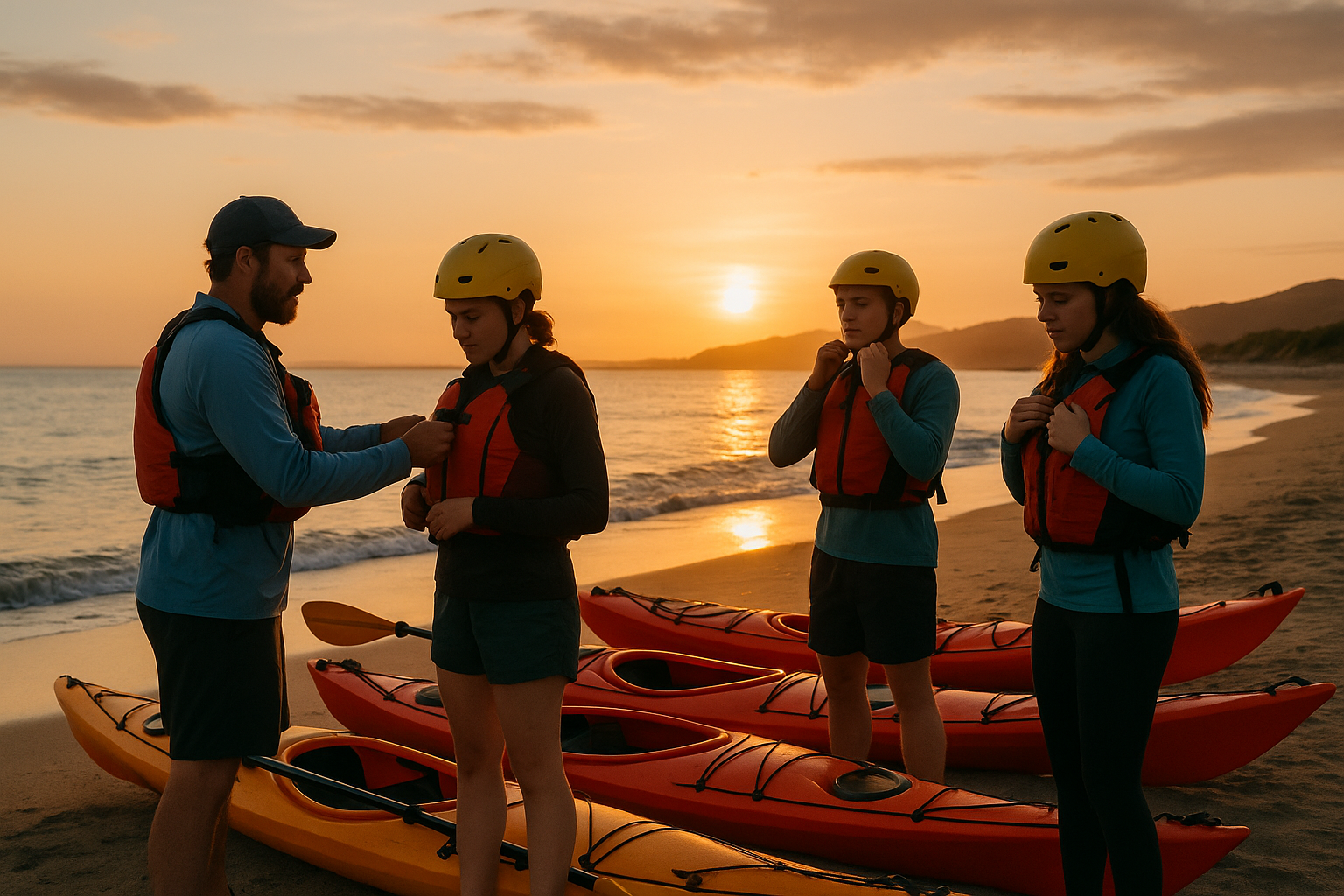
What a Good Course Should Include
- Basic theory: Weather, safety, reading conditions
- Equipment adjustment: How to properly set up in your kayak
- Paddling techniques: The basics, but well explained
- Safety maneuvers: Wet-exit and basic rescue
- Supervised practice: At least 4-5 hours on water
Resources to Continue Learning
Must-have books:
💡 Pro tip — Clubs often organize "pool sessions" in winter to practice rescue techniques in pools. Perfect for working on technical maneuvers in a safe environment.
🌅 Conclusion: Your Sea Kayaking Adventure Starts Now
There you have it, you now have all the keys to start sea kayaking in Quebec under the best conditions. Let me summarize the essential points to remember:- Start small: Rent your equipment, choose calm conditions, and limit your first outings to 2-3 hours
- Invest in a course: It will save you time, money, and potentially avoid dangerous situations
- Respect conditions: Weather and water don't forgive improvisation
- Never go alone: Find an experienced buddy or join an organized group
- Listen to your body: Better to shorten an outing than turn it into an ordeal

About the author
François Dumaine
Founder of Let's Go Play Outside
A passionate hiker, photographer and content creator, François has been hiking the trails of Quebec and Alberta since 2014. He founded Let's Go Play Outside to give you the information he wished he had before heading out.
Newsletter
Content that makes you want to go outside
Every week, a trail idea, a reflection on nature, or a tip worth the detour. Zero spam. Only the essentials.
Joined by 12,000+ outdoor enthusiasts
Read next