

Ready to explore Kalamalka Lake? Here's everything you need to know before you go!
Discover the trail
Trail description
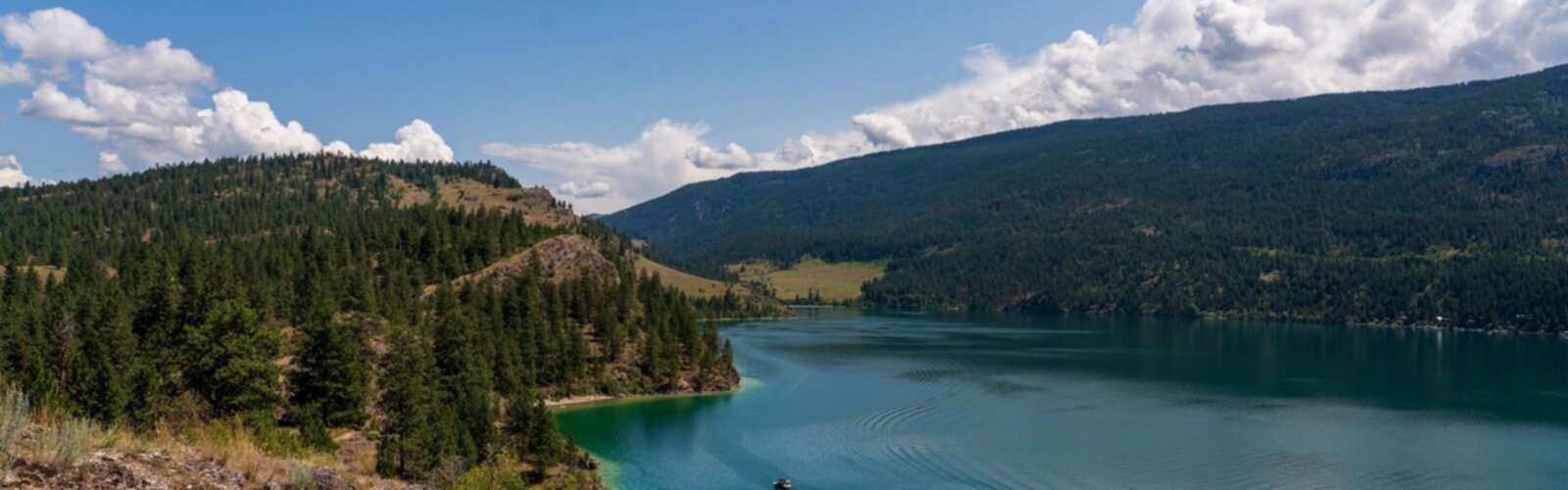
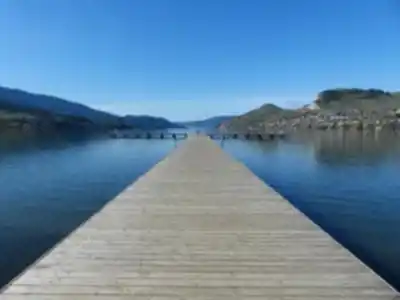
Kalamalka Lake Provincial Park stands out as one of British Columbia's most visually striking hiking destinations, where the lake's famous turquoise waters create a backdrop that shifts from deep blue to brilliant green depending on the light and season. Located in the Okanagan Valley near Vernon and Coldstream, this park offers hikers a rare combination of desert-like grasslands, forested slopes, and lakeside terrain all within a compact area.
The park's unique character comes from its position in the rain shadow of the Coast Mountains, creating a semi-arid environment that supports an ecosystem quite different from the dense forests found elsewhere in BC. As you hike these trails, you'll move through open grasslands dotted with ponderosa pines and Douglas fir, then into cooler forested sections where the canopy provides welcome shade on hot summer days.
Trail Network and Terrain
Kalamalka Lake Provincial Park maintains over 14 kilometers of well-established trails that interconnect to create various loop options and out-and-back routes. The trail system is designed to accommodate different fitness levels and time constraints, with most paths offering some elevation gain that rewards hikers with increasingly impressive lake views.
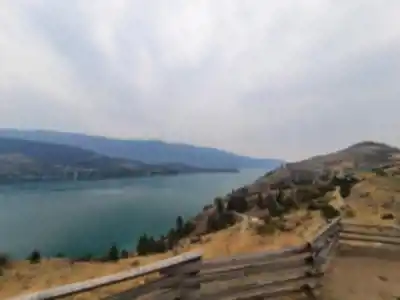
The Rattlesnake Point Trail serves as the park's signature moderate hike, taking you up through mixed terrain of grassland and light forest. The trail surface varies from packed earth to rocky sections, with some loose gravel on steeper pitches. As you climb, the views gradually open up until you reach vantage points where the entire lake spreads below you, its color shifting from turquoise near shore to deeper blues in the center. The surrounding Okanagan Valley stretches in both directions, with rolling hills covered in the region's characteristic dry grasslands and scattered trees.
For hikers seeking more of a challenge, the Cosens Bay Trail provides a longer journey through the park's most diverse ecosystems. This route starts in open grassland where you might spot ground squirrels and various bird species, then transitions into denser forest sections where the temperature drops noticeably and the terrain becomes more technical with root systems and rocky outcrops. The trail eventually descends toward Cosens Bay Beach, where a small sandy area provides access to the lake's remarkably clear water.
The Lookout Trail offers an efficient option for visitors with limited time or those wanting to sample the park's scenery without committing to a longer hike. Despite its shorter length, this trail still involves some climbing and delivers one of the most photographed viewpoints in the park, where the lake's full length is visible along with the surrounding valley.
The Hiking Experience
What makes hiking at Kalamalka Lake particularly rewarding is the constant interplay between the intimate trail experience and the expansive views. You'll start most hikes in the characteristic Okanagan grasslands, where the trail winds between scattered ponderosa pines and the ground is carpeted with native bunchgrasses. The footing here is generally good, though loose rocks can require attention on steeper sections.
As you gain elevation, the landscape opens up dramatically. The lake reveals itself in stages, first appearing as glimpses through the trees, then expanding into full panoramic views that showcase why this area has become such a popular destination. The contrast between the arid hillsides and the brilliant blue-green water creates some of the most striking scenery in the Thompson Okanagan region.
The forested sections provide a completely different atmosphere, with cooler temperatures and the sound of wind through the canopy replacing the open grassland environment. These areas often feature more technical terrain with exposed roots and rocky steps, adding variety to the hiking experience and requiring more focused footwork.
Natural Features and Wildlife
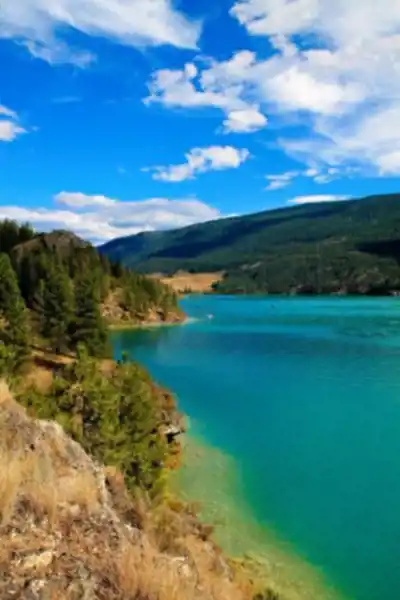
The lake's distinctive coloration results from limestone particles suspended in the water that reflect and scatter sunlight, creating the turquoise effect that makes Kalamalka Lake famous throughout the region. This optical phenomenon is most pronounced during summer months when the water temperature and mineral content reach optimal levels, though the lake maintains its appeal throughout the hiking season.
The park's semi-arid environment supports plant communities adapted to hot, dry summers and cold winters. You'll encounter prickly pear cactus, sagebrush, and bunchgrasses in the open areas, while the forested sections contain Douglas fir, ponderosa pine, and trembling aspen. Spring brings wildflower displays including balsamroot, lupine, and Indian paintbrush that add color to the grassland areas.
Wildlife sightings are common throughout the park, with mule deer frequently seen in early morning and evening hours. The area supports various bird species including red-tailed hawks, mountain bluebirds, and several woodpecker species. Small mammals like chipmunks and ground squirrels are active during daylight hours, while the park's name references the rattlesnakes that inhabit the area, though encounters are relatively rare and these snakes typically avoid human contact.
Seasonal Considerations and Trail Conditions
The park is accessible year-round, though hiking conditions vary significantly with the seasons. Summer offers the most reliable weather and the lake's most vibrant colors, but temperatures can exceed 30°C, making early morning or late afternoon hiking more comfortable. The exposed nature of many trails means sun protection becomes critical during these months, and the lack of shade on grassland sections can make midday hiking particularly challenging.
Spring provides excellent wildflower viewing and moderate temperatures, while fall brings cooler weather and changing foliage in the forested areas. The shoulder seasons often offer the most comfortable hiking conditions, with fewer crowds and more moderate temperatures that make the elevation gains more enjoyable.
Winter hiking is possible on lower elevation trails, though snow and ice can make some sections challenging and the higher viewpoints may be inaccessible. The lake rarely freezes completely due to its size and depth, maintaining its visual appeal even in colder months.
Planning Your Visit
The park's proximity to Vernon and Coldstream makes it easily accessible for day trips, with several parking areas providing trailhead access. The main parking area can fill up on summer weekends, so arriving early in the day is recommended during peak season.
Water availability is limited within the park, so carrying adequate supplies is essential, especially during summer months when the combination of elevation gain and high temperatures increases hydration needs. The exposed nature of many trail sections means sun protection is crucial, including sunscreen, hat, and appropriate clothing.
Trail surfaces can be dusty during dry periods and muddy during spring snowmelt or after rain, so footwear with good traction is recommended. Some sections involve loose rock and steep grades where trekking poles can provide additional stability and confidence.
The park operates on a leave-no-trace basis, with visitors expected to pack out all waste and stay on designated trails to protect the fragile grassland ecosystems. The combination of dry conditions and high summer temperatures creates elevated fire risk, so smoking and open flames are prohibited during much of the hiking season.
The Essential Hiking Checklist
Everything you need for your next hike. Bilingual, printable, 1 page.
Get your free hiking checklistRecommended gear for this trail
As an Amazon Associate I earn from qualifying purchases.


Ready to go?
Everything you need to know before you goStarting Point
To access the hiking trails, you can start at several trailheads. One option is the parking lot located at 12420 Kalamalka Road, Coldstream, BC. Another starting point is the Cosens Bay Parking Lot, which can be reached by following Kidston Road until it turns into Cosens Bay Road. Both locations provide convenient access to the trails in the area.
When?
How much?
As an Amazon Associate I earn from qualifying purchases.
Affiliate links — LGPO may earn a commission at no extra cost to you.
- Hiking shoes Essential
- → Salomon Elixir Tour Mid WP · 203.38 $
- Layered clothing Essential
- Rain jacket Essential
- Trekking poles
- → Black Diamond Trail Ergo Cork · 69.99 $
- Headlamp
- → Petzl Actik Core 625 · 103.95 $
FAQ - Frequently asked questions
Everything you need to knowSimilar hikes nearby
Discover other trails you might enjoy

Big White Ski Resort
Thompson Okanagan
Cougar Canyon
Thompson Okanagan
Spectrum Lake
Thompson Okanagan
Kentucky Lake
Thompson Okanagan
Clearwater Lake
Thompson Okanagan
Mahood Lake
Thompson Okanagan
Hiking near Kelowna
45 trails to explore ~34 km away
We work hard to provide the most up-to-date and error-free data possible. If something seems incorrect, let us know! Your contribution helps the whole community.
Hikers' opinions
Be the first to review!
No hiker has shared their experience yet. Share your impressions and help other hikers!