
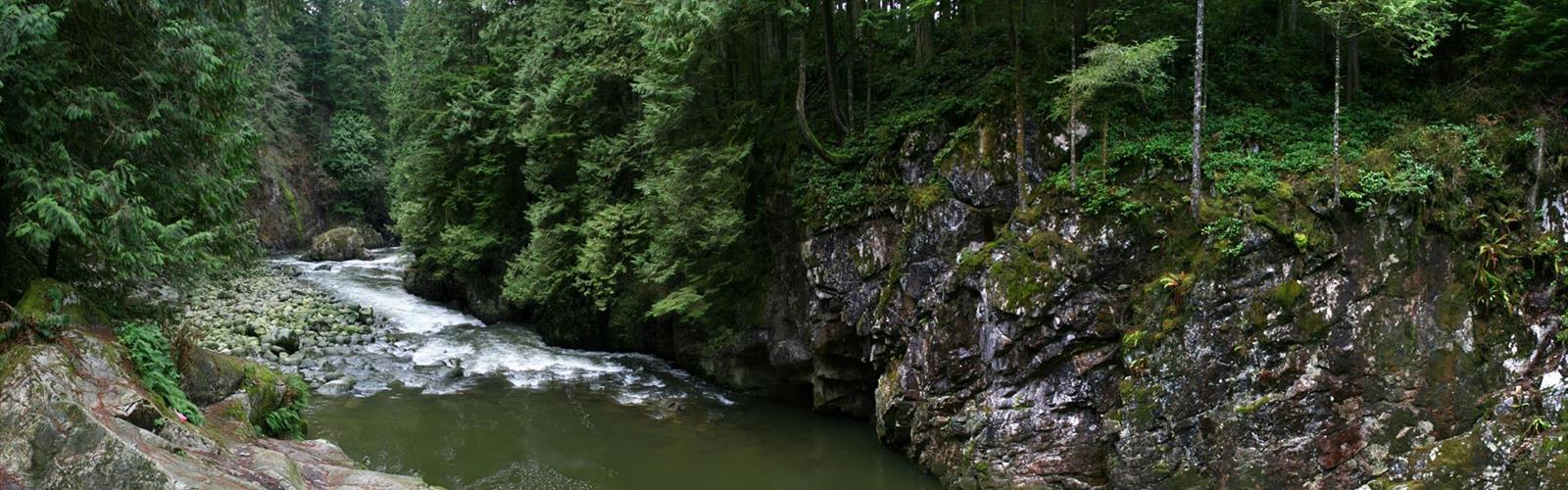

Ready to explore Capilano River Regional Park? Here's everything you need to know before you go!
Discover the trail
Trail description
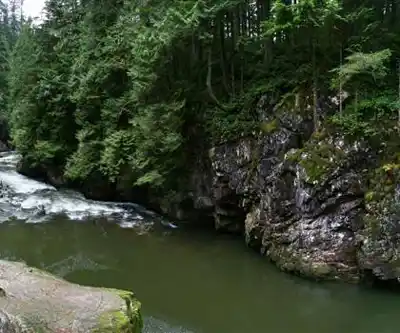
Capilano River Regional Park sits just minutes from downtown Vancouver yet manages to feel genuinely wild. Stretching 10 kilometers through the Coast Mountains of British Columbia, the park follows the Capilano River from Ambleside Park in West Vancouver all the way up to Cleveland Dam, threading through some of the most impressive old-growth coastal rainforest left in the Lower Mainland. It's the kind of place where you can be standing in a cathedral of Douglas firs and western red cedars within half an hour of leaving the city.
The main route — the Capilano Pacific Trail — gains around 200 meters of elevation over its length, spread gradually enough that the climb rarely feels punishing. Most hikers complete the full out-and-back or point-to-point in roughly 2 hours and 50 minutes, though it's easy to linger longer when the river is running high or the light is doing something interesting through the canopy.
Trail Experience and Terrain
The trail changes character as you move upstream, which keeps things interesting across the full distance. Near Ambleside, the path is wide, well-graded, and genuinely easy — the kind of terrain where you can walk side by side and hold a conversation without watching your feet. This lower section works well for families with younger kids or anyone easing back into hiking after a break.
As you head further upstream, the trail tightens up. Roots cross the path more frequently, grades steepen in places, and the surface shifts from packed gravel to natural forest floor. There are occasional rocky sections that require a bit of attention underfoot, but nothing that demands technical skill. The difficulty rating of easy holds across the full route — this is a trail that builds confidence rather than tests limits.
Trail surfaces vary throughout: packed earth and gravel on the main corridors, wooden bridges and boardwalks over the wettest crossings, and more raw forest floor on the side trails that branch off the main route. From October through March, expect mud. Vancouver's rainy season is real, and the trail shows it. Waterproof footwear with solid traction makes a meaningful difference during those months.
The River as a Constant Companion
The Capilano River is the defining feature of this park, and its personality shifts noticeably as you climb. In the lower reaches, it moves broadly and relatively calmly, with gravel bars and pools that invite you to stop and watch. Further upstream, the channel narrows, the gradient increases, and the water pushes hard through boulder-strewn rapids. Multiple viewpoints along the trail let you drop down to the river's edge or look out over it from above.
During spring snowmelt, the river runs fast and loud — the kind of volume that fills the whole valley and makes conversation difficult near the water. That same sound is part of what makes the park feel so removed from the city. Traffic noise disappears quickly once you're moving through the trees.
Wildlife and Forest Ecology
The park's ecosystems support a solid range of wildlife. Black bears move through the area, particularly during the salmon runs in late summer and fall when the river draws them in. Coyotes are present but tend to avoid people. The bird life is active and audible — Steller's jays are hard to miss, and if you're lucky you'll hear the unmistakable drumming of a pileated woodpecker somewhere in the upper canopy.
The forest itself is classic Pacific Northwest coastal rainforest. Massive Douglas firs and western red cedars dominate the upper canopy, while salmonberry, devil's club, and ferns fill in the understory. Moss covers nearly every surface — logs, rocks, lower tree trunks — giving the forest that deep green quality that photographs well but is even better in person. Nurse logs are everywhere, supporting new tree growth in the slow, patient way that old-growth forests operate.
Seasonal changes shift the experience considerably. Spring brings the most dramatic river conditions and the freshest green growth. Summer offers drier trails and longer days. Fall is arguably the most rewarding season for wildlife — salmon returning to spawn draw bears and eagles, and the deciduous trees add warm color to the otherwise evergreen landscape. Winter hiking is quieter and more atmospheric, though daylight is short and the trails are at their muddiest.
Cleveland Dam and Upper Park
Cleveland Dam marks the upper end of the main trail and provides a satisfying destination. Completed in 1954, the dam holds back Capilano Lake, and the viewing area at the top offers a strong panorama across the reservoir toward the peaks beyond. It's a popular spot for photographers, particularly on clear mornings when the mountain reflections are sharp on the water's surface.
For hikers who want more after reaching the dam, connecting trails push further into the Coast Mountains. These routes require more preparation and experience than the main Capilano Pacific Trail, but the option is there for those who want to extend the day.
Points of Interest Along the Way
The Capilano River Hatchery is worth a stop, especially if you're hiking with kids. The facility focuses on salmon conservation and gives visitors a close look at the fish during spawning season. The interpretive displays explain the salmon life cycle clearly and put the river ecosystem into context in a way that sticks with younger visitors.
Picnic areas are positioned at several points along the trail, most of them taking advantage of river views or forest shade. They work well as natural rest stops that break up the distance into manageable pieces without requiring you to commit to a full sit-down lunch.
Getting There and Practical Notes
The park's location just outside Vancouver makes it accessible by both car and public transit, with multiple entry points that let you tailor the hike to your available time. Parking exists at the main trailheads but fills up fast on summer weekends and holidays — an early start solves most of that problem and also gives you the best shot at seeing wildlife before the trail gets busy.
Beyond waterproof footwear, the standard kit applies: enough water for the full 10 kilometers, a snack or two, and a rain layer regardless of what the forecast says. Weather in the Coast Mountains moves quickly, and being caught underprepared on a trail this close to the city is an avoidable frustration.
The Essential Hiking Checklist
Everything you need for your next hike. Bilingual, printable, 1 page.
Get your free hiking checklistRecommended gear for this trail
As an Amazon Associate I earn from qualifying purchases.


Ready to go?
Everything you need to know before you goStarting Point
The capilano river regional park is located in North Vancouver, British Columbia. To get to the start of the trails, take the exit for Capilano Road on Highway 1. Head north on Capilano Road and the park will be on your right.
When?
How much?
As an Amazon Associate I earn from qualifying purchases.
Affiliate links — LGPO may earn a commission at no extra cost to you.
- Hiking shoes Essential
- → Salomon Elixir Tour Mid WP · 203.38 $
- Layered clothing Essential
- Rain jacket Essential
- Trekking poles
- → Black Diamond Trail Ergo Cork · 69.99 $
- Headlamp
- → Petzl Actik Core 625 · 103.95 $
FAQ - Frequently asked questions
Everything you need to knowSimilar hikes nearby
Discover other trails you might enjoy
Bridle Path
Vancouver Coast Mountains
Flora Lake
Vancouver Coast Mountains

Alouette Mountain
Vancouver Coast Mountains
Williamson Lake
Vancouver Coast Mountains
Brandywine Mountain
Vancouver Coast Mountains

Coliseum Mountain
Vancouver Coast Mountains
Hiking near Vancouver
235 trails to explore ~8 km away
We work hard to provide the most up-to-date and error-free data possible. If something seems incorrect, let us know! Your contribution helps the whole community.
Hikers' opinions
Be the first to review!
No hiker has shared their experience yet. Share your impressions and help other hikers!