
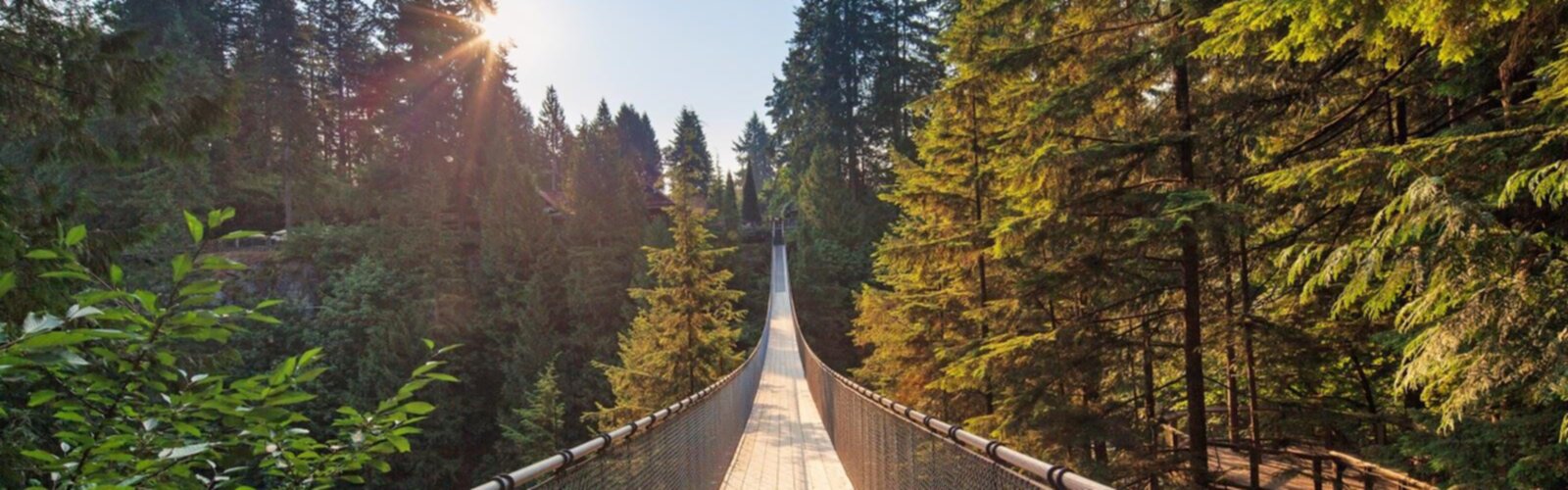

Ready to explore Capilano Suspension Bridge Park? Here's everything you need to know before you go!
Discover the trail

Trail description
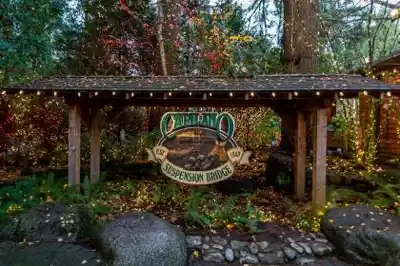
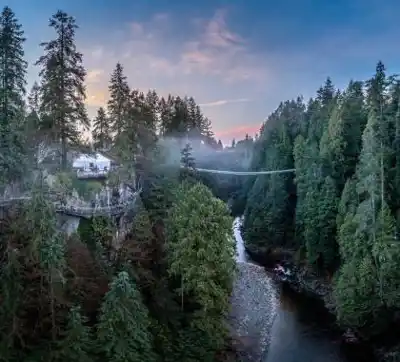
Capilano Suspension Bridge Park sits just minutes from downtown Vancouver in the Coast Mountains, offering a rare chance to experience an old-growth temperate rainforest from perspectives most people never get. This isn't a wilderness trail in the traditional sense—it's a thoughtfully engineered park where elevated walkways, suspension bridges, and cliff-edge paths bring you face to face with one of the most dramatic river canyons in the region. At roughly 2.5 km of walkable routes with about 70 meters of elevation change, the full circuit takes around an hour and a half and is accessible to most fitness levels.
The park is built around three distinct elevated experiences, each revealing a different layer of the coastal forest ecosystem. Together, they give you a surprisingly complete picture of how this landscape works—from the canyon floor carved by the Capilano River to the upper canopy where bald eagles hunt and ancient Douglas firs reach toward the sky.
The Main Suspension Bridge
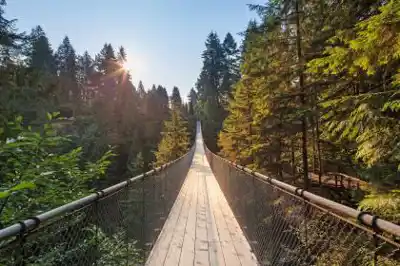
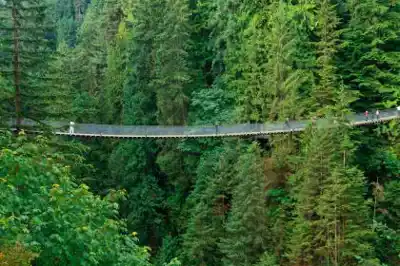
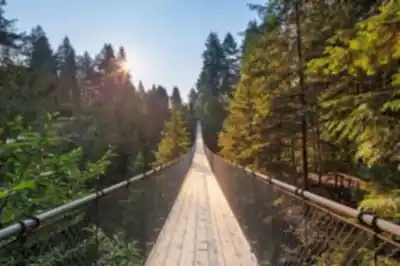
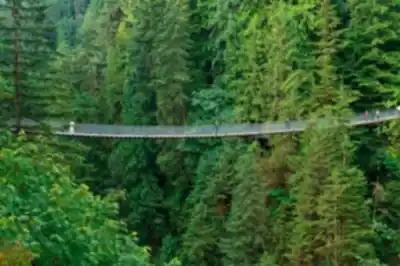
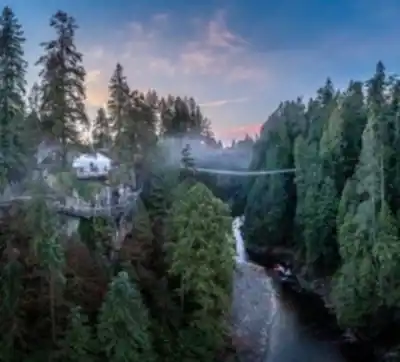
Everything here starts with the iconic suspension bridge. Spanning 137 meters across the canyon and hanging 70 meters above the Capilano River, it's one of the longest and highest pedestrian suspension bridges in the world. The moment you step onto it, you feel the gentle sway—engineered to move with wind and foot traffic, which makes the crossing feel alive rather than unsettling once you settle into it.
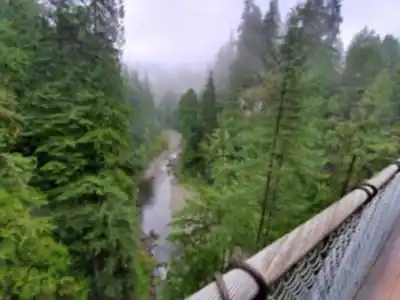
The views from mid-bridge are worth pausing for. Below, the Capilano River cuts through the canyon floor, its flow shifting dramatically between seasons—fast and turbid with spring snowmelt, lower and clearer by late summer. Around you, the canopy spreads out in every direction, dominated by massive Douglas firs that have been growing here for centuries, mixed with western red cedar and western hemlock. The bridge gives you a perspective on these trees that you simply can't get from the ground—you're level with their mid-canopy, close enough to appreciate both their individual scale and how they form a layered, interconnected ecosystem.
Treetops Adventure
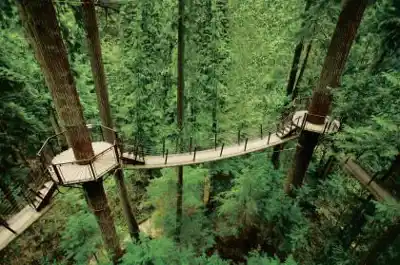
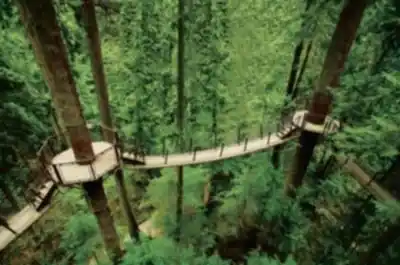
Once across the main bridge, the Treetops Adventure takes you deeper into the canopy through a series of seven smaller suspension bridges connecting platforms built around living Douglas firs. The platforms are designed to minimize impact on the trees while putting you right in the middle of a part of the forest that's normally only accessible to birds and squirrels.
The experience up here is noticeably different from the main bridge crossing. The light filters through branches in constantly shifting patterns, the air feels cooler and more humid close to the massive trunks, and you start noticing details that disappear from ground level—epiphytes clinging to bark, the intricate structure of branches that provide habitat for countless species, the way moss colonizes every available surface. The bridges vary in length and height, so each one offers something slightly different, from intimate close-up encounters with individual giants to broader views across the canopy toward the mountains beyond.
Cliffwalk
The Cliffwalk offers a completely different character from the forest-immersed experiences of the other two sections. This narrow walkway follows the granite cliff face along the canyon's edge, cantilevering out from the rock in places to create the genuine sensation of walking on air. Several sections feature glass floors that let you look straight down to the river and forest floor below—a detail that tends to sort visitors quickly into those who love it and those who grip the railing a little tighter.
Beyond the thrill factor, the Cliffwalk is where you get the clearest read on the geology of this place. The exposed granite faces show the ancient mountain-building processes that created this canyon, while the way vegetation clings to seemingly impossible cliff-side locations is a good reminder of how tenacious coastal forest plants can be. On clear days, the views extend beyond the immediate canyon to the broader Coast Mountain landscape, giving you a sense of how the Capilano River valley connects to the larger system of waterways draining toward the Pacific.
Wildlife and Seasonal Highlights
The park's position in the coastal forest ecosystem means what you see changes considerably depending on when you visit. Bald eagles are a regular presence, often spotted soaring above the canyon or perched in the tall trees—especially during salmon runs in fall, when the river below becomes a reliable food source. From the elevated walkways, you can sometimes watch salmon making their way upstream during spawning season, which adds a whole other dimension to the visit.
The forest itself shifts through the seasons. Spring brings fresh growth and wildflowers in the understory. Fall adds color from the deciduous trees and shrubs woven through the dominant conifers. Winter visits, when crowds thin out, can be particularly striking—snow on the evergreen canopy creates sharp contrasts, and the canyon feels more raw and quiet.
Interpretive Displays
Scattered throughout the park, interpretive displays add useful context to what you're seeing. Topics range from forest succession and old-growth ecology to the cultural significance of this landscape to local First Nations peoples and the role of salmon in coastal forest nutrition. These aren't just filler—they genuinely help you understand the relationships at work in the ecosystem around you, which makes the physical experience of moving through it at different elevations more meaningful.
Practical Notes
The park is reachable from downtown Vancouver by car or public transit, making it a straightforward day trip or half-day addition to a Vancouver visit. The walkways and bridges are designed for a wide range of visitors, though anyone with a significant fear of heights should know that some sections—particularly the glass-floor portions of the Cliffwalk—are genuinely exposed. Wear shoes with solid grip, since surfaces can get slippery in wet conditions, which is common in this coastal climate. Bring a light layer as well; the elevated walkways tend to be windier and cooler than ground level, even on warm days.
The Essential Hiking Checklist
Everything you need for your next hike. Bilingual, printable, 1 page.
Get your free hiking checklistRecommended gear for this trail
As an Amazon Associate I earn from qualifying purchases.


Ready to go?
Everything you need to know before you goStarting Point
The easiest way to get to the start of the trails at the capilano suspension bridge park is to drive there.
When?
How much?
As an Amazon Associate I earn from qualifying purchases.
Affiliate links — LGPO may earn a commission at no extra cost to you.
- Hiking shoes Essential
- → Salomon Elixir Tour Mid WP · 203.38 $
- Layered clothing Essential
- Rain jacket Essential
- Trekking poles
- → Black Diamond Trail Ergo Cork · 69.99 $
- Headlamp
- → Petzl Actik Core 625 · 103.95 $
FAQ - Frequently asked questions
Everything you need to knowSimilar hikes nearby
Discover other trails you might enjoy
Bridle Path
Vancouver Coast Mountains
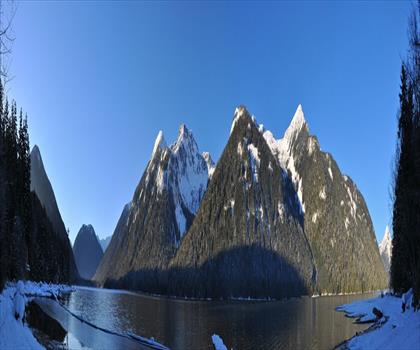
Flora Lake
Vancouver Coast Mountains

Alouette Mountain
Vancouver Coast Mountains
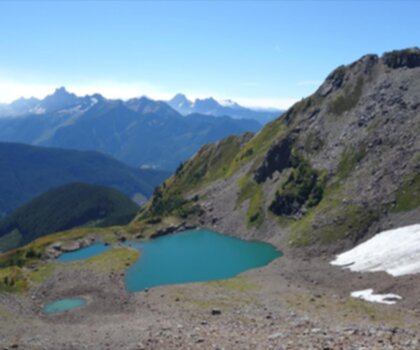
Williamson Lake
Vancouver Coast Mountains
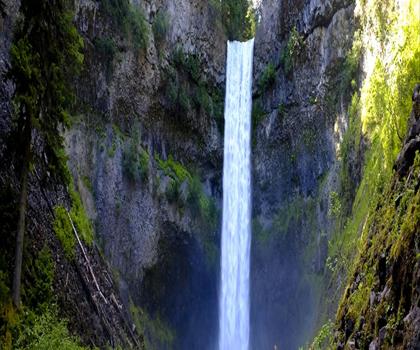
Brandywine Mountain
Vancouver Coast Mountains

Coliseum Mountain
Vancouver Coast Mountains
Hiking near Vancouver
235 trails to explore ~7 km away
We work hard to provide the most up-to-date and error-free data possible. If something seems incorrect, let us know! Your contribution helps the whole community.
Hikers' opinions
Be the first to review!
No hiker has shared their experience yet. Share your impressions and help other hikers!