
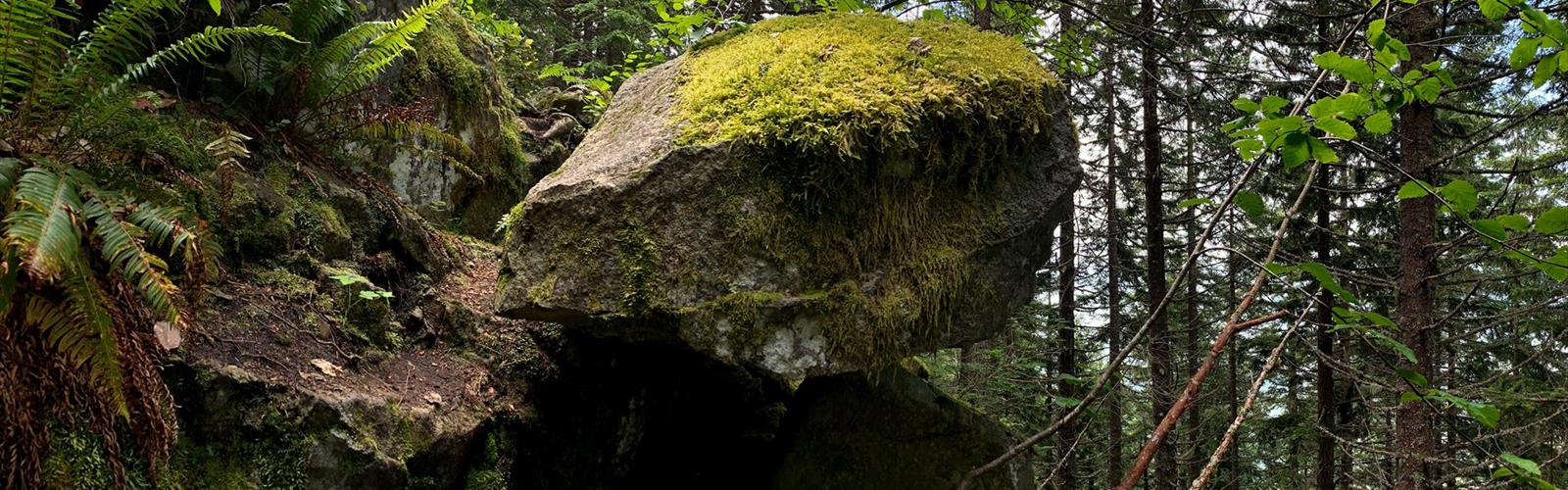

Ready to explore Cypress Provincial Park? Here's everything you need to know before you go!
Discover the trail
Trail description
Cypress Provincial Park sits in the Vancouver Coast Mountains just 30 minutes from downtown Vancouver, offering some of the most accessible alpine terrain in the region. This 3,012-hectare park stretches from the shores of Howe Sound up to the subalpine ridges, creating a diverse landscape that ranges from dense coastal forest to open meadows and rocky peaks.
The park's location on the North Shore mountains puts it in the path of Pacific storms, creating a unique ecosystem where massive Douglas fir and western hemlock trees give way to mountain hemlock and alpine fir at higher elevations. During summer months, the upper elevations burst with wildflowers including Indian paintbrush, lupine, and mountain aster, while the lower forests remain cool and shaded even on hot days.
Trail Network and Terrain
The park caters to hikers of all experience levels, from families looking for short walks to experienced backpackers tackling multi-day adventures. The trail system connects to the larger North Shore trail network, making it possible to link routes for extended trips across the region's interconnected wilderness areas.
The Howe Sound Crest Trail stands as the park's crown jewel, stretching along the ridge system through dramatically changing terrain. This challenging route starts in thick coastal forest before climbing into subalpine meadows and finally reaching the exposed rocky summits. The trail offers continuous panoramic views of Howe Sound, the Sunshine Coast, and Vancouver Island on clear days. Expect steep climbs, some scrambling sections, and potentially muddy conditions in the forest portions. The elevation changes are significant, and weather can shift quickly from warm and sunny to cold and foggy as you gain altitude.
The trail surface varies considerably throughout your journey. Lower sections wind through root-crossed forest paths that can become slippery when wet, while middle elevations open into rocky meadows with more stable footing. The upper reaches require careful navigation across exposed granite slabs and loose scree. Stream crossings are common, particularly during snowmelt season, and some may require careful rock-hopping or wading.
For those seeking rewarding views without the full commitment of the Howe Sound Crest Trail, the Bowen Lookout Trail provides an excellent moderate option. This trail climbs steadily through mixed forest before opening up to a spectacular viewpoint overlooking Bowen Island and the waters of Howe Sound. The lookout offers one of the best easily accessible vantage points in the area, making it popular with photographers and families. The trail surface is well-maintained but can be slippery when wet, and the final approach to the viewpoint involves some rocky terrain.
The Hiking Experience
What sets Cypress Provincial Park apart is the dramatic elevation gain that takes you through multiple ecosystems in a single hike. You'll start surrounded by towering coastal giants where the forest floor stays damp and cool even in summer heat. The sound of your footsteps is muffled by thick moss and fallen needles, and the canopy filters sunlight into dappled patterns.
As you climb, the forest gradually opens up. The massive old-growth trees give way to smaller alpine species, and suddenly you're walking through meadows dotted with wildflowers and small tarns. The views begin to open up here, offering glimpses of the dramatic landscape ahead. The final push to the ridgeline rewards you with sweeping panoramas that stretch from the urban sprawl of Vancouver to the wild coastline and islands beyond.
The exposed ridges provide some of the most spectacular hiking in the Vancouver area. On clear days, you can see across Howe Sound to the Sunshine Coast mountains, south to Mount Baker, and west to Vancouver Island. The contrast between the wilderness you're standing in and the city visible below creates a unique perspective on the region's geography.
Wildlife and Natural Features
The park's diverse elevation zones support a wide range of wildlife. Black bears are common throughout the area, particularly during berry season in late summer and early fall. Deer frequent the meadows and forest edges, while smaller mammals like marmots and pikas inhabit the higher rocky areas. Bird watchers can spot everything from Steller's jays and ravens in the forest to ptarmigan and rosy-finned rosy-crowned kinglets in the alpine zones.
The geological features of the park tell the story of ancient volcanic activity and glacial carving. The exposed rock faces show evidence of the region's volcanic past, while the U-shaped valleys and polished granite surfaces reveal the work of glaciers. Small alpine lakes dot the higher elevations, fed by snowmelt and providing critical habitat for amphibians.
Visitors should maintain safe distances from all wildlife and follow Leave No Trace principles to protect these natural habitats. Bear caches are available at designated camping areas, and proper food storage is essential throughout the park.
Seasonal Considerations
Cypress Provincial Park transforms dramatically with the seasons, offering year-round recreation opportunities. Summer hiking season typically runs from July through October, when most trails are snow-free and alpine flowers are at their peak. Early season hikers may encounter snow patches and muddy conditions, particularly on north-facing slopes.
Winter brings an entirely different character to the park. The adjacent Cypress Mountain Resort operates ski and snowboard facilities, while the park itself becomes a destination for snowshoeing and winter hiking. The lower elevation trails often remain accessible throughout winter, though ice and snow require appropriate footwear and caution. The contrast between the snow-covered peaks and the dark waters of Howe Sound creates particularly striking winter scenery.
Spring can be unpredictable, with rapidly changing conditions as snow melts and new growth begins. This season offers fewer crowds and the excitement of watching the landscape wake up, but trail conditions can be challenging with mud, stream crossings, and unstable snow.
Planning Your Visit
The park's proximity to Vancouver makes it easily accessible by car, with several parking areas serving different trailheads. However, this accessibility also means popular trails can be crowded, especially on weekends and holidays. Early morning starts help avoid crowds and often provide the best weather conditions and wildlife viewing opportunities.
Weather in the Coast Mountains can change rapidly, and conditions at higher elevations may be significantly different from those at the trailhead. Pack layers including rain gear, as Pacific storms can move in quickly. Even on day hikes, carry extra food, water, and emergency supplies. The exposed ridges are particularly susceptible to sudden weather changes.
Water sources are available along many trails, but treatment is recommended. The park's streams and lakes provide reliable water sources during most of the year, though some may run low during dry summer periods. Cell phone coverage is spotty throughout much of the park, particularly in the valleys and on the back sides of ridges, so let someone know your planned route and expected return time.
The Essential Hiking Checklist
Everything you need for your next hike. Bilingual, printable, 1 page.
Get your free hiking checklistRecommended gear for this trail
As an Amazon Associate I earn from qualifying purchases.


Ready to go?
Everything you need to know before you goStarting Point
The cypress provincial park is located in West Vancouver, British Columbia. To get to the start of the trails, take the Lions Gate Bridge from downtown Vancouver and follow the signs to cypress provincial park.
When?
How much?
As an Amazon Associate I earn from qualifying purchases.
Affiliate links — LGPO may earn a commission at no extra cost to you.
- Hiking shoes Essential
- → Salomon Elixir Tour Mid WP · 203.38 $
- Layered clothing Essential
- Rain jacket Essential
- Trekking poles
- → Black Diamond Trail Ergo Cork · 69.99 $
- Headlamp
- → Petzl Actik Core 625 · 103.95 $
FAQ - Frequently asked questions
Everything you need to knowSimilar hikes nearby
Discover other trails you might enjoy
Bridle Path
Vancouver Coast Mountains
Flora Lake
Vancouver Coast Mountains

Alouette Mountain
Vancouver Coast Mountains
Williamson Lake
Vancouver Coast Mountains
Brandywine Mountain
Vancouver Coast Mountains

Coliseum Mountain
Vancouver Coast Mountains
Hiking near Vancouver
235 trails to explore ~15 km away
We work hard to provide the most up-to-date and error-free data possible. If something seems incorrect, let us know! Your contribution helps the whole community.
Hikers' opinions
Be the first to review!
No hiker has shared their experience yet. Share your impressions and help other hikers!