
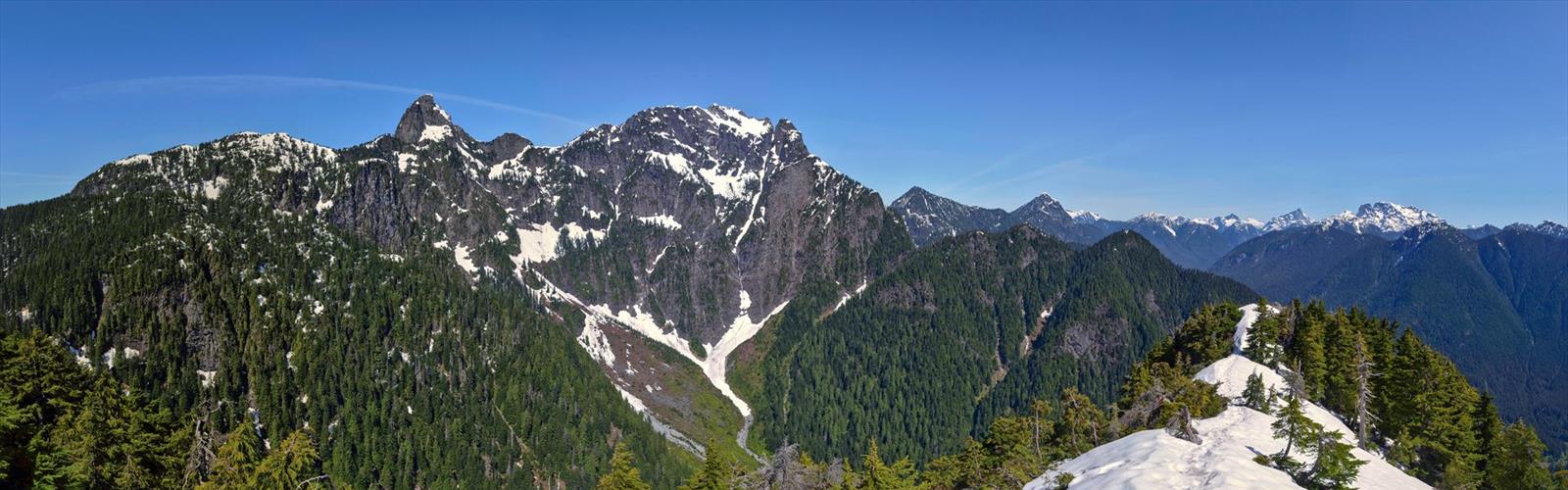

Ready to explore Evans Peak? Here's everything you need to know before you go!
Discover the trail
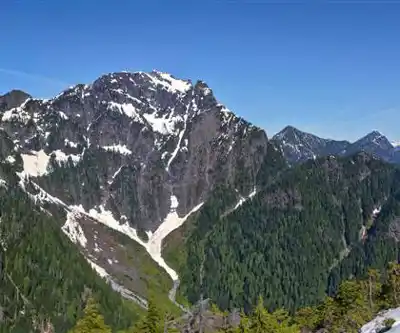
Trail description
Evans Peak rises 1,100 meters above sea level in the Vancouver Coast Mountains, delivering one of the region's most rewarding summit experiences for hikers ready to tackle steep, rugged terrain. This challenging 8-kilometer round-trip hike gains significant elevation over its 4.5-hour duration, offering the kind of dramatic mountain and valley panoramas that define the Coast Mountains experience.
Located within the broader Golden Ears Provincial Park system, Evans Peak provides a perfect example of how Coast Mountain hikes transition from well-maintained lower trails to increasingly wild alpine terrain. What makes this peak special is its combination of diverse forest ecosystems, seasonal wildflower displays, and the striking contrast between dense woodland hiking and exposed summit conditions that test your mountain skills.
The Trail Experience
Your journey begins at Golden Ears Provincial Park, where clear trail markers guide you into the dense woodlands that characterize the lower elevations. The initial section winds through mature forest, crossing several streams that provide natural rest stops and reliable water sources. This lower portion offers relatively moderate grades, giving you time to settle into your rhythm before the trail demands more from your legs and lungs.
As you climb higher, the forest composition shifts noticeably and the trail becomes significantly steeper and more technical. Rocky terrain requires careful foot placement, and the path narrows where it cuts across steep slopes. This middle section delivers the hike's most sustained challenge—you'll understand why sturdy boots and a steady pace make all the difference on terrain like this.
The upper reaches reveal why Evans Peak attracts experienced hikers seeking genuine mountain conditions. The forest canopy opens up, exposing you to whatever weather the Coast Mountains are serving up while providing tantalizing glimpses of the expansive views waiting above. During peak wildflower season, this transition zone explodes with color as alpine species take advantage of increased sunlight and seasonal snowmelt.
At the summit, every step of that demanding climb pays off completely. Sweeping vistas extend across the surrounding peaks and valleys, offering clear sightlines deep into the Coast Mountain wilderness. The elevated perspective gives you an excellent sense of this region's incredible scale and rugged character, making it an ideal spot for photography and simply absorbing the mountain environment that stretches endlessly in every direction.
Terrain and Trail Conditions
The route to Evans Peak covers dramatically varied terrain that keeps you engaged and requires different hiking techniques throughout the ascent. Lower sections follow established paths through forest duff and occasional root systems, while middle elevations introduce loose rock, sustained steep grades, and increasingly exposed trail conditions. Near the summit, expect rocky terrain that may require some light scrambling, though no technical climbing skills are necessary.
Weather conditions change substantially with elevation gain, and you'll feel the difference as you climb. The forested lower sections provide natural wind protection and relatively stable temperatures, while the upper mountain exposes you directly to whatever weather systems are moving through the Coast Mountains. Temperature drops become noticeable as you gain elevation, and conditions can shift from sunny to overcast or windy with little warning.
Stream crossings in the lower sections are generally straightforward during normal conditions, but spring snowmelt or heavy rain can dramatically increase water levels and make these crossings more challenging. The rocky terrain higher up becomes slippery when wet, demanding extra caution and potentially slower progress during or after precipitation.
Essential Gear and Preparation
Sturdy hiking boots with excellent ankle support are absolutely essential for navigating the rocky terrain safely, particularly on the steeper sections where loose rock and uneven surfaces demand secure, confident footing. The dramatic elevation change and varying exposure levels make layered clothing critical—you'll want the flexibility to add or remove layers as conditions change from the protected forest base to the exposed, potentially windy summit.
Carry significantly more water and high-energy snacks than you might expect, as the sustained climb and elevation gain will increase your consumption beyond normal hiking levels. While streams provide water sources in the lower sections, having adequate supplies eliminates the need to stop for treatment or filtration during your ascent, keeping your momentum and energy focused on the climb.
A camera or phone with extra battery capacity will help you capture the summit views and document the diverse ecosystems you'll encounter throughout the elevation zones. Consider packing a basic first aid kit and emergency whistle, as the more remote upper sections of the trail see fewer hikers who could provide assistance if problems arise.
Best Times to Visit
Late spring through early fall provides the most favorable and safe conditions for tackling Evans Peak, when trails are generally clear of snow and weather patterns offer the best chance of summit success. During these months, you'll have optimal chances of clear summit views and safe passage on the rocky upper sections that can become treacherous in poor conditions.
Spring visits reward you with spectacular wildflower displays and flowing streams, though trail conditions may be muddy in places as snowmelt continues and winter's grip slowly releases the higher elevations. Summer provides the most reliable weather windows and longest daylight hours, making it ideal for hikers who want to take their time on the summit and fully enjoy the panoramic views.
Early fall can offer exceptional visibility and comfortable temperatures for the demanding climb, though weather systems become increasingly unpredictable as the season progresses toward winter. Always check current weather forecasts and mountain conditions before heading out, as Coast Mountain weather can change rapidly and significantly impact both safety and your ability to enjoy the summit experience.
Start early enough in the day to complete the hike with adequate daylight buffer, and be prepared to turn back if conditions deteriorate during your ascent. Follow Leave No Trace principles throughout your visit—pack out all trash, stay on established trails, and avoid disturbing the wildlife and vegetation that make Evans Peak a special destination within the Vancouver Coast Mountains.
The Essential Hiking Checklist
Everything you need for your next hike. Bilingual, printable, 1 page.
Get your free hiking checklistRecommended gear for this trail
As an Amazon Associate I earn from qualifying purchases.


Ready to go?
Everything you need to know before you goStarting Point
The evans peak trails are located in the evans peak Provincial Park, which is about a 2-hour drive from Vancouver. From Vancouver, take Highway 1 east to Hope. In Hope, take Highway 3 north to Princeton. In Princeton, take the Highway 5A exit and turn left onto the 5A. The park is located about 10 km down the 5A.
When?
How much?
As an Amazon Associate I earn from qualifying purchases.
Affiliate links — LGPO may earn a commission at no extra cost to you.
- Hiking shoes Essential
- → Salomon Elixir Tour Mid WP · 203.38 $
- Layered clothing Essential
- Rain jacket Essential
- Trekking poles
- → Black Diamond Trail Ergo Cork · 69.99 $
- Headlamp
- → Petzl Actik Core 625 · 103.95 $
FAQ - Frequently asked questions
Everything you need to knowSimilar hikes nearby
Discover other trails you might enjoy
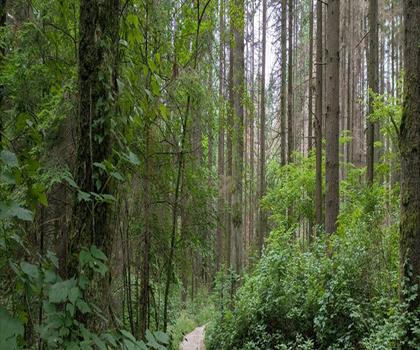
Bridle Path
Vancouver Coast Mountains
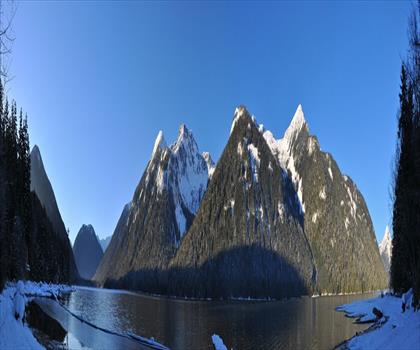
Flora Lake
Vancouver Coast Mountains

Alouette Mountain
Vancouver Coast Mountains
Williamson Lake
Vancouver Coast Mountains
Brandywine Mountain
Vancouver Coast Mountains

Coliseum Mountain
Vancouver Coast Mountains
Hiking near Vancouver
235 trails to explore ~47 km away
We work hard to provide the most up-to-date and error-free data possible. If something seems incorrect, let us know! Your contribution helps the whole community.
Hikers' opinions
Be the first to review!
No hiker has shared their experience yet. Share your impressions and help other hikers!