


Ready to explore Indian Arm? Here's everything you need to know before you go!
Discover the trail
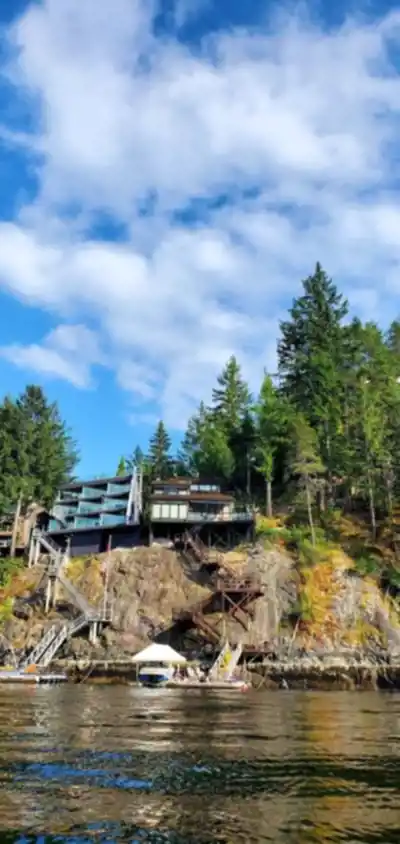
Trail description
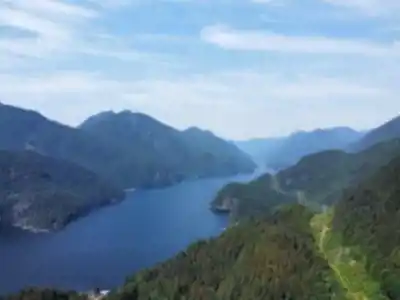
Indian Arm is a dramatic glacial fjord that cuts deep into the North Shore Mountains, extending 16 kilometers due north from Burrard Inlet into the heart of the Coast Mountains. Located just 20 kilometers northeast of Vancouver in southwestern British Columbia, it offers one of the most striking contrasts in Canadian outdoor recreation: genuine wilderness terrain within easy reach of a major city.
Carved by glaciers during the last Ice Age, Indian Arm has the unmistakable profile of a true fjord — towering rock walls that drop almost vertically into dark, deep water. The fjord ranges from 500 meters to 2 kilometers wide, creating a narrow corridor flanked by soaring mountain faces. Water depths vary from around 30 meters in shallower sections to 300 meters in the deepest parts, which gives the water its characteristic dark emerald-green color. The scale of the place hits you differently depending on whether you're on the water or looking down from the ridgelines above.
Terrain and Forest
The surrounding slopes are classic Coast Mountain terrain — steep, dense, and relentlessly vertical. Temperate rainforest clings to the hillsides from the waterline all the way up to the alpine zone, with old-growth Douglas fir, western red cedar, and hemlock forming a thick canopy overhead. The understory is equally lush, packed with ferns, salmonberry, and devil's club. This isn't manicured parkland; the forest is wild and the trails reflect that.
Several waterways feed into the fjord along its length, including the main branch of the Seymour River near the mouth, along with contributions from Lynn Creek and the Capilano River through smaller branches. These freshwater inputs create diverse aquatic environments and contribute to the fjord's rich ecosystem.
The Hike
Trails in the Indian Arm area cover a wide range of difficulty, but the main hiking experience here leans hard. With 8 km of distance, 1,200 meters of elevation gain, and an estimated 4-hour moving time, this is rated Hard — and the terrain earns that rating honestly. The elevation gain is substantial for the distance, which means you're climbing steeply for much of the route. Expect your legs to know about it the next day.
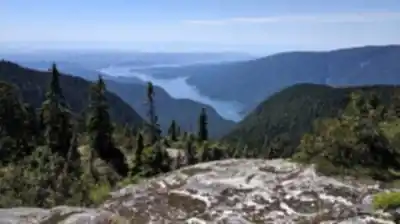
The payoff is real. As you gain elevation, the fjord opens up below you in a way that's genuinely hard to describe until you've seen it — the full 16-kilometer length of Indian Arm stretching out between walls of rock and forest, the water dark and still far below. These are some of the most dramatic viewpoints accessible on a day hike from Vancouver.
The steep-sided nature of the fjord means significant elevation gain happens fast. You're not grinding up a long gradual slope — you're climbing. The trail character shifts as you move through elevation zones, from dense coastal forest at the bottom to more open terrain higher up where the views start to open. Footing can be technical in places, particularly on wet rock, which is a regular condition in this part of British Columbia.
Access Points and Recreation Areas
Indian Arm's shores are anchored by several well-established parks and recreation areas, each offering a different entry point into the fjord environment.
- Belcarra Regional Park sits on the eastern shore and provides hiking trails through old-growth forest with viewpoints over the fjord. The trail system here connects the waterfront with higher elevations, giving hikers a sense of the full vertical scale of the place.
- Buntzen Lake Recreation Area combines lake and fjord environments in a single destination. It's popular with families and offers well-maintained trails across a range of skill levels. The proximity to Buntzen Lake means you can experience both alpine lake and fjord ecosystems on the same outing.
- Deep Cove Park is one of the most accessible entry points, especially for water-based activities. It sits at the mouth of the fjord where Indian Arm meets Burrard Inlet and serves as a natural launching point for kayaking expeditions into the fjord.
On the Water
Kayaking is one of the most compelling ways to experience Indian Arm. Paddling the fjord puts you right at the base of those rock walls, with a perspective on the scale of the place that you simply can't get from the trail. The relatively sheltered waters make it accessible for intermediate paddlers, though conditions can shift quickly and weather should always be monitored before heading out.
The combination of deep water, nutrient-rich conditions, and the transition between marine and freshwater environments supports diverse marine life throughout the fjord. The zones where freshwater streams meet the saltwater are particularly active ecologically.
Historical Context
Captain George Vancouver first mapped Burrard Inlet and the opening of Indian Arm during his Pacific Coast surveys in June 1792. Spanish explorer Dionisio Alcalá Galiano followed shortly after with a more detailed exploration of the fjord itself. Vancouver initially believed the fjord connected to the Fraser River system — an understandable assumption given the complex geography of the region. The fjord's true character as a distinct glacial waterway wasn't fully established until Captain John Richards completed comprehensive charting of the area in 1808.
What Makes Indian Arm Different
Most fjords of this scale are remote. Indian Arm is not. That proximity to Vancouver is what makes it genuinely unusual — you can be standing at the edge of serious alpine terrain, looking down at a 300-meter-deep glacial fjord, having driven less than an hour from the city. The wilderness here isn't a simulation; the terrain is steep, the forest is old, and the scale of the fjord is humbling. But the access is real, which means Indian Arm functions as a legitimate introduction to Coast Mountain wilderness for people who are ready to work for the views.
For experienced hikers, the elevation profile and terrain make it a satisfying objective that doesn't require a multi-day commitment — a hard day out with a genuine sense of place at the top.
Recommended gear for this trail
As an Amazon Associate I earn from qualifying purchases.


Ready to go?
Everything you need to know before you goStarting Point
The start of the trails at the indian arm can be accessed by boat or by car. If travelling by boat, there are a few different options for accessing the start of the trails. If travelling from Vancouver, there is a ferry that runs from Horseshoe Bay to Departure Bay in Nanaimo. From there, it is a short drive to the start of the trails. Another option is to take a boat from Deep Cove in North Vancouver. There is also a smaller ferry that runs from Belcarra to Port Moody. If travelling by car, the easiest way to get to the start of the trails is to take Highway 1 to Highway 99 and then take the exit for Squamish. From there, it is a short drive to the start of the trails.
When?
How much?
As an Amazon Associate I earn from qualifying purchases.
Affiliate links — LGPO may earn a commission at no extra cost to you.
- Hiking shoes Essential
- → Salomon Elixir Tour Mid WP · 203.38 $
- Layered clothing Essential
- Rain jacket Essential
- Trekking poles
- → Black Diamond Trail Ergo Cork · 69.99 $
- Headlamp
- → Petzl Actik Core 625 · 103.95 $
FAQ - Frequently asked questions
Everything you need to know
25 hikes under 2 hours from Montreal
Distance, elevation, parking and season for each one. The ones we go back to ourselves.
Get the guideSimilar hikes nearby
Discover other trails you might enjoy
Bridle Path
Vancouver Coast Mountains
Flora Lake
Vancouver Coast Mountains

Alouette Mountain
Vancouver Coast Mountains
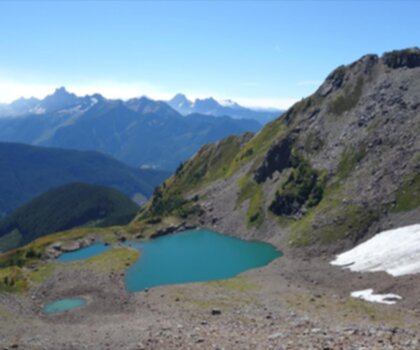
Williamson Lake
Vancouver Coast Mountains
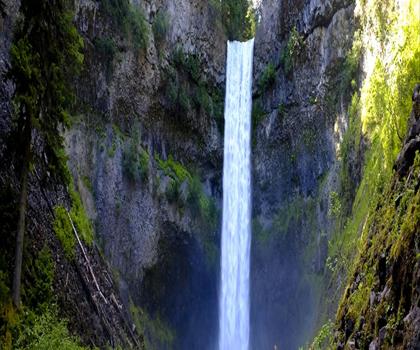
Brandywine Mountain
Vancouver Coast Mountains

Coliseum Mountain
Vancouver Coast Mountains
Hiking near Vancouver
235 trails to explore ~20 km away
We work hard to provide the most up-to-date and error-free data possible. If something seems incorrect, let us know! Your contribution helps the whole community.
Hikers' opinions
Be the first to review!
No hiker has shared their experience yet. Share your impressions and help other hikers!