

Ready to explore Lower Joffre Lake? Here's everything you need to know before you go!
Discover the trail
Trail description
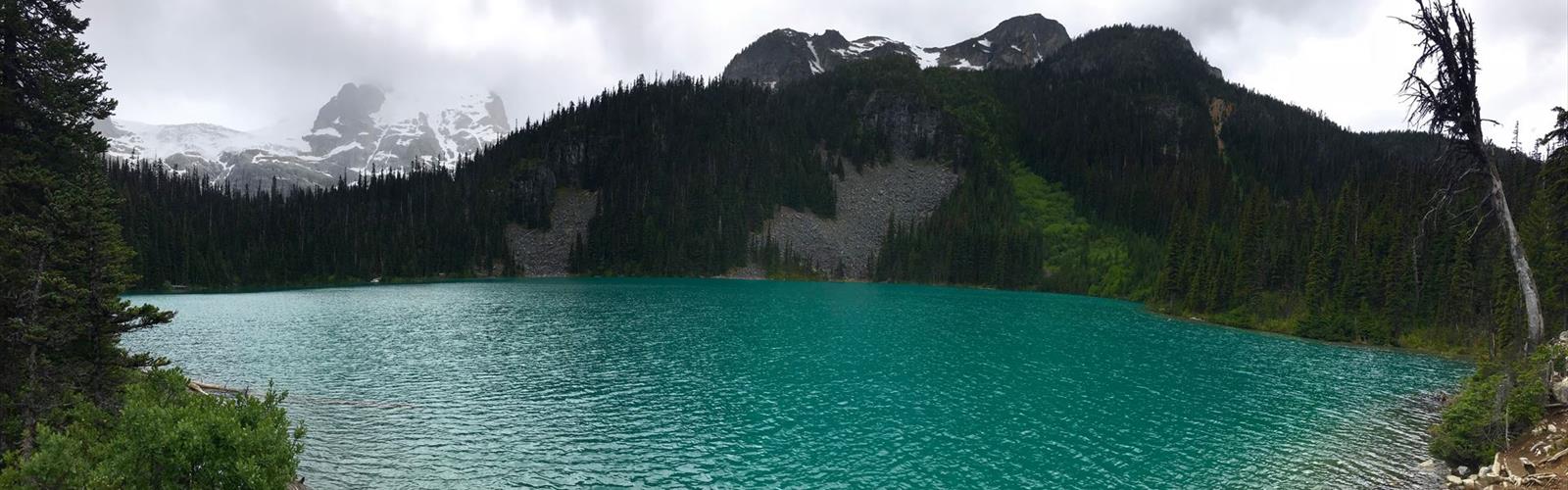
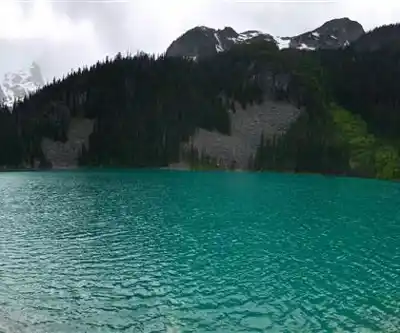
Lower Joffre Lake is the first stop along one of British Columbia's most celebrated hiking corridors, and it earns its reputation immediately. The moment you clear the treeline and the lake comes into view, that vivid turquoise color stops you in your tracks. It's the kind of scene that makes people reach for their phones before they've even caught their breath — and for good reason.
The color comes from glacial flour, ultra-fine silt ground down by glaciers and suspended in the water. It catches light differently depending on the time of day and cloud cover, shifting from a deep jade green in the shade to an almost electric blue-green under direct sun. No filter needed, and no photo quite does it justice.
Getting to the Trailhead
The trailhead is located just off Highway 99, roughly 30 kilometers east of Pemberton. That puts it within reach for a day trip from Vancouver, Whistler, or Pemberton itself. The parking area is well-marked and the access is straightforward, but it fills up fast — especially on summer weekends and holidays. An early start isn't just a suggestion here; it's genuinely the difference between finding a spot and turning around.
The Trail
The hike to Lower Joffre Lake covers 2.8 kilometers with 400 meters of elevation gain, and most hikers complete the round trip in around 1 hour 30 minutes. The difficulty is rated Easy, which holds true for the most part — the trail is well-maintained, clearly marked, and manageable for most fitness levels, including families with older kids.
The path starts in dense coastal forest, the kind that feels almost cathedral-like with towering Douglas fir, western hemlock, and cedar closing in overhead. The forest floor is thick with ferns and moss, and the light filters through in a way that makes the walk feel immersive even before you reach the lake. There are a few steeper pitches along the way, but nothing that requires technical skill or special gear under normal summer conditions.
As you approach the lake, the forest opens up and the views expand quickly. The transition from enclosed forest to open alpine setting gives the arrival a real sense of payoff — you've earned the view, even if the effort was modest.
At the Lake
The shoreline offers several natural spots to stop, rest, and take in the surroundings. The turquoise water stretches out in front of you with snow-capped peaks rising in the background, including views toward the Matier Glacier system. On calm days, the reflections on the water are exceptional — the kind of mountain lake composition that photographers specifically plan trips around.
Early morning and late afternoon light tend to produce the most dramatic color contrasts. If you can time your visit for those windows, the experience is noticeably different from a midday arrival when the light is flatter and the crowds are at their peak.
A Natural Decision Point
Lower Joffre Lake sits at a natural fork in the experience. For plenty of visitors — families, casual hikers, people who just want a taste of the mountains — the lake itself is a complete destination. The scenery is genuine alpine, the effort is accessible, and the reward is immediate.
For those who want more, the trail continues beyond Lower Joffre Lake toward Middle and Upper Joffre Lakes, where the terrain gets progressively more demanding and the scenery scales up accordingly. Lower Joffre Lake functions as both a satisfying endpoint and a natural launching pad, which is part of what makes it work so well for such a wide range of visitors.
Seasonal Conditions
The trail is hikeable year-round, but the sweet spot runs from late spring through early fall. Summer brings the warmest weather and the longest days, along with the largest crowds. Spring visits often feature high-running streams and waterfalls fed by snowmelt, while fall can bring quieter trails and autumn color in the surrounding forest. Winter access is possible but may require microspikes or snowshoes, and conditions in the broader area should be assessed carefully before heading out.
Practical Notes
- Parking: Fills quickly on weekends and holidays — arrive early.
- What to bring: Water, snacks, and layers. Temperatures near the lake can be noticeably cooler than the valley, and mountain weather shifts fast.
- Leave No Trace: The Joffre Lakes area sees heavy traffic, and the alpine environment is slow to recover from damage. Stay on designated trails, pack out everything you bring in, and keep out of the water — the lake's ecosystem is sensitive to sunscreen, soap, and other contaminants.
- Photography: Early morning and late afternoon offer the best light for capturing the turquoise color and mountain reflections.
Lower Joffre Lake delivers a genuinely spectacular mountain lake experience with a relatively low barrier to entry — a combination that's rarer than it sounds in the Coast Mountains, and exactly why this trail stays on so many people's lists year after year.
The Essential Hiking Checklist
Everything you need for your next hike. Bilingual, printable, 1 page.
Get your free hiking checklistRecommended gear for this trail
As an Amazon Associate I earn from qualifying purchases.


Ready to go?
Everything you need to know before you goStarting Point
The lower joffre lake trails can be accessed from the parking lot at the end of lower joffre lake Road.
When?
How much?
As an Amazon Associate I earn from qualifying purchases.
Affiliate links — LGPO may earn a commission at no extra cost to you.
- Hiking shoes Essential
- → Salomon Elixir Tour Mid WP · 203.38 $
- Layered clothing Essential
- Rain jacket Essential
- Trekking poles
- → Black Diamond Trail Ergo Cork · 69.99 $
- Headlamp
- → Petzl Actik Core 625 · 103.95 $
FAQ - Frequently asked questions
Everything you need to knowSimilar hikes nearby
Discover other trails you might enjoy
Bridle Path
Vancouver Coast Mountains
Flora Lake
Vancouver Coast Mountains

Alouette Mountain
Vancouver Coast Mountains
Williamson Lake
Vancouver Coast Mountains
Brandywine Mountain
Vancouver Coast Mountains

Coliseum Mountain
Vancouver Coast Mountains
Hiking near Whistler
160 trails to explore ~43 km away
We work hard to provide the most up-to-date and error-free data possible. If something seems incorrect, let us know! Your contribution helps the whole community.
Hikers' opinions
Be the first to review!
No hiker has shared their experience yet. Share your impressions and help other hikers!