


Ready to explore Lynn Canyon Suspension Bridge? Here's everything you need to know before you go!
Discover the trail
Trail description
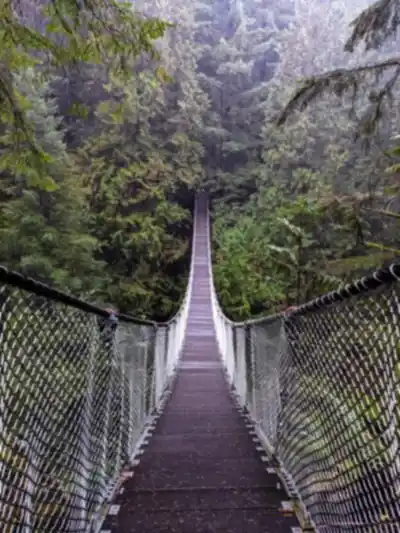
Lynn Canyon Park delivers one of Metro Vancouver's most accessible wilderness experiences, built around its iconic suspension bridge swaying 50 meters above the rushing waters of Lynn Creek. Tucked into North Vancouver's Coast Mountains, the park pairs the genuine thrill of crossing a free-hanging bridge with a trail network that winds through old-growth forest, past waterfalls, and along the walls of a dramatic granite canyon. The whole loop comes in at around 2.5 km with only 50 meters of elevation gain, making it a solid choice for families, casual hikers, and anyone who wants a real forest experience without committing to a full-day adventure.
One detail worth knowing upfront: unlike the Capilano Suspension Bridge just a few kilometers away, Lynn Canyon charges no admission fee. You get a comparable bridge experience — arguably a more authentic one — without the crowds or the ticket booth.
The Suspension Bridge
The bridge is the obvious centerpiece, and it earns the attention. Stepping onto the metal grating, you feel the span respond to your weight and the wind, swaying gently as Lynn Creek churns through the canyon below. The forest canopy stretches out on both sides, and on clear days the light filtering through the Douglas fir and cedar creates the kind of scene that makes people stop mid-crossing to take photos. It's not a white-knuckle experience for most adults, but it does have enough movement to get the heart rate up — and to make younger kids either very excited or very clingy, depending on the child.
The bridge connects the two sides of the canyon and serves as the natural midpoint of most routes through the park. Cross it, and the trail continues into deeper forest on the far side.
Trail Network
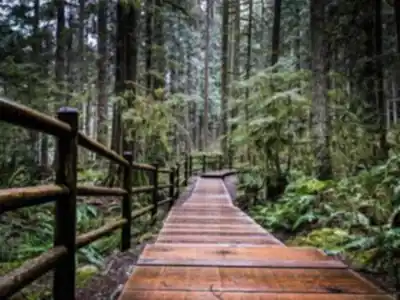
The park's trail system is well-suited to the 1h30 timeframe most visitors plan for. The Twin Falls Loop is the go-to route for first-timers: a relaxed walk through dense woodland that leads to a series of smaller waterfalls and bedrock pools carved by Lynn Creek over centuries. Trail surfaces shift between maintained gravel near the bridge and more natural forest floor as you move deeper into the park — nothing technical, but worth wearing proper footwear rather than sandals.
The Baden-Powell Trail also passes through the park for hikers looking to extend their day. This section offers a moderate step up in effort and connects to the broader regional trail network, giving experienced hikers a way to turn a short outing into something more substantial.
Throughout the park, the canyon's geology shapes the hiking experience in ways that go beyond the bridge. Steep-sided gorges drop to creek level, trails hug the canyon rim with views down to the water, and then descend to where you can stand next to the pools and cascades directly. The interplay between the rock, the water, and the forest gives the park a layered quality that holds up even on repeat visits.
Forest and Wildlife
The forest here is classic Pacific Northwest old-growth: towering Douglas fir, western red cedar, and western hemlock forming a canopy dense enough to keep the trail cool even on warm summer days. The understory is thick with ferns, salmonberry, and devil's club — the kind of lush, green environment that makes this corner of British Columbia feel genuinely wild even though you're minutes from the city.
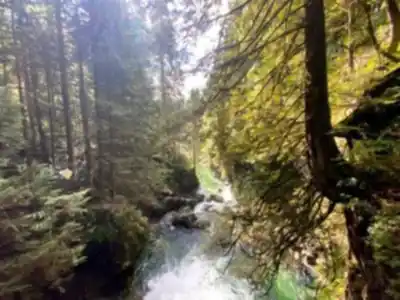
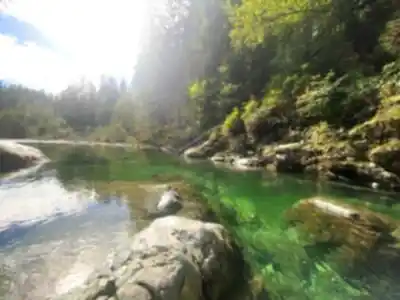
Lynn Creek runs clear and cold, its water moving over and around massive granite boulders. Spring snowmelt pushes the volume up significantly, making the waterfalls more dramatic and the canyon noticeably louder. By summer, the creek settles into calmer stretches with pools that are worth pausing at.
Steller's jays, varied thrushes, and several woodpecker species are common throughout the forest. Squirrels and chipmunks are a near-constant presence, especially around the picnic areas. Black bears and cougars do live in the broader park ecosystem, though encounters on the main trails are rare.
Seasonal Notes
The park is open year-round. Spring brings the most dramatic water levels and the loudest cascades, but also muddy, slippery trails. Summer is the most comfortable season for hiking and photography, though weekend crowds can be heavy — arriving early makes a real difference. Fall is quieter, and while the predominantly evergreen forest doesn't put on a dramatic color show, the light and the cooler temperatures make for pleasant hiking. Winter is doable but requires caution: trails ice up, and the bridge's metal grating becomes genuinely slippery when wet or frozen.
Getting There and Facilities
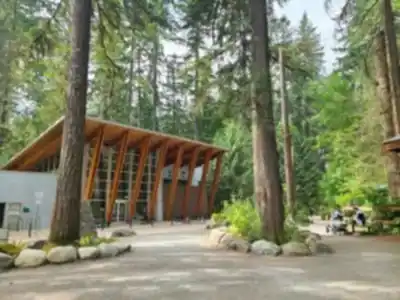
The park sits just minutes from downtown Vancouver, making it one of the most accessible wilderness experiences in the region. Parking is available near the suspension bridge, but spaces fill fast on summer weekends — plan to arrive early or use public transit if possible. The Lynn Canyon Ecology Centre near the main entrance is a useful first stop, with displays on local ecosystems that add context to what you'll see on the trail. Picnic tables are scattered through the park, and restrooms are available near the parking area and ecology centre.
What to Bring
Wear sturdy, closed-toe footwear — trail runners or hiking shoes rather than casual sneakers. The bridge grating and natural forest sections both get slippery when wet, and this is not the place for flip-flops. Bring water, especially for summer visits or if you're planning to extend your hike onto the Baden-Powell Trail. Layers are worth packing: the shaded forest can feel cool even when it's warm in the city, and conditions on the bridge itself change with the wind. A camera is hard to regret bringing — the combination of forest light, moving water, and the bridge itself gives you a lot to work with throughout the loop.
Recommended gear for this trail
As an Amazon Associate I earn from qualifying purchases.


Ready to go?
Everything you need to know before you goStarting Point
The lynn canyon suspension bridge is located in North Vancouver, British Columbia. The easiest way to get there is by car. There is limited parking at the bridge, so it is best to arrive early. Alternatively, public transportation is available from downtown Vancouver.
When?
Tuesday: 7:00 AM – 6:00 PM
Wednesday: 7:00 AM – 6:00 PM
Thursday: 7:00 AM – 6:00 PM
Friday: 7:00 AM – 6:00 PM
Saturday: 7:00 AM – 6:00 PM
Sunday: 7:00 AM – 6:00 PM
How much?
As an Amazon Associate I earn from qualifying purchases.
Affiliate links — LGPO may earn a commission at no extra cost to you.
- Hiking shoes Essential
- → Salomon Elixir Tour Mid WP · 203.38 $
- Layered clothing Essential
- Rain jacket Essential
- Trekking poles
- → Black Diamond Trail Ergo Cork · 69.99 $
- Headlamp
- → Petzl Actik Core 625 · 103.95 $
FAQ - Frequently asked questions
Everything you need to know
25 hikes under 2 hours from Montreal
Distance, elevation, parking and season for each one. The ones we go back to ourselves.
Get the guideSimilar hikes nearby
Discover other trails you might enjoy
Bridle Path
Vancouver Coast Mountains
Flora Lake
Vancouver Coast Mountains

Alouette Mountain
Vancouver Coast Mountains
Williamson Lake
Vancouver Coast Mountains
Brandywine Mountain
Vancouver Coast Mountains

Coliseum Mountain
Vancouver Coast Mountains
Hiking near Vancouver
235 trails to explore ~10 km away
We work hard to provide the most up-to-date and error-free data possible. If something seems incorrect, let us know! Your contribution helps the whole community.
Hikers' opinions
Be the first to review!
No hiker has shared their experience yet. Share your impressions and help other hikers!