
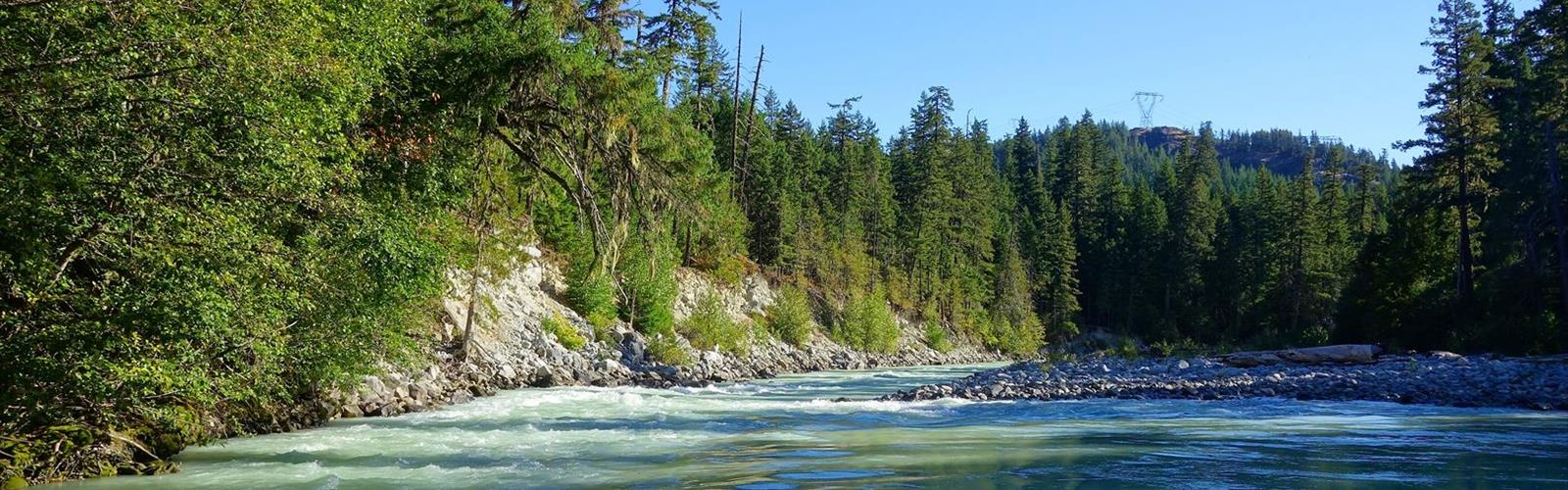

Ready to explore Mount Currie? Here's everything you need to know before you go!
Discover the trail
Trail description
Mount Currie rises to 2,819 meters at the northern edge of the Garibaldi Ranges, dominating the Pemberton Valley with a presence that's hard to ignore whether you're driving through town or standing in a farm field miles away. It's the highest summit in the immediate Pemberton area, and it earns that distinction — this is a serious, committing climb that demands a full day, strong legs, and genuine mountain experience.
The mountain sits within the traditional territory of the Lil'wat Nation, whose deep connection to this landscape stretches back thousands of years. That context matters when you're out here. You're moving through a place that carries cultural weight well beyond its recreational value, and approaching it with that awareness makes for a richer experience.
What You're Getting Into
The numbers tell part of the story: 16 kilometers round trip, 2,819 meters of elevation gain, and a realistic time commitment of around 9.5 hours. That elevation gain figure is not a typo — you're essentially climbing the full height of the mountain from the valley floor, which puts this squarely in mountaineering territory rather than a typical day hike. This is a very hard route, and that rating is well deserved.
The climb moves through several distinct zones as you gain altitude. The lower sections push through dense coastal forest — Douglas fir, western hemlock, cedar — the kind of thick, mossy BC forest that feels almost primordial. As you climb, the trees thin out and subalpine meadows open up, offering the first real breathing room and views. Above that, the terrain turns rocky and exposed, and the final push to the summit requires careful footing and solid route-finding. There are no maintained trails for much of the ascent, so comfort with off-trail navigation is essential.
Loose rock is a real factor on the upper mountain. A helmet is worth bringing, both for rockfall protection and for the confidence it gives you on exposed sections. Depending on conditions and your chosen line, a rope may also be worth considering.
Summit Views
The payoff at the top is genuinely exceptional. From the summit, the entire Pemberton Valley spreads out below — farmland, forest, and the town of Pemberton visible in the distance. To the south, the jagged peaks of the Garibaldi Range stack up on the horizon. To the north, the view opens into deep Coast Mountains wilderness, a sea of peaks and glaciated summits that most people never see from this angle. The contrast between the cultivated valley floor far below and the raw alpine world around you is striking.
Access and Approach
The climb starts from the Pemberton Valley, with the community of Mount Currie as the primary staging area. The approach typically involves logging roads before reaching the start of the climbing terrain. Because much of the route lacks formal trail infrastructure, having a topographic map and knowing how to use it is not optional — it's a baseline requirement. GPS is a useful backup, but don't rely on it exclusively.
Cell coverage is unreliable once you're on the mountain. A satellite communicator is worth the weight given the remote nature of the upper climb and the real possibility of needing to call for help in an emergency.
Gear and Preparation
This climb requires proper mountaineering boots — trail runners won't cut it on the rocky upper terrain. Layering is critical because conditions at nearly 2,800 meters can shift fast, even in midsummer. Pack for cold, wind, and potential precipitation regardless of what the valley forecast says. Beyond clothing, your pack should include:
- Navigation tools (topo map, compass, GPS)
- Emergency shelter (bivy or emergency blanket)
- Helmet
- Microspikes or light mountaineering gear (snow can persist into summer on north-facing slopes)
- Enough food and water for a 9.5-hour day with buffer
- First aid kit and wilderness first aid knowledge
- Satellite communicator
Physical conditioning matters as much as gear. The elevation gain here is relentless, and arriving underprepared physically turns a hard day into a dangerous one. Build up to this climb with significant vertical experience on other routes first.
Season and Conditions
The viable climbing window runs roughly from mid-July through September. Even within that window, snow and ice can linger on north-facing aspects and near the summit, making microspikes a smart addition to your pack throughout the season. Spring approaches carry serious avalanche risk on the steep upper slopes. Fall can offer excellent conditions — stable weather, fewer people — but shorter days compress your margin for error, so an early start is non-negotiable.
Weather in the Coast Mountains moves quickly. A clear morning in the valley can become a stormy afternoon at elevation. Check forecasts carefully, have a turnaround time in mind before you leave the trailhead, and stick to it.
Who This Climb Is For
Mount Currie is not an introductory peak. It's a destination for experienced hikers and mountaineers who are comfortable on steep, loose, unmarked terrain and who have the fitness to sustain nearly 2,800 meters of climbing in a single push. If you've been building toward a serious objective in the Vancouver Coast Mountains and want something wilder and more committing than the well-traveled peaks further south in the Garibaldi Range, this is a worthy challenge — one that rewards preparation and punishes shortcuts.
The Essential Hiking Checklist
Everything you need for your next hike. Bilingual, printable, 1 page.
Get your free hiking checklistRecommended gear for this trail
As an Amazon Associate I earn from qualifying purchases.


Ready to go?
Everything you need to know before you goStarting Point
The mount currie trails are located in Pemberton, British Columbia. To get to the start of the trails, take Highway 99 north to Pemberton. In Pemberton, turn left onto Portage Road and drive for about 5 km. The trailhead is on the right side of the road.
When?
How much?
As an Amazon Associate I earn from qualifying purchases.
Affiliate links — LGPO may earn a commission at no extra cost to you.
- Hiking shoes Essential
- → Salomon Elixir Tour Mid WP · 203.38 $
- Layered clothing Essential
- Rain jacket Essential
- Trekking poles
- → Black Diamond Trail Ergo Cork · 69.99 $
- Headlamp
- → Petzl Actik Core 625 · 103.95 $
FAQ - Frequently asked questions
Everything you need to knowSimilar hikes nearby
Discover other trails you might enjoy
Bridle Path
Vancouver Coast Mountains
Flora Lake
Vancouver Coast Mountains

Alouette Mountain
Vancouver Coast Mountains
Williamson Lake
Vancouver Coast Mountains
Brandywine Mountain
Vancouver Coast Mountains

Coliseum Mountain
Vancouver Coast Mountains
Hiking near Whistler
160 trails to explore ~28 km away
We work hard to provide the most up-to-date and error-free data possible. If something seems incorrect, let us know! Your contribution helps the whole community.
Hikers' opinions
Be the first to review!
No hiker has shared their experience yet. Share your impressions and help other hikers!