
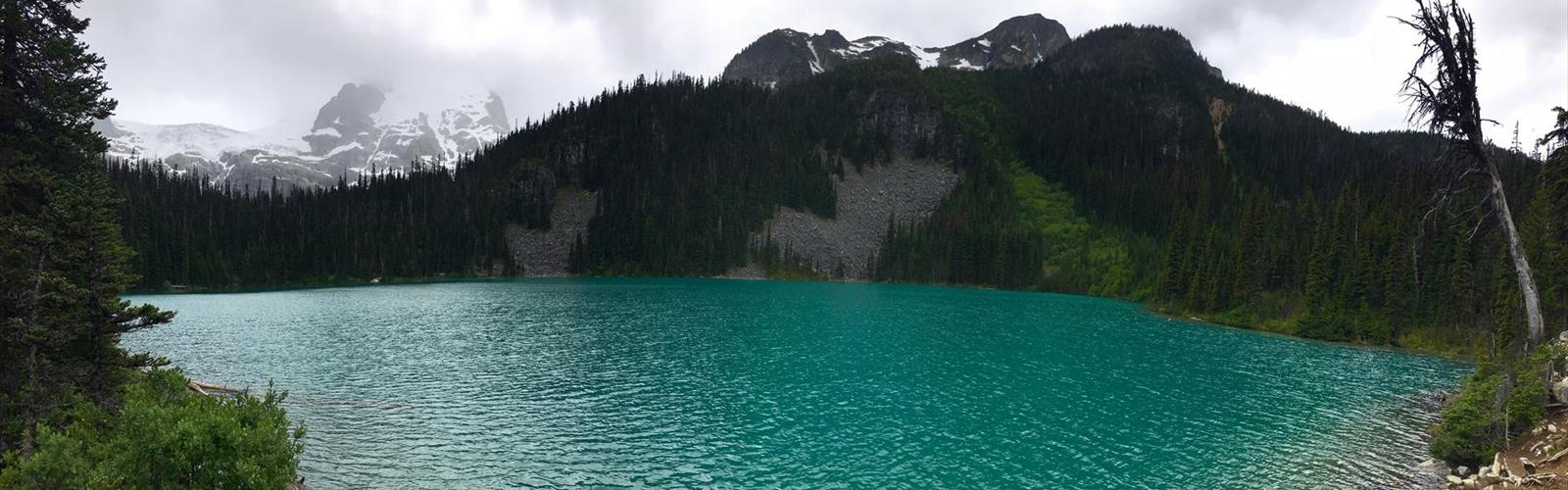

Ready to explore Mount Rohr? Here's everything you need to know before you go!
Discover the trail
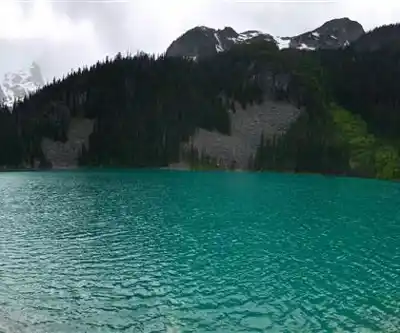
Trail description
Mount Rohr rises 2,423 meters (7,949 feet) above sea level in British Columbia's Coast Mountains, offering one of the more rewarding summit hikes accessible from the Sea-to-Sky corridor. This peak delivers the classic Coast Mountain experience: dense coastal forest transitioning to open alpine terrain, with expansive views that stretch across multiple mountain ranges on clear days.
The mountain sits in a prime location for hikers seeking serious alpine scenery without the technical climbing demands of nearby giants. From the summit, you'll look out over Joffre Lakes Provincial Park and the surrounding peaks that define this dramatic landscape. The 8-kilometer round trip with 850 meters of elevation gain provides a solid workout while remaining manageable for hikers with moderate experience, though the 4.5-hour duration and hard difficulty rating demand respect and proper preparation.
The Trail Experience
The trailhead sits conveniently near Duffey Lake Road, making Mount Rohr accessible as either a challenging day hike or part of a longer backcountry adventure. This location puts you right in the heart of Coast Mountain terrain, where the hiking begins immediately in the thick forest that characterizes lower elevations throughout this region.
The initial section winds through dense stands of hemlock, fir, and cedar, where the forest floor stays relatively clear but the canopy blocks much of the sky above. The trail wastes no time gaining elevation, and you'll quickly understand why this hike earns its hard difficulty rating. Steep switchbacks and sustained climbs characterize much of the route, demanding steady pacing and frequent rest stops to manage the relentless upward progress.
As you gain elevation, the trees gradually thin and the understory opens up, giving you glimpses of what lies ahead. The trail itself follows a logical route up the mountainside, though you'll encounter several steep sections that demand attention to footing and pacing. Root networks and rocky steps require careful foot placement, especially when wet conditions make surfaces slippery.
Midway through the ascent, the forest gives way to the subalpine zone where the real character of the Coast Mountains begins to show. Here, the trees become smaller and more scattered, and during the warmer months, the meadows burst with wildflowers that create natural gardens across the slopes. These open areas provide the first real views of the surrounding peaks and valleys, offering natural rest stops where you can catch your breath and take in the expanding scenery.
Upper Mountain and Summit Approach
The upper sections of the trail become increasingly rocky as you approach treeline. The path picks its way through boulder fields and across exposed rock faces, requiring more careful foot placement but rewarding you with increasingly dramatic views. This terrain is typical of Coast Mountain hiking, where the transition from forest to alpine happens relatively quickly due to the maritime climate and steep elevation changes.
The final push to the summit tests your endurance as the grade steepens and the air thins noticeably. Loose rock and scree sections demand attention to each step, while the exposure increases your awareness of the significant elevation you've gained. The last few hundred meters feel earned through sustained effort, making the summit arrival that much more satisfying.
Summit Views and Alpine Environment
The summit of Mount Rohr provides a commanding perspective over the Coast Mountain landscape. On clear days, the view extends well beyond the immediate peaks to include Joffre Lakes Provincial Park, where the distinctive turquoise lakes are visible far below. The panorama takes in multiple mountain ranges, each receding into the distance in layers of blue and gray that stretch toward the horizon.
What makes this summit particularly rewarding is how it positions you among the peaks rather than simply above them. You're surrounded by mountains of similar height, creating a sense of being immersed in the alpine environment rather than looking down on it from above. The rocky summit area provides plenty of space to rest, eat, and take in the views from different angles.
The alpine environment around the summit showcases the harsh beauty of high-elevation Coast Mountain terrain. Weather can change rapidly here, with clouds rolling in from the Pacific and temperatures dropping quickly even on warm days. The exposed rock and sparse vegetation tell the story of a landscape shaped by extreme conditions, where only the hardiest plants survive the combination of wind, cold, and intense UV radiation.
Seasonal Considerations and Timing
Late spring through early fall provides the most reliable access to Mount Rohr, when snow has cleared from the upper elevations and weather conditions are most stable. During these months, you'll find the trail in its best condition and have the highest likelihood of clear summit views.
The wildflower displays in the subalpine meadows typically peak during mid to late summer, transforming the landscape into a natural garden of alpine blooms. This timing also coincides with the most stable weather patterns, though you should always be prepared for sudden changes typical of mountain environments.
Early season hiking may encounter snow patches in shaded areas and on north-facing slopes, while late season brings the possibility of early winter storms. The shoulder seasons can offer excellent hiking conditions with fewer crowds, but require more careful attention to weather forecasts and trail conditions.
Preparation and Safety
Mount Rohr demands proper preparation due to its elevation gain and exposure to changing mountain weather. Sturdy hiking boots with good ankle support are essential for the rocky upper sections and steep terrain throughout the route. The 850 meters of elevation gain means you'll experience significant temperature changes from trailhead to summit, making layered clothing systems crucial for comfort and safety.
Water requirements are substantial for this hike, particularly during warm weather when the combination of elevation gain and sun exposure increases fluid needs significantly. The rocky terrain and steep sections also mean that hiking poles can be valuable for stability and reducing stress on knees during the descent.
Weather conditions can change rapidly in the Coast Mountains, with clouds and precipitation moving in quickly from the Pacific. Always check current forecasts before heading out, and be prepared to turn back if conditions deteriorate. The exposed nature of the upper mountain means that lightning, high winds, or sudden temperature drops can create dangerous situations.
Hiking with others is strongly recommended, both for safety and for the shared experience of tackling this challenging peak. The combination of steep terrain, potential weather changes, and remote location makes solo hiking here inadvisable for all but the most experienced mountain travelers.
The Essential Hiking Checklist
Everything you need for your next hike. Bilingual, printable, 1 page.
Get your free hiking checklistRecommended gear for this trail
As an Amazon Associate I earn from qualifying purchases.


Ready to go?
Everything you need to know before you goStarting Point
The mount rohr trails are located in the mount rohr Provincial Park, which is about a 2-hour drive from Vancouver. From Vancouver, take Highway 1 east to Hope. In Hope, take Highway 3 north to Princeton. In Princeton, take the Highway 5A exit and turn left onto the 5A. The mount rohr Provincial Park is about 10 km down the road on the right.
When?
How much?
As an Amazon Associate I earn from qualifying purchases.
Affiliate links — LGPO may earn a commission at no extra cost to you.
- Hiking shoes Essential
- → Salomon Elixir Tour Mid WP · 203.38 $
- Layered clothing Essential
- Rain jacket Essential
- Trekking poles
- → Black Diamond Trail Ergo Cork · 69.99 $
- Headlamp
- → Petzl Actik Core 625 · 103.95 $
FAQ - Frequently asked questions
Everything you need to knowSimilar hikes nearby
Discover other trails you might enjoy
Bridle Path
Vancouver Coast Mountains
Flora Lake
Vancouver Coast Mountains

Alouette Mountain
Vancouver Coast Mountains
Williamson Lake
Vancouver Coast Mountains
Brandywine Mountain
Vancouver Coast Mountains

Coliseum Mountain
Vancouver Coast Mountains
Hiking near Whistler
160 trails to explore ~50 km away
We work hard to provide the most up-to-date and error-free data possible. If something seems incorrect, let us know! Your contribution helps the whole community.
Hikers' opinions
Be the first to review!
No hiker has shared their experience yet. Share your impressions and help other hikers!