
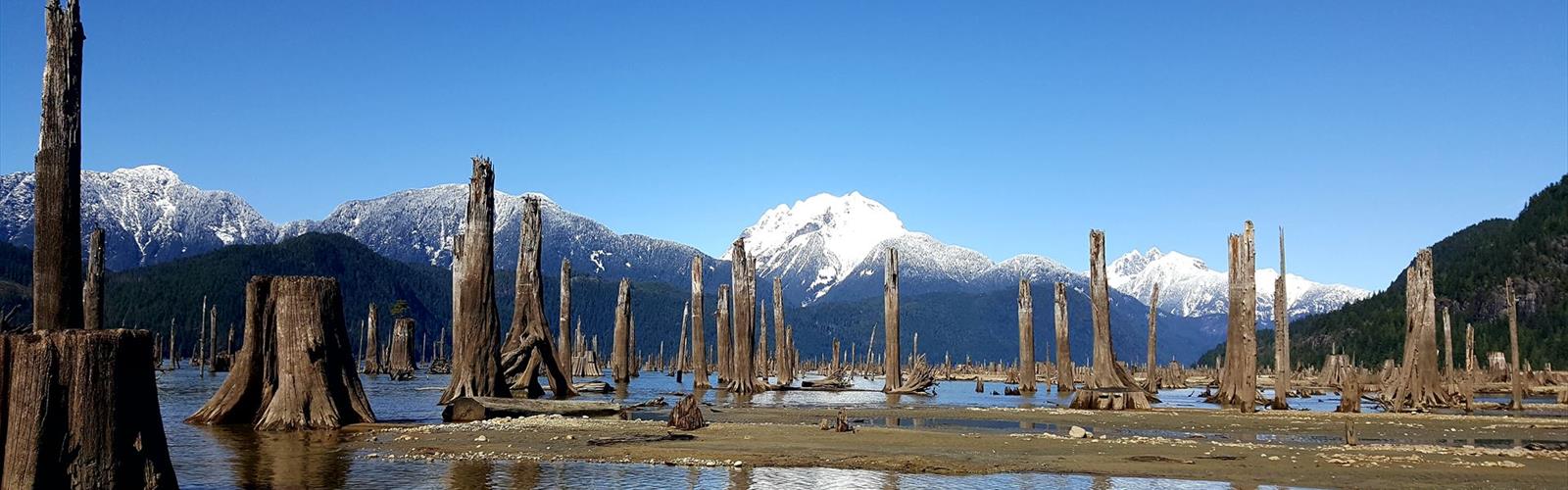

Ready to explore Stave Falls? Here's everything you need to know before you go!
Discover the trail
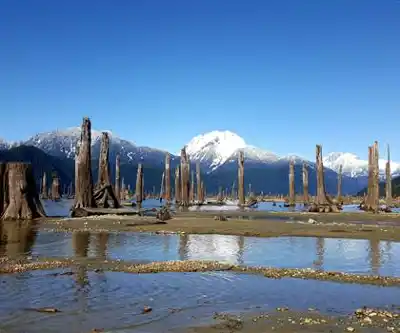
Trail description
Stave Falls is a straightforward and rewarding destination in the Vancouver Coast Mountains — the kind of place that earns repeat visits without demanding much from you in return. At 2 km with 80 meters of elevation gain, it sits firmly in easy territory, making it a natural fit for families, casual hikers, or anyone who wants a genuine forest experience without committing to a full-day effort. Plan for about an hour and fifteen minutes on the trail, though most people end up lingering longer once they reach the falls.
The Trail
The path at Stave Falls moves through dense coastal forest from the start. Douglas fir, western red cedar, and hemlock dominate the canopy, and the understory fills in with sword ferns and moss-covered logs that give the whole place that classic Pacific Northwest feel. The forest floor stays damp and green even in drier stretches of summer, which keeps things cool and pleasant underfoot.
The 80 meters of elevation gain is spread across the route in a way that never feels punishing. There are sections where the trail pitches upward noticeably, enough to get your breathing going, but nothing that requires stopping to catch your breath. Rocky patches and exposed roots show up regularly, so paying attention to your footing matters — particularly near the falls where moisture from the spray keeps surfaces slick. Sturdy trail shoes or hiking boots with decent grip are the right call here.
The trail is short enough that you can take your time without watching the clock. Stop when something catches your attention, double back to a viewpoint you liked, or just sit for a few minutes and listen to the forest. The 2 km distance gives you that freedom.
The Falls
The waterfall is the clear centerpiece of the hike, and it delivers. Water moves over weathered rock in a tiered cascade, and the volume shifts noticeably depending on recent rainfall and the time of year. When flow is high, the sound carries well before you reach the falls — you hear it building as you move through the trees, which adds a bit of anticipation to the approach.
Up close, the mist creates a noticeably cooler microclimate around the base. On a warm day, that contrast is one of the better parts of the experience. The spray also supports lush vegetation right at the edge of the falls — mosses, ferns, and other moisture-loving plants that thrive in conditions the surrounding forest can't quite match.
Multiple viewpoints let you take in the falls from different angles. Some put you at the base where the sound and mist hit you directly; others sit higher and give you a broader view of the falls in relation to the surrounding landscape. It's worth taking a few minutes at each one rather than settling for the first good spot you find.
Wildlife and Forest Character
The forest around Stave Falls supports a solid mix of bird life. Woodpeckers are active in the snags and older trees, and jays move through the canopy with their usual noise. Smaller songbirds work the understory, easier to hear than to spot. Mammals tend to stay out of sight, but the habitat is there — dense cover, fallen logs in various stages of decomposition, and enough quiet that you might catch movement if you're paying attention.
Some sections of the forest show old-growth characteristics: large-diameter trunks, complex layering, and nurse logs supporting new growth at multiple stages. It's the kind of forest structure that takes a long time to develop, and it gives the trail a sense of depth that younger second-growth forests don't quite have.
Planning Your Visit
Stave Falls works well as a half-morning or half-afternoon outing. The short distance means you can pair it with other activities in the area without the hike eating up your whole day. That said, it stands on its own — the combination of forest, elevation, and waterfall gives the experience enough variety to feel complete.
A few practical notes worth keeping in mind:
- Footwear: Trail shoes or hiking boots with good traction. The terrain near the falls stays wet and can be slippery regardless of weather conditions.
- Layers: The microclimate around the falls runs noticeably cooler and more humid than the surrounding forest. A light jacket in your pack is worth the minimal extra weight.
- Water: Bring more than you think you need. The cool forest air can mask how much you're actually exerting, especially on the uphill sections.
- Timing: Flow at the falls is strongest in spring and after significant rainfall. Summer visits are pleasant but expect lower water levels.
The trail is accessible enough for hikers at the beginning of their outdoor experience while still offering enough natural character to satisfy people who spend a lot of time in the mountains. It's a well-rounded outing in a corner of the Vancouver Coast Mountains that doesn't ask much of you and gives back consistently.
The Essential Hiking Checklist
Everything you need for your next hike. Bilingual, printable, 1 page.
Get your free hiking checklistRecommended gear for this trail
As an Amazon Associate I earn from qualifying purchases.


Ready to go?
Everything you need to know before you goStarting Point
The easiest way to get to the start of the trails at the stave falls is to take Highway 1 east from Vancouver to Hope. From there, take Highway 7 north to the town of Mission. The stave falls Dam is located just west of Mission.
When?
How much?
As an Amazon Associate I earn from qualifying purchases.
Affiliate links — LGPO may earn a commission at no extra cost to you.
- Hiking shoes Essential
- → Salomon Elixir Tour Mid WP · 203.38 $
- Layered clothing Essential
- Rain jacket Essential
- Trekking poles
- → Black Diamond Trail Ergo Cork · 69.99 $
- Headlamp
- → Petzl Actik Core 625 · 103.95 $
FAQ - Frequently asked questions
Everything you need to knowSimilar hikes nearby
Discover other trails you might enjoy
Bridle Path
Vancouver Coast Mountains
Flora Lake
Vancouver Coast Mountains

Alouette Mountain
Vancouver Coast Mountains
Williamson Lake
Vancouver Coast Mountains
Brandywine Mountain
Vancouver Coast Mountains

Coliseum Mountain
Vancouver Coast Mountains
Hiking near Vancouver
235 trails to explore ~56 km away
We work hard to provide the most up-to-date and error-free data possible. If something seems incorrect, let us know! Your contribution helps the whole community.
Hikers' opinions
Be the first to review!
No hiker has shared their experience yet. Share your impressions and help other hikers!