
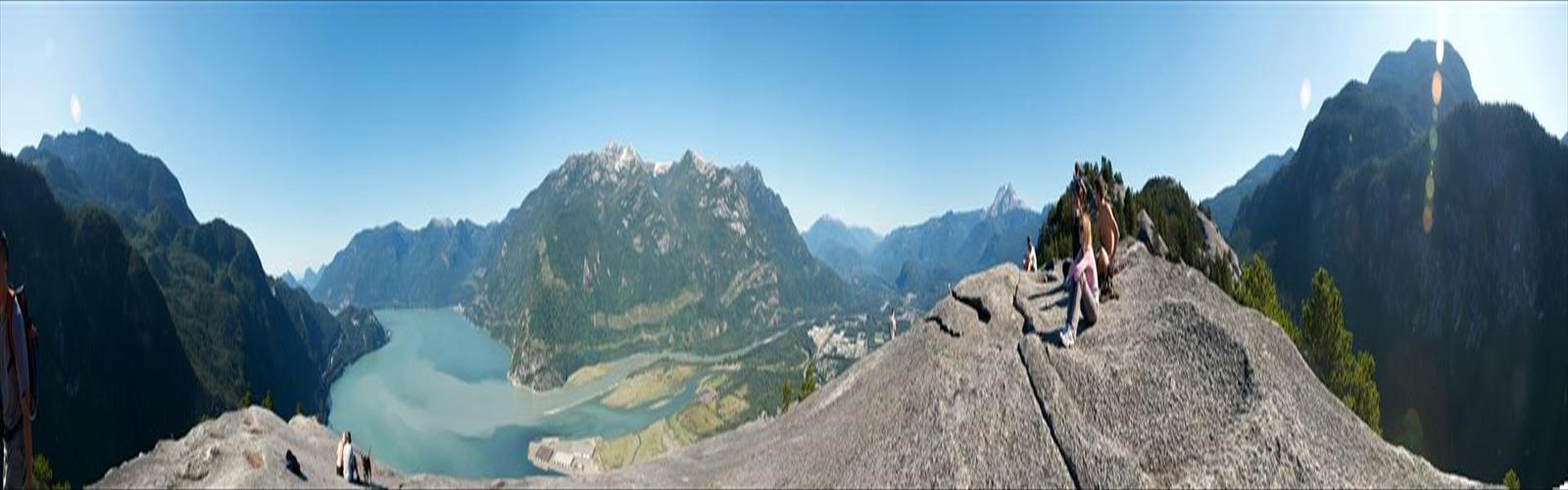

Ready to explore Stawamus Chief Trail? Here's everything you need to know before you go!
Discover the trail
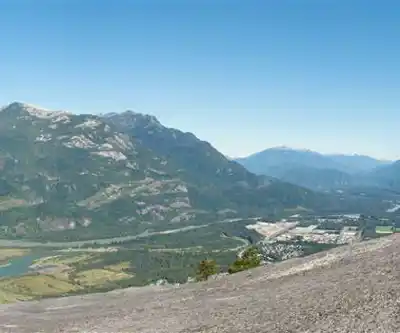
Trail description
The Stawamus Chief Trail stands as one of British Columbia's most iconic hiking destinations, drawing adventurers to its granite face just an hour north of Vancouver. This massive monolith rises dramatically from the shores of Howe Sound near Squamish, offering three distinct summit experiences that showcase the raw beauty of the Vancouver Coast Mountains.
What sets the Chief apart from other regional hikes is its unique combination of technical challenge and accessibility. The granite dome provides a completely different hiking experience from the typical forest trails found throughout the Coast Mountains. Instead of winding through dense woodland to reach viewpoints, hikers here climb directly up the face of this ancient geological formation, with sweeping vistas appearing throughout the ascent.
The Three Peaks Experience
The trail system divides into three separate routes, each targeting a different summit along the granite ridge. Most hikers tackle them as individual objectives, though experienced adventurers sometimes link multiple peaks in a single outing.
The First Peak, also known as the South Summit, reaches 610 meters and serves as the most popular destination. The trail immediately establishes its character with steep, rocky terrain that demands careful foot placement. Hikers navigate through dense coastal forest before emerging onto the granite slabs that define the upper sections. Fixed chains and wooden ladders assist passage through the most technical areas, where the rock becomes too steep for comfortable scrambling. The summit plateau opens to panoramic views across Howe Sound, with Squamish spread below and the peaks of Garibaldi Provincial Park rising to the north.
Second Peak climbs to 655 meters and attracts fewer crowds while delivering equally impressive scenery. The approach follows a similar pattern of forest hiking transitioning to granite scrambling, but the route feels more remote once you leave the First Peak junction. The summit provides a different perspective on the surrounding landscape, with particularly striking views toward Garibaldi Provincial Park and the volcanic peaks that define that wilderness area.
Third Peak represents the most committing option at 702 meters elevation. This northernmost summit sees significantly fewer visitors, creating a more wilderness-like experience despite the relatively short distance from the parking area. The route requires the same technical skills as the other peaks but rewards hikers with expansive views across the entire Coast Mountain range, stretching from the volcanic cones near Whistler to the remote peaks of the Tantalus Range.
Trail Conditions and Terrain
The Chief's reputation stems largely from its unique terrain challenges. The lower sections wind through typical coastal forest, with Douglas fir and western hemlock creating a dense canopy over fern-covered understory. Creek crossings and root-laced trail sections characterize this initial phase, which can become muddy and slippery during wet conditions.
The character changes dramatically as the trail transitions onto the granite slabs. Here, hikers encounter the technical sections that make the Chief famous throughout the Pacific Northwest. Metal chains bolted into the rock provide handholds on the steepest pitches, while wooden ladders bridge gaps where the granite becomes too vertical for safe passage. These installations require basic scrambling skills and comfort with exposure, as some sections drop away steeply on one or both sides.
The granite surface itself presents unique challenges depending on conditions. When dry, the rock provides excellent friction for hiking boots, but wet granite becomes extremely slippery and dangerous. Morning dew, recent rain, or winter ice can transform manageable sections into hazardous terrain requiring extreme caution or retreat.
Seasonal Considerations
Late spring through early fall provides the most reliable hiking conditions, with July through September offering the most predictable weather patterns. During these months, hikers can expect the granite sections to dry quickly after rain and enjoy the clearest visibility from the summits.
Winter hiking remains possible but requires significant additional preparation and experience. Snow and ice accumulate on the granite sections, making the technical areas extremely dangerous without proper equipment and mountaineering skills. The metal chains and ladders become particularly hazardous when covered with ice.
Spring conditions vary dramatically depending on elevation and recent weather patterns. The forest sections may be clear while the granite areas retain snow and ice well into May. Early season hikers should prepare for rapidly changing conditions and be ready to turn back if the technical sections prove unsafe.
Practical Planning Information
The trailhead provides ample parking, though spaces fill quickly on weekends and holidays during peak season. Starting early helps avoid both parking challenges and the afternoon crowds that can create bottlenecks on the technical sections. Most hikers find the early morning light provides better photography opportunities and more comfortable temperatures for the steep climbing.
Sturdy hiking boots with aggressive tread patterns prove essential for the granite sections. The rock surface and steep angles demand footwear that provides both support and traction. Many hikers find that lightweight approach shoes work well, offering the precision needed for rock scrambling while remaining comfortable for the forest sections.
Water requirements exceed those of typical forest hikes due to the exposed granite sections and steep climbing. The rock surfaces reflect heat and provide no shade during summer months, increasing dehydration risk. No water sources exist along the upper portions of any route, making adequate hydration planning crucial for safety and enjoyment.
Weather conditions can change rapidly in the Coast Mountains, and the exposed summit areas provide no shelter from wind or precipitation. Hikers should pack layers appropriate for conditions significantly cooler and windier than those experienced in Squamish or Vancouver. The granite surfaces offer no protection from lightning during thunderstorms, making weather monitoring essential for safe trip planning.
The Essential Hiking Checklist
Everything you need for your next hike. Bilingual, printable, 1 page.
Get your free hiking checklistRecommended gear for this trail
As an Amazon Associate I earn from qualifying purchases.


Ready to go?
Everything you need to know before you goStarting Point
The start of the trails at the stawamus chief trail in British Columbia can be accessed by driving to Squamish, British Columbia and then following the signs to the Stawamus Chief Trailhead.
When?
How much?
As an Amazon Associate I earn from qualifying purchases.
Affiliate links — LGPO may earn a commission at no extra cost to you.
- Hiking shoes Essential
- → Salomon Elixir Tour Mid WP · 203.38 $
- Layered clothing Essential
- Rain jacket Essential
- Trekking poles
- → Black Diamond Trail Ergo Cork · 69.99 $
- Headlamp
- → Petzl Actik Core 625 · 103.95 $
FAQ - Frequently asked questions
Everything you need to knowSimilar hikes nearby
Discover other trails you might enjoy
Bridle Path
Vancouver Coast Mountains
Flora Lake
Vancouver Coast Mountains

Alouette Mountain
Vancouver Coast Mountains
Williamson Lake
Vancouver Coast Mountains
Brandywine Mountain
Vancouver Coast Mountains

Coliseum Mountain
Vancouver Coast Mountains
Hiking near Squamish
211 trails to explore ~3 km away
We work hard to provide the most up-to-date and error-free data possible. If something seems incorrect, let us know! Your contribution helps the whole community.
Hikers' opinions
Be the first to review!
No hiker has shared their experience yet. Share your impressions and help other hikers!