


Ready to explore Train Wreck? Here's everything you need to know before you go!
Discover the trail
Trail description
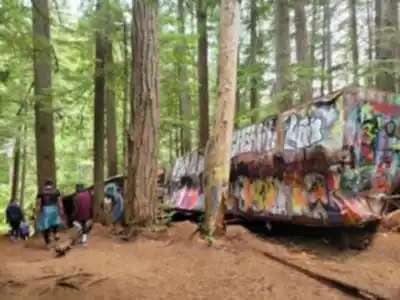
The Train Wreck trail leads to one of Whistler's most photographed and unusual destinations—seven abandoned boxcars from a 1956 freight train derailment, now transformed into vibrant outdoor art galleries deep in the coastal rainforest. This short but rewarding hike combines natural beauty with an unexpected cultural twist, making it a standout experience in the Vancouver Coast Mountains.
What makes this trail special isn't just the destination, but the journey itself. You'll walk through dense old-growth forest, cross a spectacular suspension bridge over the rushing Cheakamus River, and emerge at a site where nature has slowly reclaimed industrial remnants, while local and visiting artists have turned rusted metal into colorful canvases.
The Trail Experience
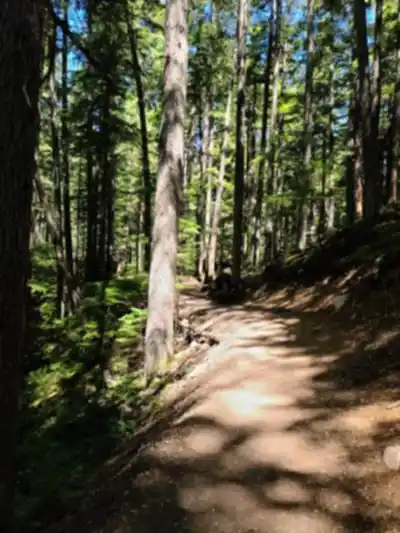
Starting from the Sea to Sky Trailhead just south of Function Junction in Whistler, the trail immediately plunges you into the heart of British Columbia's coastal forest. The path winds through towering Douglas firs, western red cedars, and hemlocks, with a lush understory of ferns, salmonberry, and devil's club creating that quintessential Pacific Northwest atmosphere.
The trail surface varies from well-maintained gravel sections to rooty, sometimes muddy forest floor—typical of this region's year-round moisture. Early sections are relatively flat, but you'll encounter some moderate climbs and descents as the path follows the natural contours of the landscape. The route can be uneven in places, with exposed roots and occasional wet spots that require careful footing.
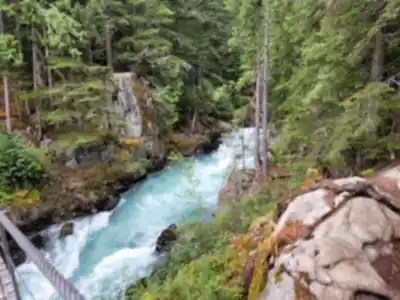
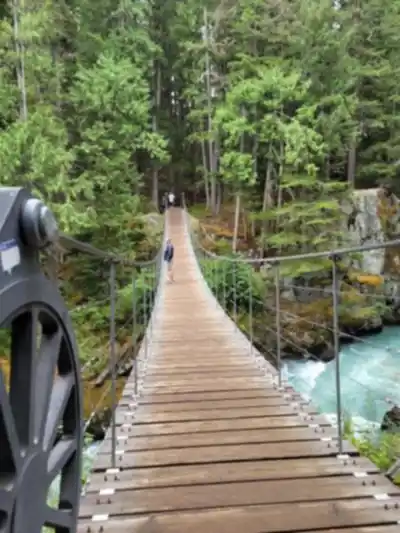
About halfway through your 2-kilometer journey, you'll reach the trail's highlight before even arriving at the train cars: a sturdy suspension bridge spanning the Cheakamus River. The bridge offers spectacular views up and down the river valley, with the rushing glacial waters below and forested mountainsides rising on both sides. This crossing alone makes the hike worthwhile, providing that classic Coast Mountains experience of pristine wilderness and dramatic terrain.
After crossing the bridge, the trail continues through more dense forest before opening up to reveal the first glimpses of colorful metal through the trees. The anticipation builds as you catch sight of bright blues, reds, and yellows that seem completely out of place in this natural setting.
The Train Wreck Site
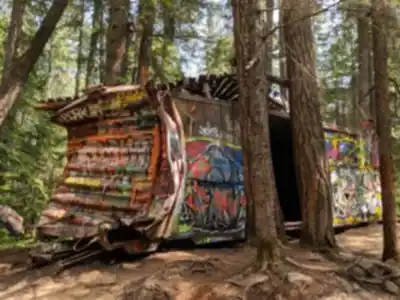
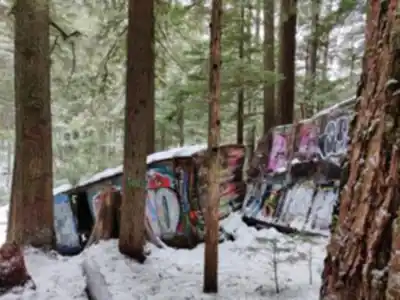
The seven boxcars scattered throughout a small clearing create an almost surreal scene. Each car tells its own story through layers of street art, tags, and murals that change regularly as new artists add their contributions. The contrast between the organic curves of massive tree trunks and the geometric lines of industrial railway cars creates countless photography opportunities.
Some cars remain largely intact, allowing you to walk through them and experience how the forest is slowly reclaiming these metal structures. Moss grows on the roofs, small trees sprout from cracks, and the interiors have become galleries where natural light filters through openings to illuminate the artwork within. Other cars have partially collapsed or been separated from their frames, creating interesting sculptural forms among the ferns and fallen logs.
The site invites exploration and offers multiple viewpoints for taking in both the individual artistic details and the broader scene of this unique intersection between human history and natural processes. Several informal trails wind between the cars, and you can easily spend an hour or more discovering new angles and artistic elements.
Planning Your Visit
The trail's easy to moderate difficulty makes it accessible for most hikers, including families with children who are comfortable walking 4 kilometers round-trip on uneven terrain. The relatively short distance means you don't need to pack extensively, but the coastal climate requires some preparation.
Sturdy hiking shoes or boots are essential, as the trail includes muddy sections, exposed roots, and potentially slippery spots, especially after rain—which is frequent in this region. The forest canopy provides natural protection from sun and light rain, but weather can change quickly in the mountains, so bring layers and rain protection.
Timing your visit can significantly impact your experience. Weekday visits offer the most solitude, allowing you to appreciate both the natural setting and the artwork without crowds. Weekend mornings are also relatively quiet, but afternoons can see heavy traffic, particularly during summer months and holiday periods. The site's popularity on social media has increased visitor numbers substantially in recent years.
The trail remains accessible year-round, though winter conditions can make footing more challenging with ice, snow, and increased mud. Spring brings the most dramatic forest growth and wildflowers, while fall offers the chance to see the deciduous trees and shrubs in their autumn colors against the evergreen backdrop.
Respecting the Site
The Train Wreck's unique character depends on maintaining the balance between accessibility and preservation. The Leave No Trace principles are particularly important here, as the site's popularity could easily lead to environmental damage. Pack out all trash, stay on established trails, and avoid disturbing the vegetation that's growing on and around the train cars.
While the graffiti and street art are part of the site's appeal, visitors should respect existing artwork and avoid adding their own marks unless they're serious artists contributing meaningfully to the evolving gallery. The cars themselves are historical artifacts, and climbing on them or attempting to remove pieces can damage both the structures and the surrounding forest floor.
The suspension bridge, while built to handle foot traffic, should be crossed carefully and in small groups to avoid excessive swaying or stress on the structure. During busy periods, wait for others to cross before starting your own crossing.
This trail offers something genuinely different in a region known for alpine peaks and pristine wilderness—a place where human history, artistic expression, and natural processes intersect in ways that continue to evolve. The Train Wreck represents a unique chapter in Whistler's story, one that's still being written by both nature and the artists who continue to transform these forest relics into something entirely unexpected.
Recommended gear for this trail
As an Amazon Associate I earn from qualifying purchases.


Ready to go?
Everything you need to know before you goStarting Point
The train wreck is located in the town of Whistler, British Columbia. To get there, take Highway 99 north from Vancouver and turn left onto the Sea to Sky Highway (Highway 99) at Squamish. The turnoff for Whistler is about 60 km north of Squamish. The Sea to Sky Highway climbs steeply up to Whistler Village, which is at an elevation of 1,609 m (5,280 ft).
When?
How much?
As an Amazon Associate I earn from qualifying purchases.
Affiliate links — LGPO may earn a commission at no extra cost to you.
- Hiking shoes Essential
- → Salomon Elixir Tour Mid WP · 203.38 $
- Layered clothing Essential
- Rain jacket Essential
- Trekking poles
- → Black Diamond Trail Ergo Cork · 69.99 $
- Headlamp
- → Petzl Actik Core 625 · 103.95 $
FAQ - Frequently asked questions
Everything you need to know
25 hikes under 2 hours from Montreal
Distance, elevation, parking and season for each one. The ones we go back to ourselves.
Get the guideSimilar hikes nearby
Discover other trails you might enjoy
Bridle Path
Vancouver Coast Mountains
Flora Lake
Vancouver Coast Mountains

Alouette Mountain
Vancouver Coast Mountains
Williamson Lake
Vancouver Coast Mountains
Brandywine Mountain
Vancouver Coast Mountains

Coliseum Mountain
Vancouver Coast Mountains
Hiking near Whistler
160 trails to explore ~8 km away
We work hard to provide the most up-to-date and error-free data possible. If something seems incorrect, let us know! Your contribution helps the whole community.
Hikers' opinions
Be the first to review!
No hiker has shared their experience yet. Share your impressions and help other hikers!