

Ready to explore Manitou Mountain - Barrett Chute Trailhead? Here's everything you need to know before you go!
Discover the trail
Trail description
Manitou Mountain via the Barrett Chute Trailhead is one of those hikes in the Haliburton Highlands to Ottawa Valley region that earns its reputation the honest way — through a genuine climb, solid forest walking, and a summit that actually delivers. With 300 meters of elevation gain, it sits in a sweet spot between a casual walk and a full-on grunt, making it accessible to hikers who are reasonably fit without requiring any technical skills.
Getting Started at Barrett Chute Trailhead
The Barrett Chute Trailhead is your launch point, and it sets the tone for what's ahead. The access is clear and the trail is well-marked from the start, so you won't be spending the first twenty minutes second-guessing whether you're on the right path. From here, the route pulls you directly into the forest, and the outside world fades quickly.
The lower section of the trail is relatively gentle — a good warm-up before the terrain starts asking more of you. The forest here is dense, with a mix of hardwoods and conifers that create solid shade on hot summer days. You'll cross a few small streams along the way, mostly via rock hops or simple log bridges, and the sound of moving water follows you through the lower portions of the climb.
The Climb
As you gain elevation, the trail's character shifts. The steeper sections come in waves rather than all at once, which gives you natural recovery points between the harder pushes. Rocky outcrops start appearing more frequently as you move higher, and these make for good rest spots where you can catch your breath and get a preview of the views waiting at the top.
The 300-meter elevation gain is real and you'll feel it, but the trail never becomes scrambling terrain or requires anything beyond solid footing and a steady pace. Hikers who are comfortable on uneven ground and have done a few moderate trails before will find this very manageable. First-timers to elevation gain should just plan to take their time on the steeper sections — there's no rush.
Wildlife is a regular part of the experience on this trail. Deer show up often, particularly if you're out early in the morning or in the late afternoon. The forest canopy supports a healthy bird population — woodpeckers, chickadees, and various songbirds are common throughout the climb. Chipmunks and squirrels are practically guaranteed company.
The Summit
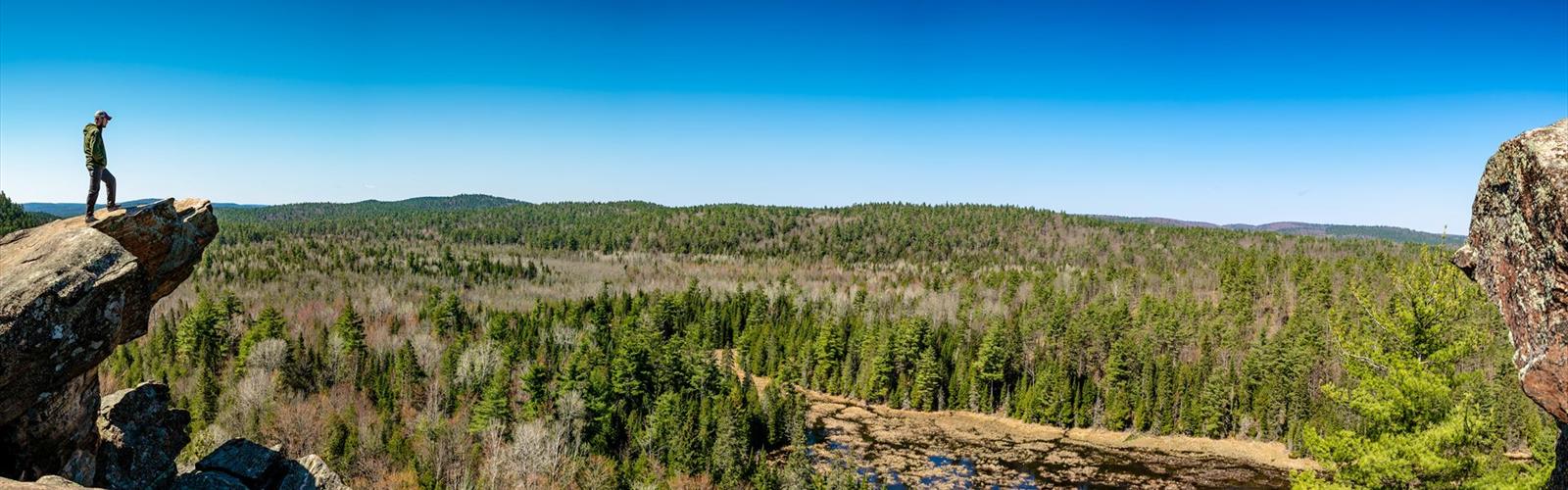
The summit of Manitou Mountain is the payoff, and it's a good one. Panoramic views stretch across the Haliburton Highlands and reach toward the Ottawa Valley — rolling hills, distant lakes, and forest as far as you can see. On a clear day, the vista is genuinely expansive, the kind that makes you want to sit down and just look for a while.
The summit area has enough room for a group to spread out comfortably. The rocky terrain provides natural seating, and it's an obvious spot for lunch. Bring a camera — the views from up here are worth the effort of capturing properly, not just a quick phone snap.
Planning Your Visit
The round trip typically takes somewhere in the range of 3 to 4 hours, depending on your pace and how long you linger at the top. That's a reasonable half-day commitment that leaves time for other things if you want to explore the region further.
The trail is hikeable from spring through fall. Spring brings wildflowers and streams running full from snowmelt. Summer offers long days and reliable weather, though the exposed summit can be warm. Fall is arguably the best time to be on this trail — the hardwood forest turns and the views from the summit take on a completely different quality when the canopy below is lit up in orange and red.
Winter hiking is possible but requires proper preparation. Snow and ice on the steeper sections add real difficulty and demand microspikes or crampons at minimum. It's not a trail to underestimate in winter conditions.
What to Bring
Hiking boots are the right call here. The combination of rocky terrain, stream crossings, and sustained elevation gain rewards footwear with solid ankle support and grip. Trail runners can work for experienced hikers in dry conditions, but boots give you more margin for error.
- Water: Carry more than you think you need. The climb and time spent at the exposed summit add up, especially in summer.
- Food: Pack a real lunch or substantial snacks — the summit is too good a spot to rush through.
- Navigation: The trail is well-marked, but cell coverage can be unreliable in the forest. A downloaded offline map or a physical map adds a useful safety layer.
- Layers: Summit temperatures can be noticeably cooler and windier than at the trailhead, particularly in spring and fall.
On the Trail
The trail is in good shape, and keeping it that way comes down to the usual basics: stay on the marked path, especially when it's wet and shortcuts are tempting. Wet soil erodes fast and those shortcuts become permanent damage quickly. Pack out everything you bring in — the summit area stays clean because hikers have been consistent about it, and that's worth maintaining.
Give wildlife the space it needs. The deer and birds on this trail are used to hikers, but that comfort depends on people continuing to behave predictably and respectfully around them.
Manitou Mountain via the Barrett Chute Trailhead is a trail that earns its place as a go-to option in this region — enough elevation to feel like real hiking, forest that's worth walking through for its own sake, and a summit view that holds up against anything else in the Haliburton Highlands to Ottawa Valley corridor.
The Essential Hiking Checklist
Everything you need for your next hike. Bilingual, printable, 1 page.
Get your free hiking checklistRecommended gear for this trail
As an Amazon Associate I earn from qualifying purchases.


Ready to go?
Everything you need to know before you goStarting Point
The manitou mountain - barrett chute trailhead is located in Ontario. To get there, take Highway 17 east from Sault Ste. Marie to Wawa. Take the exit for Highway 652 and drive north to White River. Turn left on Highway 11 and drive west to the town of Manitouwadge. Turn right on Highway 599 and drive north to the trailhead.
When?
How much?
As an Amazon Associate I earn from qualifying purchases.
Affiliate links — LGPO may earn a commission at no extra cost to you.
- Hiking shoes Essential
- → Salomon Elixir Tour Mid WP · 203.38 $
- Layered clothing Essential
- Rain jacket Essential
- Trekking poles
- → Black Diamond Trail Ergo Cork · 69.99 $
- Headlamp
- → Petzl Actik Core 625 · 103.95 $
FAQ - Frequently asked questions
Everything you need to knowSimilar hikes nearby
Discover other trails you might enjoy

Grace Lake
Haliburton Highlands to the Ottawa Valley
Adventure Trail Gear
Haliburton Highlands to the Ottawa Valley
Gould Lake
Haliburton Highlands to the Ottawa Valley
Mazinaw Lake
Haliburton Highlands to the Ottawa Valley
Kamaniskeg Lake
Haliburton Highlands to the Ottawa Valley
Blueberry Mountain Trail
Haliburton Highlands to the Ottawa Valley
Hiking near Ottawa
47 trails to explore ~86 km away
We work hard to provide the most up-to-date and error-free data possible. If something seems incorrect, let us know! Your contribution helps the whole community.
Hikers' opinions
Be the first to review!
No hiker has shared their experience yet. Share your impressions and help other hikers!