
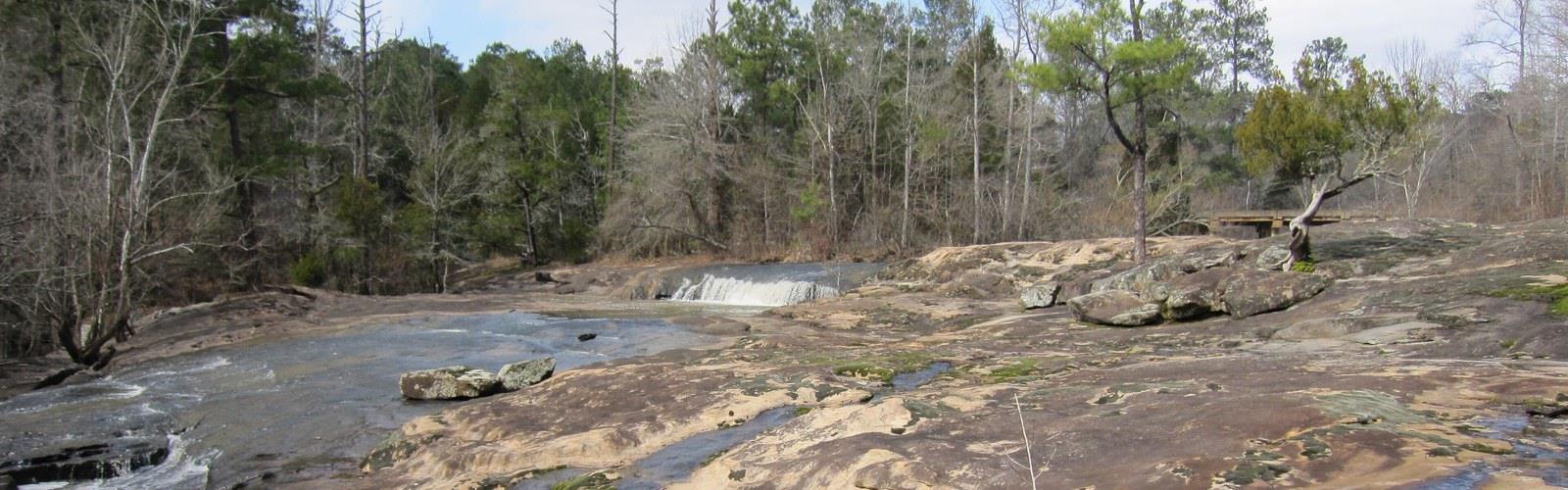

Ready to explore Piedmont National Wildlife Refuge? Here's everything you need to know before you go!
Discover the trail
Oh no! We don't have any photos 😢
This trail hasn't been captured yet. Be the first to share your adventure!Trail description
Piedmont National Wildlife Refuge is one of those places that quietly earns its reputation. Tucked into the rolling hills of central Georgia, this federally managed refuge has been doing important conservation work since the 1930s — and for hikers, it offers a genuinely rewarding experience in a landscape that tells a real ecological story.
A Landscape with History
The refuge was established in 1939 on land that had been heavily farmed and largely depleted by decades of intensive cotton agriculture. The U.S. Fish and Wildlife Service took over and began the long process of restoring the land to a functioning forest ecosystem. What you walk through today is the result of that decades-long recovery — a maturing mix of loblolly pine, hardwood bottomlands, and open fields that have gradually come back to life. That backstory gives the place a different kind of depth than a pristine wilderness area. You're hiking through a success story.
What the Terrain Is Like
The landscape here is classic Georgia Piedmont — gently rolling hills, creek drainages cutting through the forest, and a mix of upland pine stands and lowland hardwood areas. The terrain is generally accessible and not technically demanding, making it a solid option for hikers of varying experience levels. Trails wind through stands of mature loblolly pine, past beaver ponds, and along creek corridors where the vegetation shifts noticeably as you move from higher ground to the bottomlands.
The refuge manages its forests actively, which means you'll sometimes see areas in different stages of growth — from dense young pine stands to more open, park-like mature forest. That variety keeps the hiking visually interesting and creates different habitat conditions that support a wide range of wildlife.
Wildlife and Natural Features
Piedmont NWR is probably best known among birders and wildlife watchers, and for good reason. The refuge is a stronghold for the Red-cockaded Woodpecker, a federally endangered species that depends on old-growth longleaf and loblolly pine for nesting. The refuge has an active management program for this bird, and you can actually see the marked nest trees along some of the trails — small white rings painted around the trunks to identify active cavity trees. It's one of the more tangible wildlife conservation experiences you'll find on a hiking trail in the Southeast.
Beyond the woodpecker, the refuge supports a broad mix of wildlife. White-tailed deer are common throughout, and the beaver ponds scattered across the property attract waterfowl, wading birds, and other wetland-dependent species. Wild turkey, various songbirds, and the occasional river otter round out what you might encounter on a typical outing. The diversity of habitats — pine uplands, hardwood bottoms, wetlands, and open fields — is what drives that species richness.
Trails and Access
The refuge has a network of hiking trails that give you access to the main habitat types on the property. The Allison Lake Trail is one of the more popular routes, looping around a small lake and through a mix of pine and hardwood forest. It's a good introduction to what the refuge has to offer and accessible for most hikers. Other trails push deeper into the pine uplands and along creek drainages, offering more solitude and a better chance at wildlife sightings away from the trailhead.
The refuge also has a wildlife drive — a gravel road you can travel by vehicle or on foot — that passes through several key habitat areas and gives you a broader look at the property without committing to a full trail hike. This is particularly useful for birding or for visitors who want a more relaxed way to explore.
A visitor center is located on the refuge and is worth stopping at before you head out. Staff there can point you toward recent wildlife sightings, give you a current trail map, and fill you in on any seasonal closures or management activities that might affect your visit.
Practical Information
- Admission: There is no entrance fee to visit Piedmont National Wildlife Refuge.
- Dogs: Leashed pets are permitted on the trails.
- Hunting: The refuge is open to hunting during designated seasons — check the refuge website or visitor center for current schedules, as this can affect trail access and the overall experience during those periods.
- Hours: The refuge is generally open during daylight hours. The visitor center has its own operating hours — confirm before your visit.
- Facilities: Restrooms and parking are available at the visitor center. Trailhead parking is also available at key access points on the property.
- Cell service: Coverage can be limited in parts of the refuge, so downloading an offline map before you go is a smart move.
Best Times to Visit
Spring and fall are the strongest seasons here. Spring brings migrating songbirds moving through the refuge, wildflowers along the creek corridors, and active wildlife after the winter quiet. Fall offers cooler temperatures, good foliage color in the hardwood areas, and continued wildlife activity as animals prepare for winter. Summer is doable but hot and humid — early morning starts are strongly recommended if you're visiting between June and August. Winter is underrated: the leafless hardwoods open up sight lines for wildlife watching, and the trails are rarely crowded.
Who It's Good For
Piedmont National Wildlife Refuge works well for a pretty wide range of visitors. Birders will find it genuinely productive, especially in spring and during migration. Families with kids who have some trail experience will appreciate the accessible terrain and the tangible wildlife conservation angle — seeing a marked Red-cockaded Woodpecker nest tree is the kind of thing that sticks with younger hikers. Anyone interested in ecological restoration or land management history will find the refuge's story compelling on its own terms. And if you're just looking for a quiet forest walk in central Georgia without a lot of crowds, this delivers that consistently.
The Essential Hiking Checklist
Everything you need for your next hike. Bilingual, printable, 1 page.
Get your free hiking checklistRecommended gear for this trail
As an Amazon Associate I earn from qualifying purchases.


Ready to go?
Everything you need to know before you goWhen?
How much?
As an Amazon Associate I earn from qualifying purchases.
Affiliate links — LGPO may earn a commission at no extra cost to you.
- Hiking shoes Essential
- → Salomon Elixir Tour Mid WP · 203.38 $
- Layered clothing Essential
- Rain jacket Essential
- Trekking poles
- → Black Diamond Trail Ergo Cork · 69.99 $
- Headlamp
- → Petzl Actik Core 625 · 103.95 $
FAQ - Frequently asked questions
Everything you need to knowSimilar hikes nearby
Discover other trails you might enjoy

Hiking near Pittsburgh
0 trails to explore ~877 km away
We work hard to provide the most up-to-date and error-free data possible. If something seems incorrect, let us know! Your contribution helps the whole community.
Hikers' opinions
Be the first to review!
No hiker has shared their experience yet. Share your impressions and help other hikers!