
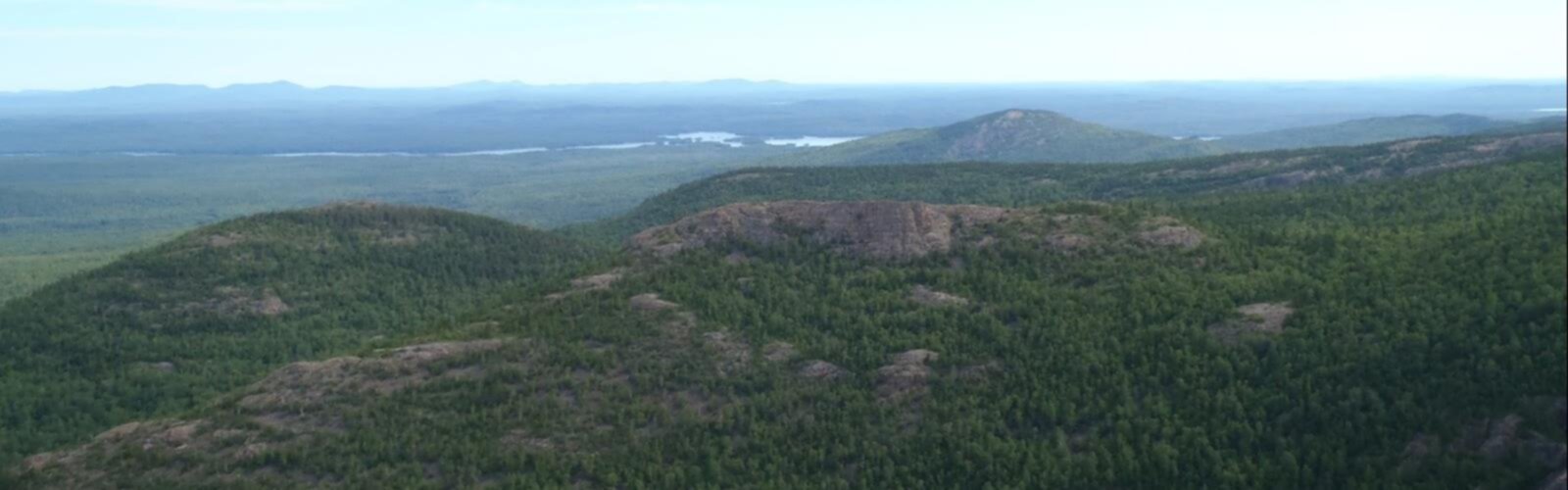

Ready to explore The Traveler, Maine? Here's everything you need to know before you go!
Discover the trail

Available trails
| TrailTrails | Dist.Distance | GainElevation | TimeDuration | Difficulty | GPX |
|---|---|---|---|---|---|
|
|
6.1 km | — | 1h30 | GPX |
GPX track: © OpenStreetMap contributors — ODbL 1.0
Trail description
The Traveler stands as Maine's eighth-most prominent peak, rising dramatically from the wilderness of Baxter State Park in Piscataquis County. This distinctive mountain earned its name from 19th-century loggers who noticed how the distant summit seemed to move alongside them as they floated timber down the East Branch of the Penobscot River—a visual trick that any prominent landmark creates when viewed from a moving vantage point.
What makes The Traveler particularly compelling is its complex ridge system and multiple summits. The main peak reaches the highest elevation, but hikers also encounter the Peak of the Ridges at 3,225 feet and both North and South Traveler Mountains at 3,144 feet and 2,677 feet respectively. This creates a substantial mountain massif rather than a simple single summit, offering varied terrain and multiple objectives for ambitious hikers.
Trail Access and Route Options
The mountain's western approach provides the primary hiking access, with three distinct ridges descending toward Upper and Lower South Branch Ponds at the mountain's base. These ridges—North Traveler Ridge, Center Ridge, and Pinnacle Ridge—offer different routes to the summit complex, each with its own character and challenges.
North Traveler Ridge provides the most direct path to the northern summit, while Center Ridge and Pinnacle Ridge both begin near the thoroughfare between the two ponds. These southern routes initially climb toward the Peak of the Ridges at 3,225 feet before merging into a common path that continues to The Traveler's main summit. This route design means hikers can create loop options or choose their preferred approach based on conditions and objectives.
The 8-kilometer round trip involves 1,079 meters of elevation gain, making this a substantial day hike that typically requires around 4 hours and 30 minutes to complete. The moderate difficulty rating reflects both the significant elevation gain and the rugged terrain typical of Maine's backcountry peaks.
Terrain and Hiking Experience
The western slopes where the hiking routes ascend showcase the varied terrain that makes Maine mountain hiking distinctive. Starting from the pond area, hikers initially travel through dense forest typical of the North Woods, with the trail gradually steepening as it gains the ridge systems. The three ridges each offer slightly different experiences—some sections involve scrambling over granite ledges and exposed rock faces, while others wind through thick spruce and fir forests.
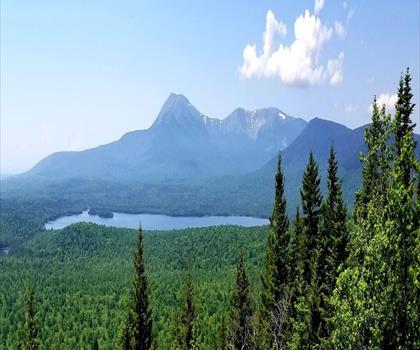
As elevation increases, the forest transitions to the stunted growth patterns common at higher elevations in Maine. The exposed ridgelines provide increasingly expansive views across Baxter State Park's wilderness, with glimpses of the surrounding peaks and the extensive forest canopy stretching toward the horizon. These viewpoints become more frequent and dramatic as you climb higher, rewarding the sustained effort required to gain elevation on this substantial peak.
The final approach to the main summit typically involves navigating more technical terrain, including rock scrambles and potentially exposed sections where weather conditions become a significant factor. The granite slabs and boulder fields characteristic of Maine's high peaks require careful foot placement and basic scrambling skills. The Peak of the Ridges serves as an important waypoint, offering its own rewarding views and a chance to assess conditions before continuing to the highest point.
What Sets The Traveler Apart
Unlike many of Maine's peaks that offer a single summit experience, The Traveler's multi-peak system creates opportunities for extended exploration. The interconnected ridges mean experienced hikers can potentially visit multiple summits in a single outing, though this significantly increases both distance and time requirements. Each summit offers different perspectives across the Maine Highlands region, from views of the extensive wilderness to glimpses of distant peaks and water bodies.
The mountain's prominence—its height above the surrounding landscape—creates particularly striking views that extend well beyond the immediate Baxter State Park boundaries. This elevation advantage, combined with the exposed nature of the upper ridges, provides some of the most expansive vistas available in this part of Maine.
Watershed and Geographic Context
The Traveler sits at the heart of an extensive watershed system that feeds into the Penobscot River, which eventually reaches Penobscot Bay on Maine's coast. This geographic position means hikers are exploring terrain that plays a crucial role in the state's water systems. The mountain's east side drains directly into the East Branch of the Penobscot River, while the north and west sides feed a more complex network of brooks that flow into Trout Brook, then Grand Lake Matagamon, which serves as the source of the East Branch.
The south side contributes to yet another drainage pattern, with water flowing into Pogy Brook, then Wassataquoik Stream, and finally joining the East Branch. This intricate watershed geography creates the network of streams, brooks, and ponds that hikers encounter throughout the area, and helps explain the lush forest growth and diverse ecosystems found on different sides of the mountain.
Planning Your Visit
The Traveler's location within Baxter State Park means hikers must plan according to the park's regulations and seasonal access patterns. The mountain's substantial elevation gain and potentially technical terrain make it important to start early and allow adequate time for the full route, especially when including exploration of the multiple summit areas.
Weather conditions can change rapidly at elevation, and the exposed ridge sections become particularly challenging in poor visibility or high winds. The rock scrambles and technical sections require appropriate footwear with good grip and ankle support, making this hike more demanding than simple forest walks. Trekking poles can be helpful for the steep sections and provide additional stability during the scrambling portions.
Water sources exist along the route, particularly in the lower elevations near the ponds and in the various brooks that drain the mountain's slopes. However, the higher elevations and ridge sections may have limited water availability, especially during dry periods, so carrying adequate water for the full hike is essential.
The proximity to Upper and Lower South Branch Ponds adds an additional dimension to trip planning, as these areas offer camping opportunities for those wanting to extend their visit or start their hike from an established base camp. The ponds also provide scenic destinations in their own right, with opportunities for fishing and wildlife observation that can complement the hiking experience.
The Essential Hiking Checklist
Everything you need for your next hike. Bilingual, printable, 1 page.
Get your free hiking checklistRecommended gear for this trail
As an Amazon Associate I earn from qualifying purchases.


Ready to go?
Everything you need to know before you goStarting Point
To access the hiking trails, you can start at the South Branch Pond Campground. The address is Baxter State Park, T6 R9 WELS, ME 04462. This location serves as a primary trailhead for the area.
When?
How much?
As an Amazon Associate I earn from qualifying purchases.
Affiliate links — LGPO may earn a commission at no extra cost to you.
- Hiking shoes Essential
- → Salomon Elixir Tour Mid WP · 203.38 $
- Layered clothing Essential
- Rain jacket Essential
- Trekking poles
- → Black Diamond Trail Ergo Cork · 69.99 $
- Headlamp
- → Petzl Actik Core 625 · 103.95 $
FAQ - Frequently asked questions
Everything you need to knowSimilar hikes nearby
Discover other trails you might enjoy
Chimney Peak, Maine
Maine Highlands
Katahdin
Maine Highlands

Little Spencer Mountain
Maine Highlands
barnard mountain
Maine Highlands
Pleasant Pond Mountain
Maine Highlands
Katahdin Lake
Maine Highlands
Hiking near Bangor
0 trails to explore ~141 km away
We work hard to provide the most up-to-date and error-free data possible. If something seems incorrect, let us know! Your contribution helps the whole community.
Hikers' opinions
Be the first to review!
No hiker has shared their experience yet. Share your impressions and help other hikers!