
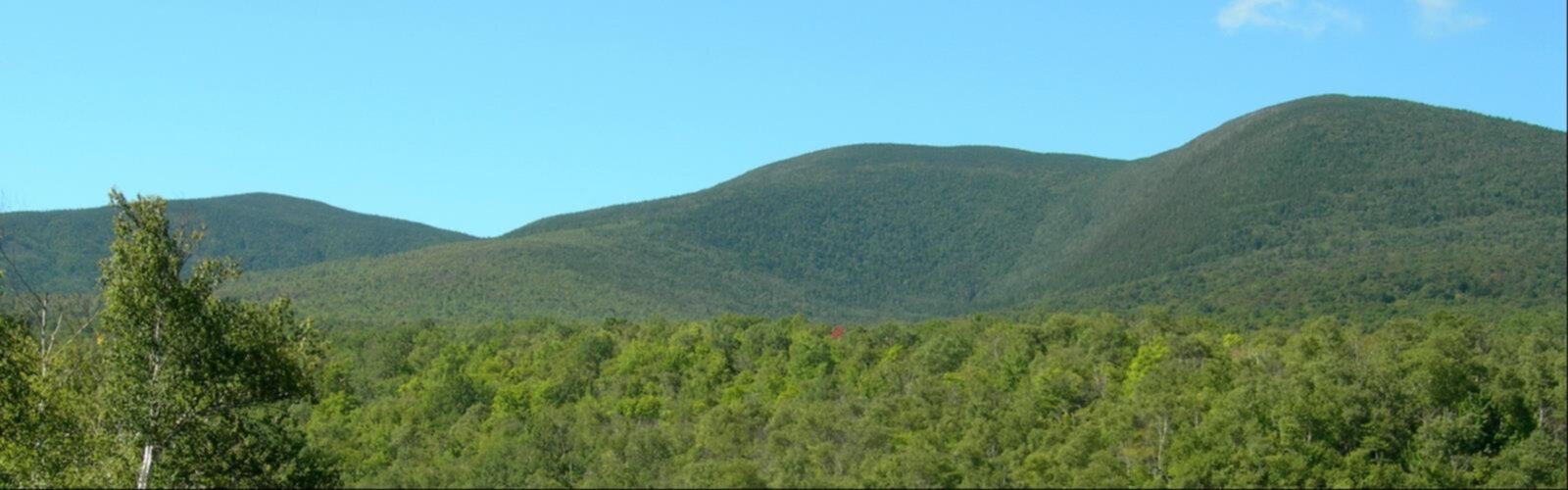

Ready to explore Crocker Mountain, Maine? Here's everything you need to know before you go!
Discover the trail
Oh no! We don't have any photos 😢
This trail hasn't been captured yet. Be the first to share your adventure!Trail description
Crocker Mountain is Maine's fourth-highest peak at 4,228 feet, rising above Carrabassett Valley in Franklin County. It sits behind only the Katahdin summits and Sugarloaf Mountain in the state's elevation rankings, which makes it a genuine objective for hikers who want to tick off Maine's high points. This isn't a casual outing — the 20.6-kilometer round trip with 1,289 meters of elevation gain earns its very hard rating, and the estimated 8.5 hours on trail reflects real terrain, not a conservative guess.
The mountain is part of the Appalachian Mountain chain and sits directly on the Appalachian Trail, the 2,170-mile route running from Georgia to Maine. For AT thru-hikers, Crocker is one of the harder climbs in Maine's already demanding final stretch. For day hikers, it's a serious undertaking that rewards preparation and punishes shortcuts.
What the Trail Actually Feels Like
The route follows the white blazes of the Appalachian Trail the entire way, so navigation is straightforward. What isn't straightforward is the terrain itself. The lower elevations move through dense hardwood forest where the trail is rooty and uneven — the kind of footing that looks manageable but adds up over hours. As you gain elevation, the forest transitions to sparser vegetation, the roots give way to exposed rock, and the grade steepens noticeably.
Several sections of the climb are genuinely steep, the kind where you're using your hands on rocks and thinking carefully about where you plant your feet. Wet conditions make these sections significantly harder and slower. If you're carrying a full pack, factor that into your time estimate — the 8.5-hour window assumes a reasonable pace with short breaks, and it can stretch considerably with extra weight or slippery rock.
The summit itself is wooded, so don't come expecting a wide-open panoramic payoff at the top. What you get instead is the satisfaction of a hard climb through varied forest ecosystems, glimpses of the surrounding Western Mountains through breaks in the canopy, and the knowledge that you've knocked off one of Maine's most significant peaks. The experience is more about the physical challenge and the journey through the terrain than a single dramatic viewpoint.
Crocker Cirque
Between the main summit and South Crocker Mountain lies one of the more interesting geological features in this part of Maine: Crocker Cirque. This bowl-shaped depression was carved by glacial movement thousands of years ago and contains a small pond that makes for a natural rest stop. The cirque is accessible via the Appalachian Trail as you move between the two summits.
It's worth pausing here. The pond reflects the surrounding forest, the geology is genuinely striking, and it's a good spot to refuel before continuing. For anyone interested in Maine's glacial history, the cirque is a tangible example of how ice sheets shaped this landscape — the scale of the bowl makes the process feel real in a way that reading about it doesn't.
Watershed and Geography
Crocker Mountain sits at a meaningful hydrological divide. The eastern slopes drain into brooks that feed the South Branch of the Carrabassett River, which eventually connects to the Kennebec River and the Gulf of Maine. The northwest face drains into Stoney Brook, then into Stratton Brook, Flagstaff Lake, and the Dead River — another major Kennebec tributary. The southwest slopes contribute to Nash Stream, which flows into the South Branch of the Dead River.
This drainage pattern isn't just geography trivia. It means the mountain connects to multiple river valleys and water systems across the region, which gives you a sense of how central Crocker is to the broader Western Mountains landscape.
Planning Your Hike
The numbers here are not soft. 20.6 kilometers, 1,289 meters of gain, 8.5 hours — this hike demands real preparation. Here's what actually matters when you're getting ready:
- Start early. An 8.5-hour day means you need to be on trail well before mid-morning to finish in daylight, especially outside of summer's longer days.
- Footwear matters. Hiking boots with solid ankle support and aggressive tread are the right call here. The rocky, rooty terrain and steep grades will punish trail runners or casual footwear, particularly on the descent.
- Bring trekking poles. The steep downhill sections put real stress on your knees. Poles make a meaningful difference over a full day of this terrain.
- Water and food. The physical output on a hike like this is substantial. Carry more water than you think you need, especially in warm weather. There are natural water sources along the route, but treat anything you collect from them.
- Layer up. At 4,228 feet, the summit can be significantly colder and windier than the trailhead, even when the weather looks stable below. A wind layer and an insulating mid-layer are worth the weight.
Less experienced hikers or anyone new to big elevation days should build in extra time and be honest about their fitness level before committing to this one. The very hard rating is accurate, and the mountain doesn't offer many easy escape routes once you're committed to the upper sections.
Where Crocker Fits in the Western Mountains
Maine's Western Mountains region is home to some of the most demanding hiking in the northeastern United States, and Crocker Mountain holds a legitimate place near the top of that list. Its position on the Appalachian Trail means it sees a mix of thru-hikers grinding through Maine's final miles and local hikers who know exactly what they're getting into. The mountain's elevation, its glacial cirque, and its role in the regional watershed make it more than just a peak to check off — it's a genuinely interesting piece of Maine's mountain landscape.
For hikers working through Maine's high peaks or looking for a serious day out in the Western Mountains, Crocker delivers exactly what the numbers promise: a long, hard, rewarding climb through real backcountry terrain.
The Essential Hiking Checklist
Everything you need for your next hike. Bilingual, printable, 1 page.
Get your free hiking checklistRecommended gear for this trail
As an Amazon Associate I earn from qualifying purchases.


Ready to go?
Everything you need to know before you goStarting Point
To access the hiking trails, you can start at the trailhead located on Caribou Valley Road (CVR). The parking area is near the intersection of CVR and Route 27. Note that CVR is a rough, unpaved road, so a high-clearance vehicle is recommended. Another option is to begin from the Appalachian Trail crossing on Route 27, where there is a small parking area available.
When?
How much?
As an Amazon Associate I earn from qualifying purchases.
Affiliate links — LGPO may earn a commission at no extra cost to you.
- Hiking shoes Essential
- → Salomon Elixir Tour Mid WP · 203.38 $
- Layered clothing Essential
- Rain jacket Essential
- Trekking poles
- → Black Diamond Trail Ergo Cork · 69.99 $
- Headlamp
- → Petzl Actik Core 625 · 103.95 $
FAQ - Frequently asked questions
Everything you need to knowSimilar hikes nearby
Discover other trails you might enjoy
Long Mountain
Western Mountains
Pleasant Mountain
Western Mountains
Witt's End Trail
Western Mountains
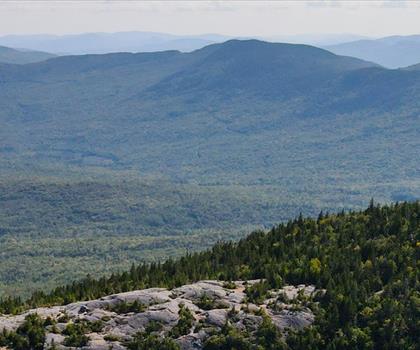
Tumbledown Mountain
Western Mountains
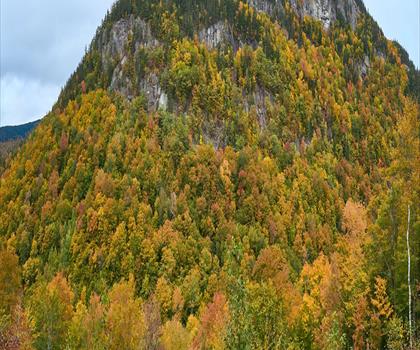
Royce Mt. Trailhead
Western Mountains

Bald Pate Mountain
Western Mountains
Hiking near Sherbrooke
53 trails to explore ~125 km away
We work hard to provide the most up-to-date and error-free data possible. If something seems incorrect, let us know! Your contribution helps the whole community.
Hikers' opinions
Be the first to review!
No hiker has shared their experience yet. Share your impressions and help other hikers!