

Ready to explore East Kennebago Mountain, Maine? Here's everything you need to know before you go!
Discover the trail

Trail description
East Kennebago Mountain rises to 3,791 feet in Franklin County's remote wilderness, earning its place on the New England 100 Highest list. This lesser-known peak offers experienced hikers a chance to escape the crowds that flock to Maine's more famous mountains while still delivering the challenging terrain and rewarding views that make western Maine hiking so compelling.
The mountain sits deep in Maine's logging country, where vast stretches of working forest create a landscape that feels genuinely wild. Unlike the well-marked trails of Acadia or the White Mountains, East Kennebago maintains an old-school hiking character that appeals to those who appreciate a more rugged, self-reliant outdoor experience.
Trail Access and Approach
Getting to the trailhead requires navigation through a network of logging roads off Route 16 near Stratton. This approach is part of the adventure—you'll drive through active timber country on gravel roads that can change seasonally depending on logging operations. The access route demands a vehicle with decent clearance, and conditions can vary significantly based on recent weather and road maintenance.
The logging road approach means you're entering a working landscape where the forest industry shapes both the terrain and access patterns. This adds an element of planning to your hike that goes beyond simply following GPS directions to a parking area.
The Hiking Experience
The 8-kilometer trail gains 1,155 meters of elevation over moderately challenging terrain that typically requires 3 to 4 hours to complete. The route winds through dense mixed forest dominated by spruce, fir, and hardwoods that create a classic Maine woods environment. This isn't a trail where you'll encounter dozens of other hikers—the remote access and moderate technical demands keep traffic light.
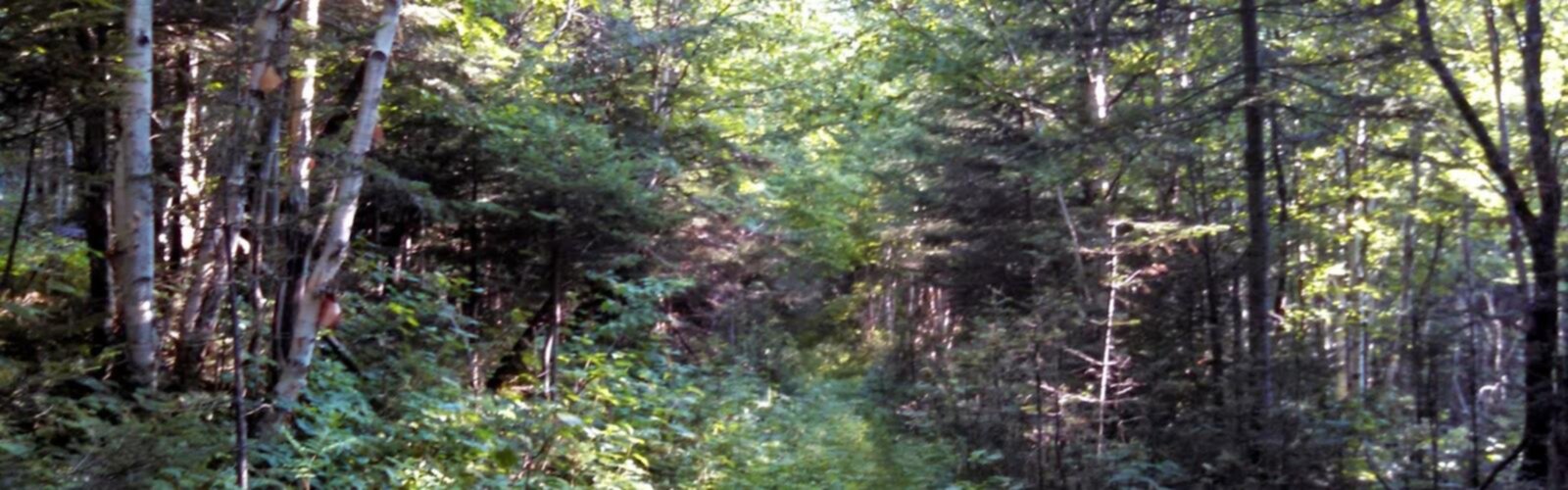
The forest canopy creates a cathedral-like atmosphere for much of the ascent, with filtered sunlight illuminating the understory and highlighting the rich forest floor ecosystem. The trail itself follows old logging roads and footpaths that have been used for decades, giving it a worn, established feel despite the relatively light traffic.
As you climb through the elevation zones, the forest composition gradually shifts. The lower elevations feature the mixed growth typical of Maine's transitional forest, while higher sections show more boreal characteristics with increased conifer density and the hardy plant communities adapted to shorter growing seasons and harsher conditions.
Wildlife and Natural Features
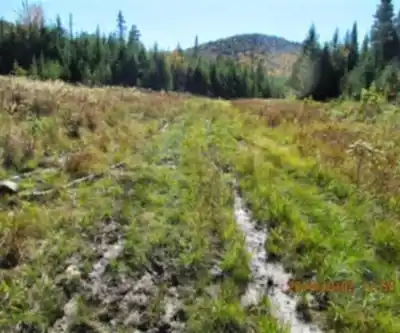
East Kennebago's remote location and extensive forest cover create excellent wildlife habitat. Moose tracks are common along the trail and in muddy sections, particularly during early morning and evening hours. The dense forest provides cover for black bears, though encounters are rare given the animals' tendency to avoid human activity.
Birdlife reflects the boreal forest environment, with species like gray jays, boreal chickadees, and various woodpecker species creating the soundtrack for your hike. During migration periods, the mountain's elevation and forest diversity can produce interesting bird sightings for those who take time to observe.
The forest floor supports typical Maine woodland plants, including various ferns, mosses, and seasonal wildflowers. Blueberry bushes are common at higher elevations, offering a natural trail snack during late summer hiking season.
Summit Views and Rewards
The summit delivers panoramic views across western Maine's vast wilderness, showcasing the region's characteristic landscape of endless forest broken by lakes, rivers, and distant mountain ranges. On clear days, Mount Washington's distinctive profile is visible across the New Hampshire border, providing a dramatic focal point for the eastern horizon.
The summit views emphasize the scale of Maine's North Woods—mile after mile of unbroken forest stretching to the horizon. This perspective helps hikers understand why this region remains one of the largest wilderness areas in the eastern United States and why it continues to support wildlife populations that have disappeared from more developed regions.
Weather conditions significantly impact visibility, and the summit can be shrouded in clouds even when lower elevations enjoy clear skies. The elevation gain and northern latitude mean summit conditions can be substantially different from the trailhead, particularly regarding temperature and wind exposure.
Practical Considerations
The moderate difficulty rating reflects both the physical demands of the elevation gain and the navigation skills required for the logging road approach. Hikers should have solid experience with longer day hikes and feel comfortable with basic route-finding skills.
Weather preparation is crucial given the elevation gain and potential for rapidly changing conditions. Pack layers appropriate for temperatures that can be 15-20 degrees cooler at the summit than at the trailhead. Wind exposure at the summit can create significant wind chill even on relatively mild days.
Water sources along the trail are limited, making it essential to carry adequate hydration for the full hike. The forest environment provides good shade during summer months, but the steady elevation gain creates consistent physical demands that require proper hydration management.
The remote location means cell phone coverage is unreliable or nonexistent, emphasizing the importance of proper trip planning and letting others know your hiking schedule. Emergency self-rescue capabilities become more important when help is far away and communication options are limited.
Following Leave No Trace principles helps preserve the pristine character that makes East Kennebago special. The light trail traffic means human impact is minimal, and maintaining this condition requires conscious effort from every visitor to pack out all waste and minimize their environmental footprint.
The Essential Hiking Checklist
Everything you need for your next hike. Bilingual, printable, 1 page.
Get your free hiking checklistRecommended gear for this trail
As an Amazon Associate I earn from qualifying purchases.


Ready to go?
Everything you need to know before you goStarting Point
To access the hiking trails, you can start from different trailheads. One common starting point is the parking area located at the end of Kennebago River Road. Another option is to begin from the trailhead accessible via Wiggle Brook Road. Both roads are unpaved and may require a high-clearance vehicle, especially in wet conditions. Ensure to check local maps for precise directions as signage may be limited.
When?
How much?
As an Amazon Associate I earn from qualifying purchases.
Affiliate links — LGPO may earn a commission at no extra cost to you.
- Hiking shoes Essential
- → Salomon Elixir Tour Mid WP · 203.38 $
- Layered clothing Essential
- Rain jacket Essential
- Trekking poles
- → Black Diamond Trail Ergo Cork · 69.99 $
- Headlamp
- → Petzl Actik Core 625 · 103.95 $
FAQ - Frequently asked questions
Everything you need to knowSimilar hikes nearby
Discover other trails you might enjoy
Long Mountain
Western Mountains

Pleasant Mountain
Western Mountains
Witt's End Trail
Western Mountains
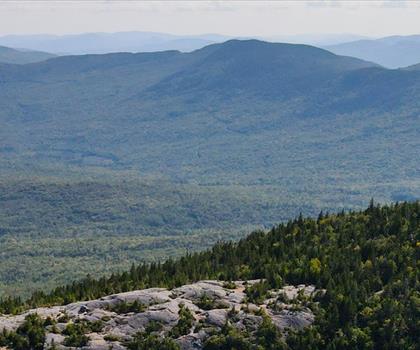
Tumbledown Mountain
Western Mountains

Bear Mountain Inn + Barn Maine
Western Mountains
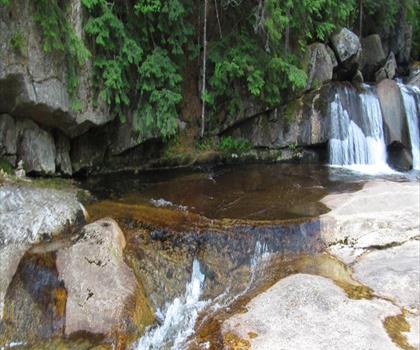
Screw Auger Falls
Western Mountains
Hiking near Sherbrooke
53 trails to explore ~106 km away
We work hard to provide the most up-to-date and error-free data possible. If something seems incorrect, let us know! Your contribution helps the whole community.
Hikers' opinions
Be the first to review!
No hiker has shared their experience yet. Share your impressions and help other hikers!