

Ready to explore Gap Mountain? Here's everything you need to know before you go!
Discover the trail
Trail description
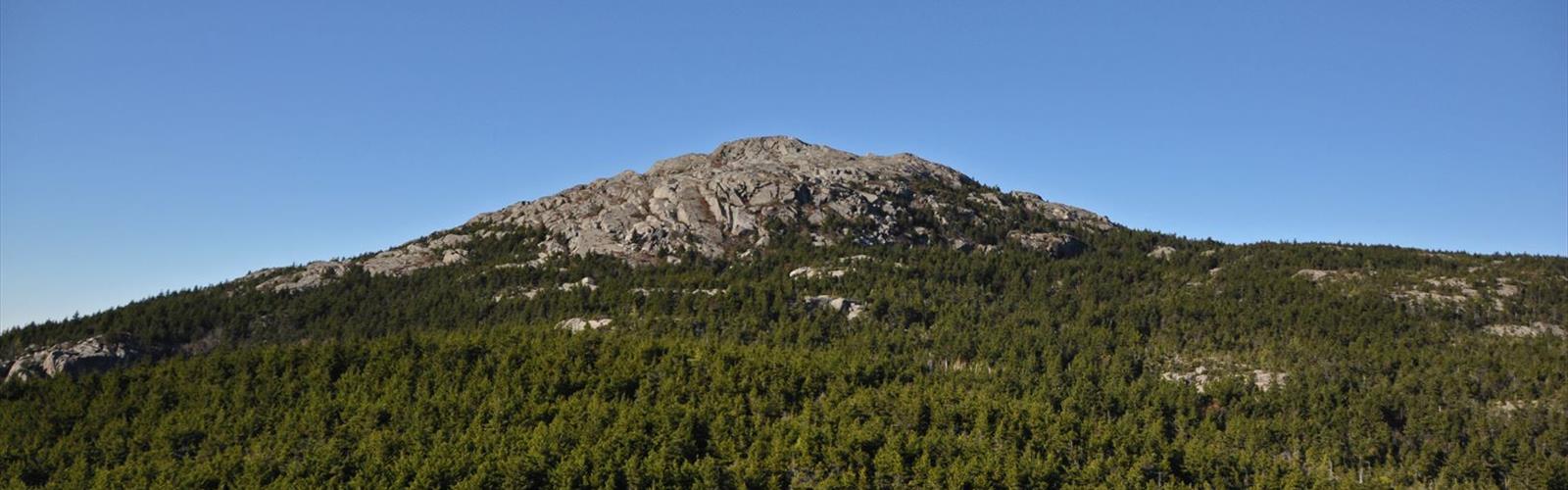
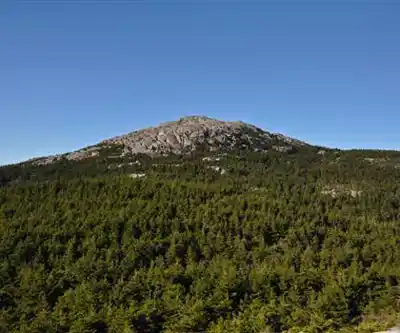
Gap Mountain rises as a distinctive three-peaked monadnock in Troy, New Hampshire, offering hikers a rewarding alternative to the crowds that flock to nearby Mount Monadnock. This compact mountain reaches elevations between 1,820 and 1,900 feet above sea level across its trio of summits, with each peak providing a different hiking experience. The mountain's defining characteristic—and the source of its name—is the prominent cleft that separates the higher southern summit from the north and middle peaks, creating a dramatic gap visible from surrounding areas.
The Metacomet-Monadnock Trail serves as the primary route over Gap Mountain, threading across the north and middle summits before continuing on its long journey through New England. This well-established trail system makes Gap Mountain accessible to hikers following the longer trail or those seeking a shorter day hike in the Monadnock Region. The entire mountain lies within the Gap Mountain Reservation, carefully managed by the Society for the Protection of New Hampshire Forests to preserve both its natural character and public access.
The Summit Experience
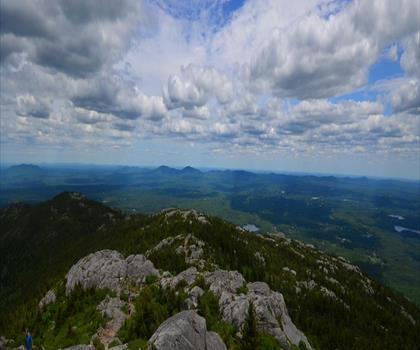
Gap Mountain's three peaks offer distinctly different rewards for hikers willing to explore them. The lower north summit and middle summit feature mostly bald rock faces and open ledges that provide expansive panoramic views across New Hampshire's rural landscape. From these exposed summits, hikers can take in sweeping vistas of rolling farmland, scattered forests, and the region's characteristic monadnock formations rising from the surrounding terrain.
The views from the north and middle summits showcase the impressive bulk of Mount Monadnock just 3 miles to the north, allowing hikers to appreciate the scale and prominence of New Hampshire's most climbed mountain from a unique perspective. Little Monadnock Mountain appears 4 miles to the southwest, completing the trio of monadnocks that define this corner of New Hampshire. These open summits provide excellent opportunities for photography and extended rest stops, with the exposed rock offering natural seating areas.
In contrast, the higher southern summit presents a completely different environment. This wooded peak lacks the dramatic views of its northern neighbors, instead offering hikers a peaceful forest experience with the satisfaction of reaching Gap Mountain's highest point. The dense tree cover creates a more intimate hiking experience, with the forest canopy filtering sunlight and providing habitat for the mountain's wildlife.
Trail Conditions and Hiking Experience
The hiking experience on Gap Mountain varies considerably as the trail moves between the different summits and terrain types. The approach through forested sections involves typical New England trail conditions with root-crossed paths, occasional rocky sections, and moderate grades that build endurance without overwhelming less experienced hikers. The trail covers approximately 3.2 kilometers with 183 meters of elevation gain, making it accessible to hikers with basic fitness levels while still providing a satisfying workout.
As hikers emerge onto the bald north and middle summits, the terrain shifts to exposed bedrock and open ledges. These sections require basic scrambling skills and attention to footing, particularly in wet conditions when the rock surfaces become slippery. The open nature of these summits also means hikers face direct exposure to weather conditions, making appropriate clothing and sun protection important considerations.
The transition between summits involves descending into the characteristic gap that gives the mountain its name, then climbing back up to reach the next peak. This creates a rolling profile that adds interest to the hike while providing natural breaking points for rest and navigation. The wooded southern summit requires hikers to navigate through typical New England forest conditions with potentially muddy sections during wet seasons.
What Sets Gap Mountain Apart
Gap Mountain's unique three-summit configuration creates a hiking experience unlike most other peaks in the Monadnock Region. Rather than a single climb to one viewpoint, hikers can explore multiple perspectives and environments within a single outing. The contrast between the exposed, view-rich north and middle summits and the forested southern peak gives hikers a taste of different mountain environments without requiring separate trips.
The mountain's position along the historic Metacomet-Monadnock Trail adds another layer of interest for hikers interested in long-distance trail culture. Even day hikers can experience a small section of this significant New England trail system, which connects numerous peaks and protected areas across the region. The trail's white blazes provide reliable navigation markers and connect Gap Mountain to the broader network of hiking opportunities in the area.
Natural Environment and Watershed
Gap Mountain sits at an important watershed divide, with its slopes draining into two major river systems that ultimately reach different parts of the Atlantic coast. The eastern and southern slopes send their waters into the Millers River, which flows into the Connecticut River and eventually reaches Long Island Sound. Meanwhile, the northern and western slopes drain into the Ashuelot River, which also joins the Connecticut River but at a different point in its journey to the sea.
This watershed position contributes to the mountain's diverse ecological character, supporting different plant communities on various slopes and elevations. The forested sections harbor typical New England hardwood and mixed forest species, while the exposed summits support specialized plant communities adapted to the harsh conditions of open rock faces and thin soils.
The mountain's position within the protected Gap Mountain Reservation ensures that these natural systems remain undisturbed by development, maintaining the rural character that makes the summit views so appealing. The Society for the Protection of New Hampshire Forests' management helps preserve both the ecological integrity and the recreational opportunities that draw hikers to this distinctive peak.
Regional Context and Access
Gap Mountain occupies a special place in the Monadnock Region's hiking landscape, offering an experience that complements rather than competes with the area's more famous peaks. While Mount Monadnock draws thousands of hikers annually, Gap Mountain provides a quieter alternative with equally rewarding views and a more intimate connection to the landscape. The mountain's moderate difficulty level makes it an excellent choice for hikers building up to more challenging peaks or those seeking a satisfying hike without extreme physical demands.
The mountain's location in Troy places it within easy reach of both local hikers and visitors exploring the broader Monadnock Region. Its position along the Metacomet-Monadnock Trail also makes it a natural stopping point for long-distance hikers following this historic route through New England. The combination of accessibility, diverse terrain, and excellent views makes Gap Mountain a valuable addition to any hiker's exploration of southwestern New Hampshire's distinctive landscape.
The Essential Hiking Checklist
Everything you need for your next hike. Bilingual, printable, 1 page.
Get your free hiking checklistRecommended gear for this trail
As an Amazon Associate I earn from qualifying purchases.


Ready to go?
Everything you need to know before you goStarting Point
The gap mountain trails are located in Harts Location, New Hampshire. To get to the start of the trails, take Route 302 west from Bartlett, NH. The trailhead is located on the left side of the road, just past the intersection of Route 302 and Route 16.
When?
How much?
As an Amazon Associate I earn from qualifying purchases.
Affiliate links — LGPO may earn a commission at no extra cost to you.
- Hiking shoes Essential
- → Salomon Elixir Tour Mid WP · 203.38 $
- Layered clothing Essential
- Rain jacket Essential
- Trekking poles
- → Black Diamond Trail Ergo Cork · 69.99 $
- Headlamp
- → Petzl Actik Core 625 · 103.95 $
FAQ - Frequently asked questions
Everything you need to knowSimilar hikes nearby
Discover other trails you might enjoy
Wapack National Wildlife Refuge
Monadnock Region
Gap Mountain Trail South
Monadnock Region

Pitcher Mountain Trailhead
Monadnock Region
Monadnock State Park
Monadnock Region
Pack Monadnock
Monadnock Region
Silver Mountain Trail
Monadnock Region
Hiking near Manchester
0 trails to explore ~59 km away
We work hard to provide the most up-to-date and error-free data possible. If something seems incorrect, let us know! Your contribution helps the whole community.
Hikers' opinions
Be the first to review!
No hiker has shared their experience yet. Share your impressions and help other hikers!