

Ready to explore Mongaup Mountain, New York? Here's everything you need to know before you go!
Discover the trail
Oh no! We don't have any photos 😢
This trail hasn't been captured yet. Be the first to share your adventure!Trail description
Mongaup Mountain sits in the heart of the Catskills in New York, offering hikers a quieter alternative to some of the more heavily trafficked peaks in the region. This is the kind of summit that rewards those willing to seek it out — less crowded, genuinely wild, and deeply rooted in the character of the Catskill landscape.
The Catskill Setting
The Catskills are one of the most iconic hiking destinations in the northeastern United States, and Mongaup Mountain is a solid representative of what makes this range worth exploring. The terrain here is classic Catskill: dense hardwood and mixed forest, rocky ridgelines, and the kind of rugged, unmanicured trail experience that draws hikers back year after year. The mountain sits within the Catskill Park, a patchwork of public and private land that has been a cornerstone of New York's outdoor recreation culture for well over a century.
Unlike the Catskill High Peaks that draw large crowds — particularly those on the 3500 Club list — Mongaup Mountain tends to attract hikers who are comfortable navigating less-maintained trails and who prefer solitude over spectacle. That's not a knock on the mountain; it's actually one of its strongest selling points.
The Trail Experience
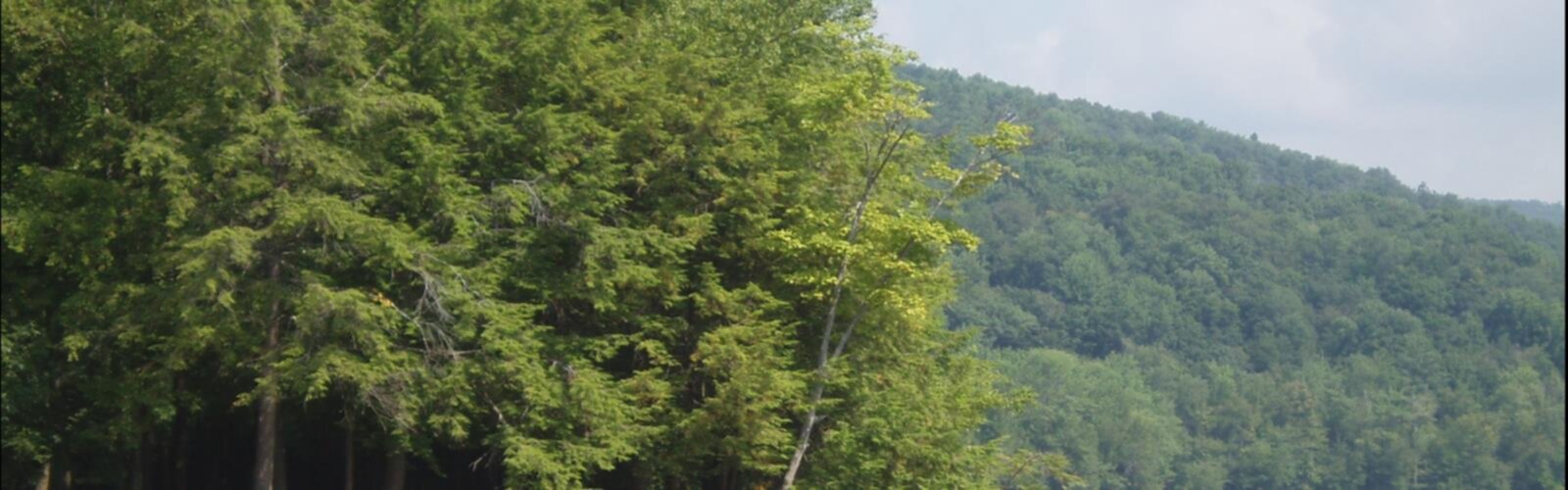
The approach to Mongaup Mountain takes you through a forested landscape that feels genuinely remote. The trail winds through a mix of deciduous trees — expect beech, birch, and maple — with the understory shifting depending on elevation and aspect. The forest floor is often carpeted with ferns, and in the right season, the canopy closes in overhead to create a cool, shaded corridor that makes the climb feel manageable even on warmer days.
The terrain is typical of the Catskills: rooty, occasionally rocky, and with enough variation in grade to keep things interesting without becoming technical. Hikers should be comfortable with uneven footing and should wear footwear with solid ankle support. Trekking poles are a reasonable addition, especially on the descent.
The summit area, like many Catskill peaks, is heavily wooded. Don't expect a wide-open panoramic view from the top — the Catskills are known for their forested summits, and Mongaup is no exception. The reward here is more about the journey through the landscape than a dramatic payoff at the top, which suits a certain kind of hiker perfectly.
Navigation and Trail Conditions
Hikers heading to Mongaup Mountain should come prepared with a reliable map and ideally a GPS device or downloaded offline map. Trails in this part of the Catskills can be lightly marked, and the network of old logging roads and informal paths in the area can make navigation tricky if you're relying solely on trail markers. The New York State Department of Environmental Conservation (DEC) manages much of the public land in the Catskill Park, and their trail maps are a solid starting resource before you head out.
Trail conditions vary significantly by season. Spring can bring muddy, soft trail surfaces — particularly on north-facing slopes where snowmelt lingers. Summer is generally the most accessible season, though the dense foliage means you'll be hiking in a green tunnel for much of the route. Fall brings the Catskills to life with color, and the hardwood forest on Mongaup Mountain puts on a genuine show. Winter hiking is possible for those with the right gear, but the remote nature of the area means you should be well-prepared and ideally not hiking solo.
Wildlife and Natural Environment
The Catskills support a healthy and diverse wildlife population, and the forested slopes of Mongaup Mountain are no exception. Black bear are present throughout the region — standard Catskill protocol applies: store food properly, don't leave anything scented in your vehicle, and be aware of your surroundings. White-tailed deer are common, and the birdlife in the mixed forest is worth paying attention to, particularly during spring migration when warblers move through in numbers.
The forest itself is part of what makes this area ecologically interesting. The Catskills sit at a transition zone between northern boreal forest and the broader northeastern hardwood forest, and that mix shows up in the plant communities you'll encounter on the trail. Keep an eye out for the shift in vegetation as you gain elevation.
Practical Information
- Location: Mongaup Mountain is located in the Catskills region of New York State, within the Catskill Park.
- Land management: The surrounding public land is managed by the New York State Department of Environmental Conservation (DEC). Check the DEC website for current trail conditions, closures, and access updates before your trip.
- Parking: Confirm trailhead parking availability and access road conditions before heading out, as these can change seasonally or due to maintenance.
- Dogs: Dogs are generally permitted on DEC-managed lands in the Catskills. Keep your dog under control and pack out all waste.
- Leave No Trace: The Catskills see significant visitor pressure across the region. Pack out everything you bring in, stay on established trails, and avoid cutting switchbacks.
- Cell service: Do not count on reliable cell service in this area. Download maps offline and let someone know your itinerary before you go.
Who This Hike Is For
Mongaup Mountain is a good fit for hikers who have some experience under their belt and are comfortable with a more self-reliant approach to trail navigation. It's not the place for a first-ever hike, but it's also not an extreme objective — it sits in that satisfying middle ground where you earn the experience without needing technical skills or specialized equipment. If you've done a handful of Catskill hikes and are looking to get off the beaten path, Mongaup Mountain is worth putting on your list.
Those working through the Catskill 3500 Club peak list will already have Mongaup Mountain on their radar, as it is one of the peaks included in that challenge — a detail that gives it a certain credibility among serious Catskill hikers even if it doesn't draw the same crowds as the more famous summits in the range.
The Essential Hiking Checklist
Everything you need for your next hike. Bilingual, printable, 1 page.
Get your free hiking checklistRecommended gear for this trail
As an Amazon Associate I earn from qualifying purchases.


Ready to go?
Everything you need to know before you goStarting Point
To access the hiking trails, head towards the trailhead located near Mongaup Pond Campground. The primary parking area is at 231 Mongaup Pond Road, Livingston Manor, NY 12758. From Livingston Manor, take Debruce Road (County Route 81) and follow signs to Mongaup Pond Campground. There are no alternative trailheads for this location.
When?
How much?
As an Amazon Associate I earn from qualifying purchases.
Affiliate links — LGPO may earn a commission at no extra cost to you.
- Hiking shoes Essential
- → Salomon Elixir Tour Mid WP · 203.38 $
- Layered clothing Essential
- Rain jacket Essential
- Trekking poles
- → Black Diamond Trail Ergo Cork · 69.99 $
- Headlamp
- → Petzl Actik Core 625 · 103.95 $
FAQ - Frequently asked questions
Everything you need to knowSimilar hikes nearby
Discover other trails you might enjoy

Old Mill Falls
Catskills
Catskill Scenic Trail
Catskills
Cliff Lake
Catskills
Plattekill Falls
Catskills
Devil's Path Trail
Catskills
Ashokan Reservoir
Catskills
Hiking near Poughkeepsie
0 trails to explore ~72 km away
We work hard to provide the most up-to-date and error-free data possible. If something seems incorrect, let us know! Your contribution helps the whole community.
Hikers' opinions
Be the first to review!
No hiker has shared their experience yet. Share your impressions and help other hikers!